FEMA Money Keeps Flowing to Florida While a Resilience Program Stays Frozen
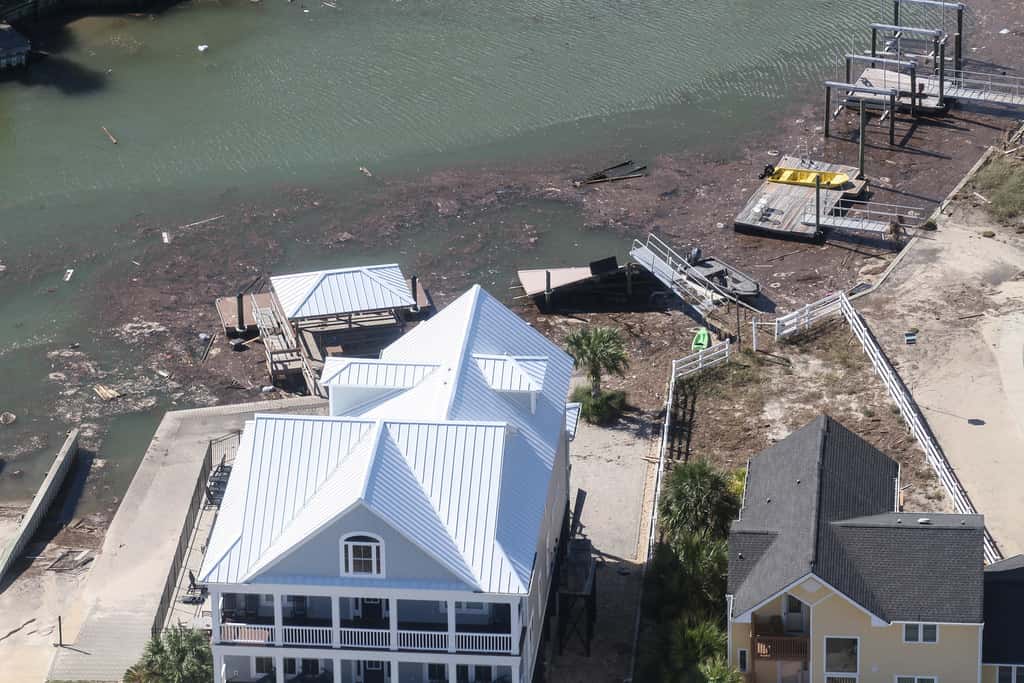
Federal disaster money continues to reach Florida in large volumes. FEMA has provided more than $2 billion to the state since January 2025 to support infrastructure repair and rebuilding, including nearly $55 million announced in July for community resilience, critical infrastructure restoration, and mitigation projects.
At the same time, roughly $300 million in federal aid intended to help Florida communities protect against flooding, hurricanes, and other disasters has been frozen since January 2025, after FEMA ended the Building Resilient Infrastructure and Communities program, known as BRIC.
The two facts describe federal disaster policy as Florida is experiencing it: recovery funding after damage occurs remains available, while funding designed to prevent damage before it occurs has been curtailed.
The distinction between obligated and disbursed money matters when reading these announcements. FEMA obligates funds when it approves a project worksheet, which commits the federal share but does not immediately transfer cash. Disbursement follows as work is completed and documented. A community can therefore be told it has received tens of millions of dollars while still waiting years for reimbursement on completed work, and that gap is a recurring source of friction between local governments and the agency.
What FEMA has sent
The July announcement of nearly $55 million included more than $30 million under FEMA's Public Assistance program across Florida, with nearly $7 million going to the Florida Division of Emergency Management for projects including debris removal and wastewater system repairs following Hurricane Ian and other storms.
Earlier in the year, FEMA approved more than $89 million in June for more than 70 recovery and hazard mitigation projects in communities affected by Hurricanes Debby, Helene, Milton, and prior disasters, and nearly $97 million in April.
Florida has also been reported to receive roughly $480 million in Public Assistance funding for disaster recovery in a separate allocation. The cumulative total since January 2025 exceeds $2 billion.
Cost share is the other structural feature. The federal government typically covers 75 percent of eligible costs under Public Assistance, with the remaining 25 percent split between state and local governments, though the federal share can be increased for catastrophic events. For a small municipality facing a multi-million dollar water treatment repair, even a 12.5 percent local share can exceed an entire annual capital budget. That is why disaster recovery frequently reshapes local finances for years after the storm itself has passed from public attention.
How Public Assistance works
FEMA's Public Assistance program reimburses state and local governments and certain nonprofits for disaster response and recovery costs. It covers debris removal, emergency protective measures, and the repair or replacement of damaged public infrastructure: roads, bridges, water and sewer systems, public buildings, and utilities.
The program operates on reimbursement rather than advance payment, which means local governments front the money and are repaid after documentation review. That structure creates cash flow pressure for smaller jurisdictions and is why the timing of FEMA obligations matters as much as the amounts.
The multi-year lag is normal. Ian made landfall in September 2022, and FEMA obligations for Ian-related projects were still being announced in 2026. Large infrastructure projects require engineering, procurement, and construction on timelines measured in years.
BRIC replaced an earlier program and was funded through a set-aside from disaster relief spending, meaning its budget scaled with the severity of recent disasters. That design was intended to create a countercyclical mechanism: heavier disaster years generated larger mitigation budgets for the following period. Florida, as one of the most disaster-affected states, was correspondingly one of the larger recipients, which is why ending the program produced a proportionally larger effect here than in most states.
What BRIC did
BRIC was a pre-disaster mitigation program. It funded projects designed to reduce future disaster damage: elevating structures, hardening infrastructure, improving stormwater systems, acquiring and demolishing repeatedly flooded properties, and strengthening critical facilities.
FEMA Director Cameron Hamilton ended the program, describing it as a wasteful, politicized grant program. The approximately $300 million in Florida-designated funding has been frozen since.
The mitigation case is quantitative rather than ideological. Studies commissioned by the National Institute of Building Sciences have found that federally funded mitigation saves on the order of six dollars in avoided future losses for every dollar spent, with higher ratios for certain hazard types. That figure has been widely cited across the political spectrum for years.
Repetitive loss properties are the specific case where mitigation economics are least ambiguous. The National Flood Insurance Program has paid claims multiple times on the same structures, sometimes many times over, on properties that flood predictably. Acquiring and removing those structures ends the claims permanently and converts the parcel to open space that absorbs floodwater. The arithmetic favors acquisition decisively, and the obstacle has always been the upfront capital, which is what federal mitigation grants supplied.
Why this matters more in Florida
No state has more exposure. Florida has more than 1,300 miles of coastline, more residents living in coastal flood zones than any other state, and a housing stock heavily concentrated in surge-vulnerable areas. It has absorbed Ian, Idalia, Debby, Helene, and Milton in a four-year span.
The mitigation projects that BRIC funded are precisely the ones Florida communities need: stormwater capacity in Tampa Bay, elevation in the Keys and coastal Southwest Florida, hardening of water and wastewater systems that fail during storms, and acquisition of repetitively flooded properties.
Those projects do not get built without federal cost share. Local governments in Florida generally cannot fund large mitigation capital projects from their own revenue, and the state's mitigation funding, while significant, does not fill a $300 million gap.
Florida's building code is the state's most successful mitigation policy and it required no federal money. Adopted and strengthened after Hurricane Andrew in 1992, it imposes wind load, roof attachment, and opening protection standards that have measurably reduced losses in newer construction. The limitation is that codes govern new building and substantial improvement, not the existing stock. Millions of Florida homes predate the modern code, and retrofitting those is exactly what mitigation grant programs were designed to fund.
The insurance connection
Mitigation and insurance are directly linked. FEMA's Community Rating System gives National Flood Insurance Program policyholders discounts based on their community's floodplain management and mitigation activities, with discounts reaching 45 percent in the highest-rated communities.
Communities that cannot fund mitigation projects do not improve their ratings, which means residents do not get premium reductions. In a state where insurance affordability is a first-order political issue, that link is not abstract.
Florida's property insurance market has stabilized in the past two years, with Citizens implementing an average 8.8 percent rate reduction and more than a dozen new carriers entering. That recovery is fragile and depends substantially on avoiding a major landfall, which is exactly what mitigation is designed to make survivable.
Federal flood insurance policy is the other congressional lever with direct Florida consequence. The National Flood Insurance Program has operated on a series of short-term reauthorizations for years, and its pricing methodology has shifted toward risk-based rates that raise premiums substantially for many Florida coastal properties. Florida has more NFIP policies in force than any other state by a wide margin, which makes every reauthorization fight a Florida fight regardless of how it is framed nationally.
The congressional angle
Disaster funding runs through congressional appropriations and FEMA administration, which puts Florida's delegation in a position to affect it. Sens. Marco Rubio and Rick Scott jointly raised FEMA funding concerns in prior years, before Rubio resigned the seat to become Secretary of State.
Sen. Ashley Moody, appointed to fill the vacancy, is on the ballot Nov. 3 against Democratic nominee Angie Nixon. Disaster funding is one of the most concrete Florida-specific federal issues either candidate can address.
The state's House delegation, which spans both parties and every region, has historically been unified on disaster funding regardless of partisan disagreement on other matters. Whether that unity extends to restoring pre-disaster mitigation funding is untested.
Local governments can also act without waiting on federal programs. Stormwater utility fees, updated local floodplain ordinances, higher freeboard requirements above base flood elevation, and land use decisions that steer development away from surge zones are all within municipal and county authority. Several Florida jurisdictions have adopted requirements exceeding state minimums, and those choices show up in Community Rating System scores and therefore in what residents pay for flood insurance.
What's next
The 2026 hurricane season runs through Nov. 30 and has been quiet, with two named storms and no hurricanes through late August. NOAA has maintained a below-normal outlook, forecasting 7 to 13 named storms with 2 to 6 hurricanes.
A quiet season buys time. It does not resolve the mitigation funding question, and the projects that BRIC would have funded remain unbuilt while the money is frozen.
Florida property owners can act individually regardless of federal program status. The state's My Safe Florida Home program provides grants for wind mitigation improvements to eligible homeowners, and those improvements generate insurance premium credits under Florida law. Program funding is appropriated by the Legislature and application windows open periodically.
Individual assistance is the other FEMA program Floridians encounter, and it is distinct from Public Assistance. Individual assistance provides direct help to households after a declared disaster, covering temporary housing, home repair, and other needs, and it is available only when a declaration includes that category. Registration runs through DisasterAssistance.gov or the FEMA helpline, and applications carry deadlines that are frequently extended but should not be relied upon to be. Households denied assistance have appeal rights, and appeals succeed often enough that a denial should be treated as the beginning of the process rather than the end of it.
Spotted an issue with this article?
Have something to say about this story?
Write a letter to the editorComments
No comments yet. Be the first to weigh in.
Related Coverage
Florida's Senators Split as Senate Passes Protect College Sports Act Over Concerns for FSU and Miami's Conference Future
22m ago

UN Security Council Extends Haiti Gang Suppression Force Through March 2027 as Florida Diaspora Watches
17h ago

Senate Passes Protect College Sports Act With Ashley Moody Amendment Backed by Miami, FSU and USF
19h ago
Rick Scott Renews Push to Send ACA Subsidies to Consumers as Florida Reels From Coverage Losses
20h ago