FSU Researchers Turn Stinking Sargassum into a Pantry Staple
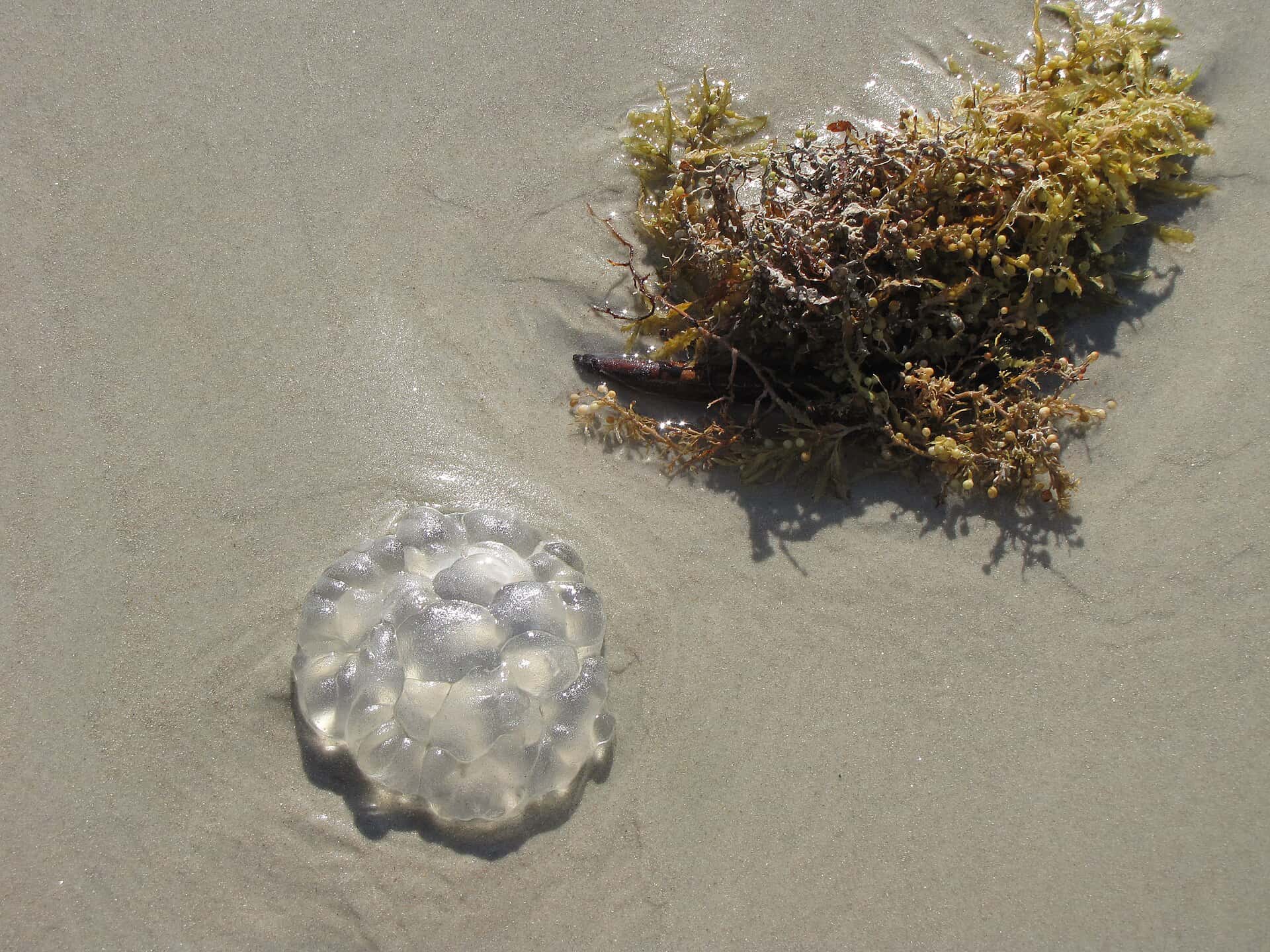
The brown seaweed that fouls Florida's beaches each summer may finally have a use beyond the bulldozer. A team of researchers at Florida State University, working with colleagues at Florida Atlantic University and Florida International University, has demonstrated a process for converting pelagic sargassum into sodium alginate, a widely used food ingredient that thickens salad dressings, stabilizes plant-based meats, and gels everything from gummy candies to pharmaceutical pills.
The research, published this month in a peer-reviewed environmental chemistry journal, comes as 2026 is on track to produce one of the largest sargassum blooms on record. Satellite estimates from researchers at the University of South Florida's Optical Oceanography Lab show seaweed mats stretching across the tropical Atlantic and into the Caribbean Sea, with significant strandings already reported along the southeast coast and in the Florida Keys. Miami-Dade County alone has spent as much as $35 million in a single year on beach cleanup, a cost that strains local budgets and dents the state's beach tourism economy.
The FSU team frames the work as a way to flip a stubborn environmental problem into a revenue stream. Sodium alginate sells on the global ingredients market for several dollars per kilogram, and the supply chain is currently dominated by farmed brown kelp grown in cold-water regions like China, Chile, and Norway. If Florida-grown sargassum can be converted at commercial scale, the state could become a domestic source of an ingredient that currently has to be imported.
How the Process Works
Sodium alginate is naturally present in the cell walls of brown algae, including the sargassum species that drift across the Atlantic. The FSU process uses a sequence of alkaline extraction, ion exchange, and filtration to isolate the alginate from other plant material. The result is a white powder that meets food-grade purity standards and behaves like the alginate currently sourced from kelp.
The principal investigator on the FSU side leads a lab focused on sustainable food chemistry and has previously worked on extracting useful compounds from agricultural waste streams. Collaborators at Florida Atlantic University contributed expertise in marine biology and sargassum identification, while Florida International University researchers focused on toxin and heavy metal screening, an important step because sargassum is known to accumulate arsenic and other contaminants as it drifts across the Atlantic.
That contamination question is one of the central challenges for any food-related use of sargassum. The researchers report that their purification process effectively removes the heavy metals, leaving an alginate product that meets U.S. Food and Drug Administration standards. The team's next phase will involve scaling up the process from laboratory benchtop quantities to pilot plant volumes, a step that typically requires industry partnerships and dedicated facilities.
Why Sargassum Has Become a Crisis
Pelagic sargassum is a free-floating brown algae that has long drifted through the Atlantic in the so-called Sargasso Sea, a region of the central Atlantic bounded by ocean currents. Around 2011, satellite imagery began to detect a new bloom region in the tropical Atlantic, stretching from the coast of West Africa across to the Caribbean. The new bloom, christened the Great Atlantic Sargassum Belt by researchers, has grown nearly every year since.
Scientists attribute the bloom's persistence to a combination of factors: nutrient runoff from rivers like the Congo and the Amazon, dust from the Sahara fertilizing surface waters, warmer sea surface temperatures, and changes in ocean circulation. The seaweed itself plays an important ecological role in the open ocean, providing habitat for juvenile sea turtles, fish, and crustaceans. The problem starts when the mats wash ashore.
On Florida beaches, the stranded seaweed begins to decompose within days, releasing hydrogen sulfide gas that smells like rotten eggs. The gas can irritate eyes and lungs, and in concentrated form can cause respiratory distress. Local hospitals in the Florida Keys and the Caribbean have reported upticks in respiratory complaints during major stranding events. Beachfront hotels see cancellations, and dive operators struggle when the mats reduce water clarity offshore.
The Economic Stakes
Florida's beach tourism economy is enormous. Visit Florida reports that beach destinations account for the majority of the state's roughly $130 billion annual tourism industry, and coastal counties from the Panhandle to the Keys depend on clean, accessible sand. When sargassum mats arrive in May and persist through summer, the economic toll spreads beyond the immediate cleanup bill.
Cleanup costs are borne primarily by local governments and private resorts. Heavy equipment is required to remove the mats, and the seaweed is typically hauled to inland disposal sites or composted. The composting option has gained ground in recent years, but contamination concerns about arsenic and other heavy metals have limited the use of sargassum compost on food crops. A commercial extraction pathway like the one the FSU team is developing could potentially divert significant volumes of seaweed from landfills.
Beyond food applications, sargassum-derived alginate has uses in cosmetics, biofuels, biodegradable plastics, and animal feed. Some startups in the Caribbean have begun small-scale operations turning seaweed into building bricks or paper. The Florida research adds a high-value food ingredient to the list, though the team cautions that the chemistry of sargassum-derived alginate may not be identical to kelp-derived alginate, and ingredient manufacturers will need to validate any new source before incorporating it into existing product lines.
State and Federal Responses
Florida agencies have stepped up their sargassum response in recent years. The Florida Department of Environmental Protection coordinates with coastal counties on cleanup permitting, and the agency has issued guidance documents to help local governments handle the mats consistently. The Florida Fish and Wildlife Conservation Commission monitors the ecological impacts on nearshore habitats, including impacts on coral reefs and seagrass beds smothered by accumulating biomass.
At the federal level, the National Oceanic and Atmospheric Administration funds the satellite monitoring work at the University of South Florida that produces the most widely cited bloom forecasts. NOAA also supports research at its labs in Miami and Galveston, Texas, on the biology of sargassum and on the broader question of how marine biomass interacts with the ocean carbon cycle.
The Inter-American Development Bank and the United Nations have funded sargassum response projects across the Caribbean, where countries like Barbados, the Dominican Republic, and Mexico have experienced the same coastal impacts as Florida. Some Caribbean nations have begun building dedicated processing facilities to convert the seaweed into useful products, in some cases with European or Canadian investment. The Florida research could provide a U.S. counterpart to those international efforts.
What This Means for Florida Industry
The potential commercial pathway is what excites economic development officials. Florida already hosts a sizable food and beverage manufacturing sector, with major employers including Tropicana in Bradenton, Publix's manufacturing arm, and PepsiCo's juice operations. A locally grown alginate supply could plug into existing supply chains and reduce reliance on imported ingredients, a goal that has gained political traction nationally as policymakers focus on food and supply chain security.
For coastal counties hit hardest by the seaweed, the prospect of a buyer for the biomass is welcome news. Local officials in the Florida Keys, Miami-Dade County, and Palm Beach County have all expressed interest in collection partnerships if a processing plant were sited within reasonable trucking distance. The Florida Department of Economic Opportunity has previously supported feasibility studies on seaweed-to-product ventures, though no commercial-scale facility has yet been built.
Workforce considerations would be part of any commercial rollout. The processing chemistry is not exceptionally complex, but it does require trained operators familiar with industrial food-grade extraction. Florida's community college system already trains workers for the state's food manufacturing sector, and a sargassum processing industry could draw on the same pipeline. University researchers say they envision a future where Florida exports a value-added ingredient instead of paying to dispose of the raw material.
Caveats and Open Questions
Scaling research findings into commercial reality is rarely straightforward, and the FSU team is careful to note the unknowns. The composition of sargassum varies seasonally and geographically, which complicates supplying a consistent feedstock to a chemical process. Storage of wet biomass for extended periods is difficult because the material begins to decompose quickly, meaning processing would likely need to occur near the point of collection.
Regulatory approval is another hurdle. The U.S. Food and Drug Administration considers sodium alginate generally recognized as safe when sourced from approved species and processed using established methods. Sargassum-derived alginate would likely face additional scrutiny, particularly regarding heavy metal content and the specific species being processed. The researchers expect the regulatory pathway to take several years even if commercial partners move quickly on the chemistry side.
Environmental groups have raised questions about whether harvesting sargassum at scale could disrupt the pelagic ecosystem that depends on the floating mats. The researchers and their collaborators emphasize that they envision harvesting only the seaweed that has already washed ashore or is about to strand, not open-ocean collection. That distinction may matter for public acceptance and for any future certifications around sustainable sourcing.
What's Next
The FSU team plans to pursue grant funding for a pilot processing facility, likely in partnership with an industry collaborator and a Florida coastal community willing to host the operation. Conversations with food ingredient manufacturers are reportedly underway, though no commercial agreements have been announced. The research consortium has also signaled interest in extending the work to other compounds present in sargassum, including fucoidan, a sulfated polysaccharide with potential pharmaceutical applications.
For now, Florida's beaches will continue to bear the brunt of the 2026 bloom. Cleanup crews are already at work in the Keys and along the southeast coast, and forecasters at the University of South Florida expect the heaviest strandings between June and August. Residents and visitors are encouraged to check the daily sargassum reports before heading to the beach and to give decomposing mats a wide berth.
Beachgoers should also be aware of the small organisms that often hitch a ride on the floating seaweed. Sargassum mats can carry tiny jellyfish-like creatures called sea lice and the larvae of certain stinging organisms, which can cause skin irritation if they come into contact with swimmers. The Florida Department of Health's Beach Water Quality program issues advisories during major stranding events and recommends rinsing off after swimming near visible mats. Sea turtle hatchlings can become trapped in heavy strandings, and the FWC asks beachgoers to report distressed turtles to the agency's hotline.
The hope from researchers, local officials, and the state's beach tourism industry alike is that within a few years, the brown drift lapping at Florida's sand will be seen less as a curse and more as a feedstock waiting to be hauled to a factory gate. The FSU consortium has been invited to present its findings at the International Sargassum Conference, an annual gathering of researchers and policymakers from across the Atlantic basin, with the next meeting scheduled later this year. The Florida delegation is expected to draw significant interest from Caribbean nations watching closely for any pathway to monetize a problem that has cost the region hundreds of millions of dollars in cleanup and tourism losses.
Spotted an issue with this article?
Have something to say about this story?
Write us a letterComments
No comments yet. Be the first to weigh in.
Related Coverage
Lead pellets from shot iguanas linked to first known crocodile poisoning death in Florida
1d ago

DeSantis and Cabinet protect more than 10,770 acres, from Putnam County woods to Martin County ranches
5d ago

Record King Tides and Heavy Rain Swamp South Florida Streets as Water Managers Warn the Season Peaks Oct. 27
6d ago

Florida's loggerhead sea turtles set preliminary nesting record
Oct 1