Inter Miami's Messi Rewrites World Cup History as Argentina Marches Into the Knockout Round
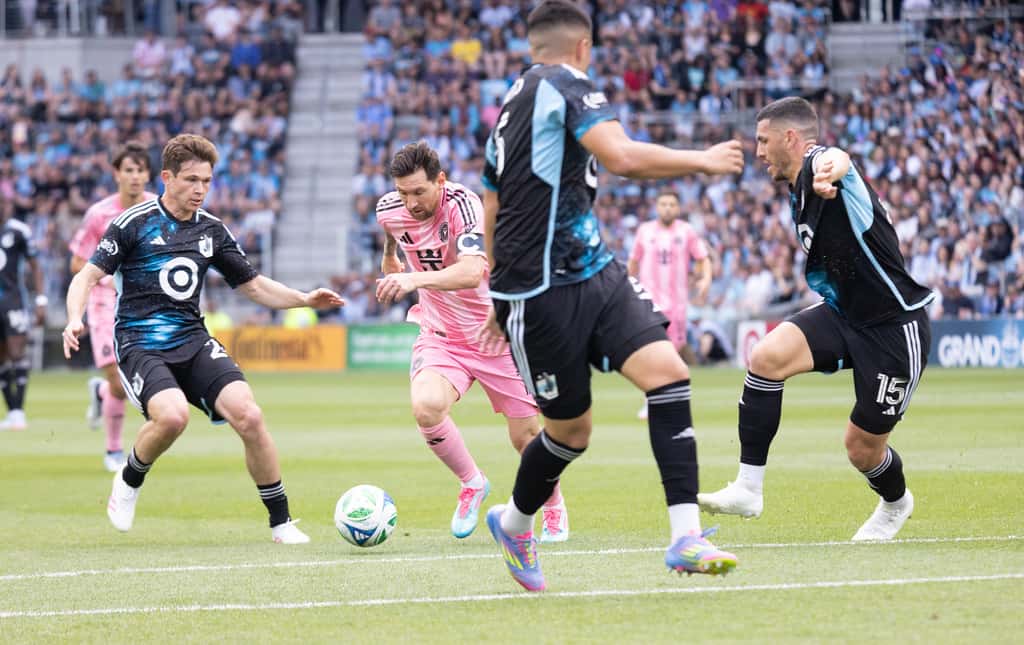
Lionel Messi, the captain of Major League Soccer's Inter Miami, has authored one of the defining individual stories of the 2026 FIFA World Cup, becoming the all-time leading scorer in men's World Cup history while carrying defending champions Argentina into the knockout round. On June 22, 2026, Messi scored both goals in a 2-0 win over Austria at AT&T Stadium in Arlington, Texas, a result that sent Argentina into the last 32 and pushed his career World Cup total to 18 goals. For South Florida, the player at the center of the moment is also the face of its local club.
The milestone carries unusual weight because of whom it surpassed. With his goals against Austria, Messi moved past Miroslav Klose's mark of 16 World Cup goals, claiming the record outright at the age of 38. That a player his age is still setting the tournament's most prestigious scoring record speaks to a longevity that has come to define the latter stage of his career, much of which is now playing out in a Miami jersey between national-team windows.
For Inter Miami's fan base, the achievement lands close to home. Messi joined the club and helped lift it to its first MLS Cup last season, and his World Cup heroics shine a spotlight on the South Florida soccer scene that has grown around his presence. The global stage may be in Texas and the broader United States, but the player commanding it spends his club seasons in Miami, giving the region a direct stake in every record he breaks.
A Record Years in the Making
Reaching 18 World Cup goals is the product of a career that has spanned an extraordinary length of time at the highest level. Messi entered the tournament already having made history by becoming the first male player to appear at six different editions of the World Cup, a feat that placed him in a category of his own before a ball was kicked. The scoring record built on that foundation, turning sustained presence into sustained production.
The 2026 edition added new chapters from the start. In Argentina's opener against Algeria, Messi scored a hat-trick, his first ever at a World Cup, an emphatic statement that he intended to be a decisive figure even at 38. That performance set the tone for a campaign in which the veteran has repeatedly delivered the goals that matter most for the defending champions.
Surpassing Klose's total of 16 gives the record a clear lineage. Klose had stood as the men's World Cup scoring leader, and moving past that mark places Messi atop a list that measures excellence across the tournament's history. For a player whose resume already includes nearly every honor the sport offers, the World Cup scoring record adds a distinction tied specifically to the game's grandest competition.
The accomplishment also reframes how this stage of his career is viewed. Rather than a farewell tour, Messi's World Cup has become a continuation of his peak influence, with the numbers to prove it. The record is not a nostalgic footnote but a current achievement, earned against teams competing for the same trophy Argentina is trying to defend.
The Night in Arlington
The match against Austria on June 22 captured both the drama and the resolve that have marked Messi's tournament. The night did not begin smoothly: after a penalty was awarded following a VAR review, Messi dragged the spot kick wide, a rare early miss that left the score level and the outcome uncertain. For a player so often defined by composure, the moment was a reminder that even the greatest are not immune to the occasional setback.
The response came before halftime. On 38 minutes, Messi opened the scoring, with Facundo Medina providing the setup and Thiago Almada cleverly letting the ball run through to leave his captain with the chance. The goal settled Argentina and gave the defending champions the lead they would not relinquish, transforming the early miss into a footnote rather than a turning point.
Messi then closed the win deep in injury time, scoring his second of the night to make the final 2-0. The late strike sealed the result and, with it, the record, as the two goals combined to lift his career World Cup tally to 18 and past Klose's previous mark. A match that had opened with a miss ended with a record secured and a place in the last 32 confirmed.
The performance encapsulated the qualities that have kept Messi central to Argentina's hopes. Faced with adversity early, he found the decisive moments when they were needed, both creating and finishing the chances that mattered. For a 38-year-old carrying the expectations of a defending champion, it was a display of the enduring quality that has made his career singular.
Argentina's Path Through the Group
The win over Austria did more than add to Messi's personal milestones; it advanced Argentina's defense of its title by sending the team into the knockout round. As defending champions, the side carries the burden of expectation that comes with holding the sport's biggest prize, and reaching the last 32 keeps that defense alive as the tournament moves toward its decisive phases.
Messi's goals have been the engine of that progress. The hat-trick against Algeria opened the campaign with a statement, and the brace against Austria provided the result that secured advancement. For a team built around the contributions of its captain, the pattern has been clear, with the veteran supplying the moments that translate into points and progression.
Advancing also preserves the broader narrative around this Argentina side. A defending champion that exits early leaves its title defense unfulfilled, but a team marching into the knockout round keeps the storyline intact and the pressure mounting in a productive way. Each round survived raises the stakes and the attention, and Argentina has positioned itself to keep playing into the tournament's later stages.
The knockout format brings a different kind of challenge, where a single result can end a campaign. For a team leaning on a 38-year-old talisman, the test ahead is to sustain the level that carried it through the group. The early evidence, anchored by Messi's record-setting form, suggests Argentina intends to make its title defense a lasting one.
The Inter Miami Connection
What gives Messi's World Cup story its particular charge in South Florida is his day job. He is the captain of Inter Miami, the MLS club whose fortunes he transformed after arriving, and his exploits on the world stage reflect directly on the region that hosts his club football. When Messi breaks records for Argentina, the South Florida fan base shares in the glow of a player it watches throughout the domestic season.
He is not the only Inter Miami figure involved. Teammate Rodrigo De Paul also made Argentina's 26-player roster for the tournament, meaning the club is represented twice in the defending champions' squad. The presence of two Inter Miami players on a team chasing the World Cup deepens the local connection and gives South Florida supporters more than one reason to follow Argentina's run closely.
The link underscores how thoroughly Inter Miami has woven itself into the global game's storylines. A club playing in MLS now counts among its ranks the all-time leading scorer in men's World Cup history and a teammate alongside him on the international stage. That standing elevates the profile of South Florida soccer and ties the region to one of the tournament's marquee narratives.
For fans in the area, the effect is a sense of shared ownership in Messi's achievements. The records may be set at a World Cup hosted across multiple venues, but the player setting them belongs, in club terms, to Miami. That connection turns a distant milestone into something local supporters can claim as part of their own team's story.
A New Chapter for South Florida Soccer
Messi's arrival has coincided with a period of growth and ambition for Inter Miami. The club won its first MLS Cup last season, a breakthrough that marked its emergence as a force in the domestic league and rewarded the fan base that rallied around the captain. That title gave the region a champion to celebrate and added substance to the excitement his signing generated.
The club's trajectory points upward off the field as well. Inter Miami was set to play its first season at Miami Freedom Park, a new stadium that represents a significant investment in the team's future and in the region's soccer infrastructure. A purpose-built home signals long-term commitment and gives the club a stage befitting the global attention its captain attracts.
Together, the MLS Cup and the new stadium frame a moment of momentum for South Florida soccer. A club that has won its first league title and is moving into a new home stands at the center of a growing sport in the region, with Messi as the figure linking its local success to the world game. His World Cup record adds another layer of prestige to that ascent.
The broader effect is to position South Florida as a notable hub in the sport's expanding American footprint. With a championship club, a new stadium, and a captain rewriting World Cup history, the region offers a compelling case for the depth of soccer interest taking root there. The tournament has amplified that story, drawing eyes to a market where the global game continues to gain ground.
What's Next
For Argentina, the immediate focus is the knockout round, where the defending champions will look to extend a title defense that Messi's goals have powered through the group stage. The last 32 marks the start of the single-elimination phase, and the team's ability to sustain its form will determine how far the run continues. With its captain in record-setting touch, Argentina enters that stretch as a side to watch.
For Messi personally, the questions turn to how much further the records can extend. Having claimed the men's World Cup scoring record at 38, every additional goal pushes the mark higher and adds to a legacy already without parallel in the tournament's history. Each match offers the chance to build on a total that now stands at 18 and counting.
For South Florida and Inter Miami, the World Cup run keeps the spotlight on a region whose club soccer has risen sharply in profile. With Messi and De Paul carrying the club's banner on the international stage, a first MLS Cup secured, and a new stadium ahead, the area has tied itself to one of the sport's great ongoing stories. However Argentina's defense ends, the connection between a global record and a Miami fan base has already been made, and the region will follow every step of what comes next.
Spotted an issue with this article?
Have something to say about this story?
Write a letter to the editor