Miami-Dade Commissioners Restore Land Conservation Funding After a Petition Drive
Miami-Dade County commissioners have restored funding for the county's Environmentally Endangered Lands program to $20 million after a proposal that would have cut it to $6.5 million, a reversal that followed a late petition drive by environmental groups. Under the proposed reduction, the program would have been left with roughly $3 million for acquisition and stewardship after covering about $3.5 million in land maintenance costs. The decision keeps one of Florida's longest-running local conservation programs operating at a functional scale.
What the program does
The Environmentally Endangered Lands program, known as EEL, acquires and manages environmentally significant land in Miami-Dade County. Voters approved it decades ago, and it has since protected thousands of acres across a county where development pressure on remaining natural land is among the most intense in the state.
The program's work divides into two functions that compete for the same budget. Acquisition purchases land or development rights before parcels are built on. Stewardship maintains land already in the program, which in South Florida means controlling invasive species, managing prescribed fire and maintaining hydrology.
Stewardship is the less visible function and the one that suffers first under budget pressure. Preserved land that is not actively managed degrades, particularly in South Florida where invasive plants can convert a functioning ecosystem into a monoculture within a few seasons without intervention.
The county's remaining natural areas include pine rockland, a globally imperiled habitat that survives almost exclusively in Miami-Dade and the Keys and that supports species found nowhere else. Much of it has already been lost to development, which makes the remaining fragments disproportionately valuable.
The budget fight
The proposal on the table would have cut the program to $6.5 million. After accounting for roughly $3.5 million in land maintenance costs the program is obligated to cover, that would have left approximately $3 million for everything else.
At that level the program would have been able to do little beyond maintaining what it already holds, effectively ending acquisition. In a county where the window to purchase remaining natural parcels closes as development proceeds, a pause in acquisition is not a deferral but frequently a permanent loss.
Environmental organizations mounted a petition drive in the final stretch before the commission vote, and commissioners agreed to restore funding to $20 million. Lauren Jonaitis, executive director of the Tropical Audubon Society, characterized the outcome as keeping the program running for now.
That qualification reflects the reality that annual budget cycles produce annual decisions. A restoration in one year does not establish a baseline for the next, and programs funded at commission discretion face the same argument each cycle.
The county's fiscal pressures
The proposed cut did not arise in isolation. Miami-Dade County, like local governments across Florida, faces cost pressures that have accumulated over several years, including rising insurance costs for county property, construction cost inflation affecting capital projects, and personnel costs.
Property tax revenue, the primary funding source for Florida counties, faces its own uncertainty. Condominium values are declining across roughly 92 percent of Florida markets, and Miami-Dade's condominium median sits at $415,000 against nearly 13 months of supply, a buyer's market by any standard.
Declining assessed values in a county where condominiums make up a substantial share of the tax base translate into revenue pressure with a lag, because Florida property assessments and the tax rolls built on them adjust over time rather than immediately.
Statewide, voters will decide on a property tax measure that would affect local government revenue, and Palm Beach County has published a tool allowing residents to estimate its potential effects. Counties across Florida have been modeling the implications for their own budgets.
Why conservation land matters in Miami-Dade
The case for conservation spending in Miami-Dade extends beyond habitat protection into functions with direct economic value. Natural land absorbs stormwater, which reduces flooding in a county where drainage capacity is a chronic constraint and where sea level rise is raising groundwater tables.
Preserved land also plays a role in aquifer protection. The Biscayne Aquifer supplies drinking water to millions of South Florida residents and is shallow and permeable, which makes surface land use directly relevant to water quality.
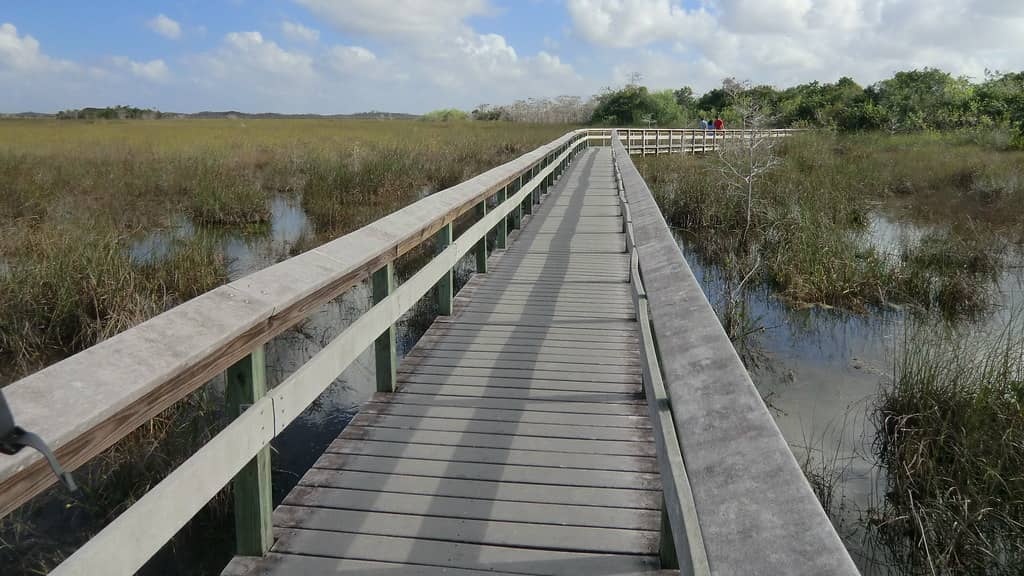
Miami-Dade sits between Everglades National Park to the west and Biscayne Bay to the east, and the county's remaining natural areas form connective tissue between those systems. Fragmentation of that connectivity has consequences for both.
The county has also invested substantially in Biscayne Bay water quality after algae blooms and fish kills drew sustained public attention, and land conservation upstream is part of the same system as bay restoration downstream.
What it means for Miami-Dade residents
For residents, the most immediate practical effect is that county preserves remain open and maintained. EEL sites across the county provide public access to natural areas in an urban county where such access is limited.
For homeowners in flood-prone areas, the stormwater function of preserved land is a direct interest even where the connection is not obvious. Land that absorbs rainfall reduces the volume entering the drainage system during heavy rain events.
For the county's tourism economy, natural areas are part of the product. Visitors to South Florida come for beaches and urban attractions but also for the Everglades and the broader natural environment, and that segment supports jobs across the county.
Residents who want to influence future budget decisions have the same avenue that produced this outcome: the commission's annual budget process includes public hearings, and the petition drive that preceded this vote demonstrated that organized public input can change a proposed allocation.
The broader Florida picture
Local conservation programs across Florida face similar pressure. Counties including Alachua, Volusia, Sarasota and Lee operate land acquisition programs funded through local revenue, and each competes annually against other county priorities.
At the state level, Florida Forever is the principal land conservation program, and its funding has varied substantially across legislative sessions. State and local programs frequently partner on acquisitions, with each contributing a share of a purchase price.
Land prices in Florida have risen substantially, which means a conservation budget of a given size buys less than it did a decade ago. That dynamic compounds the effect of flat or reduced funding, because purchasing power declines even when nominal allocations hold.
Development pressure has not eased. Florida continues to add residents through domestic and international migration, and the housing that population requires competes directly with conservation for the same remaining parcels.
What conservation groups are watching
The qualification in Jonaitis's assessment, that the decision keeps the program running for now, points to the structural problem. Annual discretionary funding leaves the program exposed each budget cycle, and long-term acquisition planning is difficult under that uncertainty.
Conservation organizations have generally favored dedicated funding sources that are not subject to annual reallocation, whether through voter-approved dedicated millage or through bonding against a defined revenue stream.
Land acquisition also operates on timelines that do not match annual budgets. Negotiating a purchase, completing due diligence and closing can take longer than a fiscal year, which makes a program with unpredictable funding a difficult counterparty for landowners.
The organizations that mobilized for this year's petition drive will face the same cycle next year, and the outcome demonstrated both the effectiveness of that mobilization and its recurring cost.
How the program acquires land
Acquisition is slower and more complex than a budget line suggests. The program identifies parcels with conservation value, assesses them against established criteria, appraises them, negotiates with willing sellers and completes due diligence before closing.
Not every parcel the program wants is available. Conservation programs generally cannot use eminent domain for acquisition, which means every purchase depends on a landowner choosing to sell, often at a price competing with development offers.
Conservation easements offer an alternative to outright purchase, allowing a landowner to retain title while permanently restricting development. Easements cost less than fee simple acquisition and are used where full purchase is not feasible.
Partnerships stretch limited dollars. County programs frequently combine funding with state programs, federal sources and private land trusts to complete purchases that no single source could fund alone, which is why a county allocation of $20 million can support acquisitions worth considerably more.
What the county already protects
The EEL program has assembled a portfolio of preserves across Miami-Dade over its history, including pine rockland fragments, tropical hardwood hammocks, wetlands and coastal habitat. Several sites are open to the public with trails and interpretive access.
Pine rockland is the habitat that makes the county's holdings globally significant. The ecosystem exists almost exclusively in South Florida and the Bahamas, depends on periodic fire to persist, and supports plant and animal species found nowhere else on Earth.
Managing fire-dependent habitat in a densely developed county is among the program's hardest technical problems. Prescribed burns require weather windows, smoke management planning and coordination with surrounding neighborhoods, and land that cannot be burned degrades over time.
That management requirement is why the stewardship portion of the budget matters as much as acquisition. Land protected on paper but left unmanaged loses the qualities that justified protecting it.
What's next
The restored $20 million allocation gives the program capacity for both stewardship and acquisition in the coming fiscal year. How the county allocates between those two functions will determine whether new land enters the program or whether the funding primarily maintains existing holdings.
The county's next budget cycle will present the question again, and the fiscal pressures that produced this year's proposed cut are unlikely to resolve in the interim.
The statewide property tax measure on the November ballot would, if approved, affect local government revenue across Florida, and counties are modeling the implications for discretionary programs including conservation.
For Miami-Dade's remaining natural areas, the practical significance of the vote is time. Parcels that can be acquired this year may not be available in a future cycle, which is what gives an annual funding decision consequences that extend well beyond a single budget.
Spotted an issue with this article?
Have something to say about this story?
Write a letter to the editor