NASA Kennedy Space Center Navigates Leadership Transition as Artemis Moon Program Advances Toward Crewed Mission
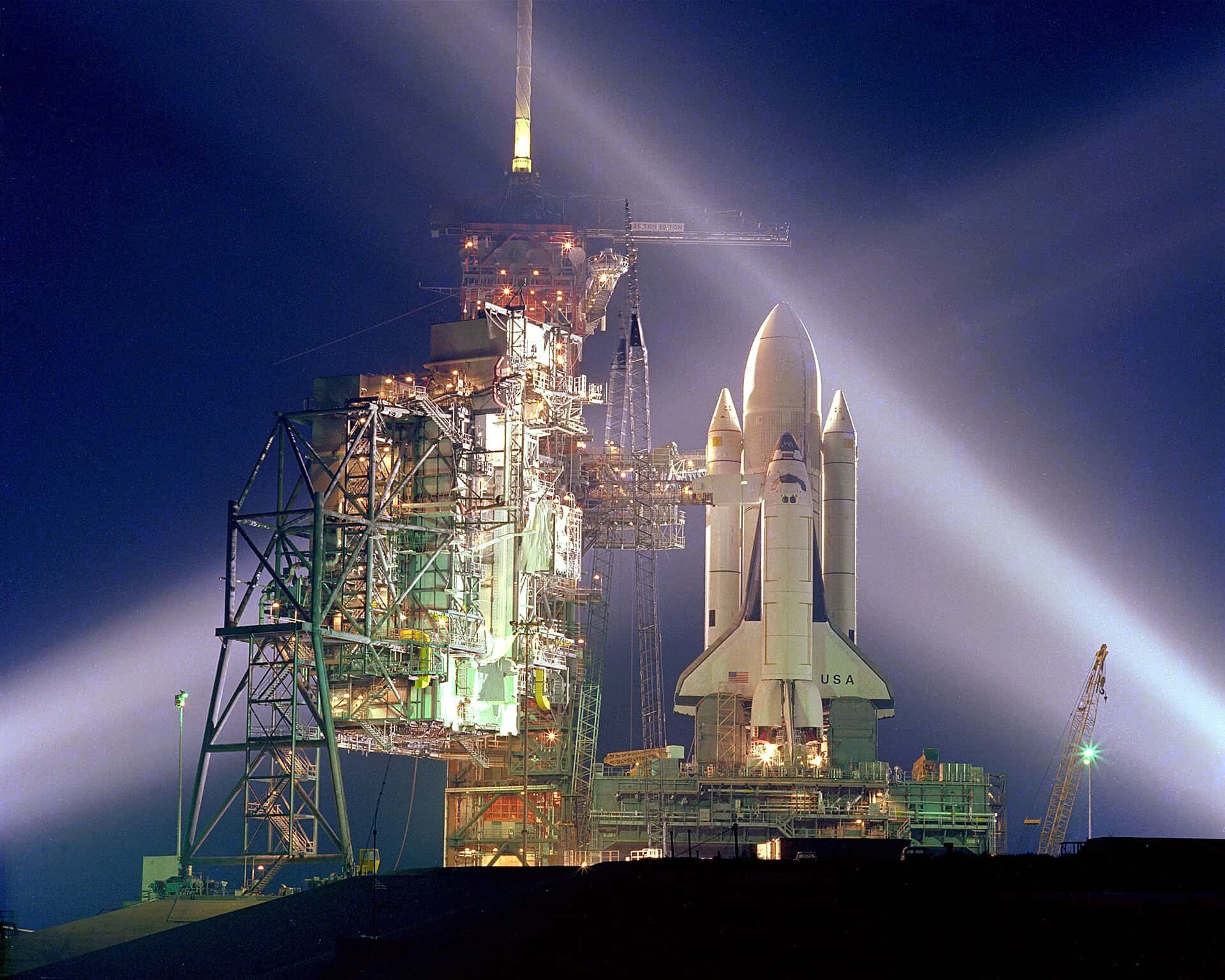
NASA's Kennedy Space Center on Florida's Space Coast is navigating a leadership transition this month, with the retirement of longtime center director Janet Petro and the appointment of Brian Hughes as the new senior director of launch operations. The personnel changes come as the center is managing one of the most complex and consequential mission portfolios in its history, including preparations for the Artemis II crewed lunar flyby, ongoing commercial cargo missions to the International Space Station, and a packed manifest of commercial launch activity from Cape Canaveral Space Force Station next door.
Leadership Transition
Janet Petro's retirement as Kennedy Space Center director ends a tenure that saw the center through some of the most significant transitions in NASA's modern history, including the end of the Space Shuttle program, the transition to commercial crew services through SpaceX's Crew Dragon and Boeing's Starliner, and the development and early test flights of the Space Launch System rocket that will carry Artemis astronauts to and around the Moon.
Petro oversaw Kennedy's evolution from a government-operated launch facility almost entirely dedicated to NASA missions into a multi-user spaceport where government and commercial launches proceed in parallel. That transformation has been one of the most significant changes in the center's operational character since its founding, and it positioned Kennedy as the highest-tempo major launch facility in the world as SpaceX, United Launch Alliance, and other launch providers added missions to the manifest alongside NASA's own operations.
Brian Hughes, designated as the new senior director of launch operations, brings experience in operational management that NASA leadership said is well suited to the demands of overseeing launch infrastructure that supports both government and commercial customers. Hughes' primary responsibility will be overseeing the integrated launch operations that keep the Eastern Range functioning safely and efficiently across a diverse portfolio of missions and launch providers.
Artemis II Mission Preparations
The most significant near-term milestone at Kennedy Space Center is the preparation for Artemis II, the first crewed Artemis mission, which will carry four astronauts on a free-return trajectory around the Moon without attempting a landing. The mission, the next step in NASA's path back to the lunar surface after Artemis I flew an uncrewed test of the Space Launch System and Orion capsule in late 2022, will provide the agency and its international partners with critical data on the performance of the SLS and Orion systems under crewed conditions.
The Artemis II crew includes Commander Reid Wiseman, Pilot Victor Glover, Mission Specialist 1 Christina Koch, and Mission Specialist 2 Jeremy Hansen of the Canadian Space Agency, who will be the first Canadian to fly to the Moon. The crew has been engaged in extensive training at Kennedy and at other NASA facilities, and the center's preparation activities include ensuring that the launch complex, ground support systems, and recovery operations are ready for a crewed mission with the most demanding safety requirements in the agency's portfolio.
Kennedy Space Center's visitor complex has incorporated Artemis programming into its exhibits and experiences, with displays and presentations designed to help visitors understand the Artemis missions' role in NASA's broader strategy of returning humans to the Moon as a stepping stone toward eventual human exploration of Mars. The visitor complex draws millions of visitors annually to Brevard County and is a significant contributor to the Space Coast's tourism and hospitality economy.
America 250 and Kennedy's Summer Programming
Kennedy Space Center Visitor Complex is participating in the United States' 250th anniversary celebration this summer, with programming that places space exploration in the context of American history and the arc of national achievement. The celebration, which marks 250 years since the Declaration of Independence was signed in July 1776, has prompted cultural institutions and major national landmarks around the country to develop commemorative programming.
For Kennedy, the 250th anniversary celebration is an opportunity to tell the story of how space exploration, which began just 13 years after the anniversary of the Declaration of Independence, became one of the defining national endeavors of the 20th and early 21st centuries. The connection between national identity, democratic values, and the aspiration to explore beyond Earth is a narrative thread that resonates with the summer's themes.
Brevard County and the broader Space Coast region have integrated the Kennedy anniversary programming into their own summer tourism and economic development activities. The area's hotels, restaurants, and attractions benefit from visitor traffic generated by the Kennedy visitor complex, and the summer programming is expected to contribute to a strong tourism season in the region.
CRS-34 and ISS Resupply Operations
Alongside the high-profile Artemis preparations, Kennedy Space Center has been coordinating with SpaceX on commercial resupply services missions to the International Space Station. The CRS-34 mission, which involves a SpaceX Dragon cargo spacecraft delivering supplies and scientific experiments to the station crew, was scheduled for launch from Kennedy in mid-May 2026.
The commercial resupply program, under which SpaceX and Northrop Grumman receive NASA contracts to deliver cargo to the ISS, has been one of the most operationally successful elements of NASA's commercial space strategy. Regular cargo deliveries maintain the science capabilities and crew welfare systems on the station, and the missions also provide opportunities to return research results and hardware to Earth for analysis.
The ISS remains a central element of NASA's low Earth orbit research strategy even as the agency's long-range focus shifts toward the Moon and Mars. Transitioning from ISS to future commercial space stations is a long-term planning challenge that Kennedy is engaged in along with the broader NASA enterprise, as the current ISS is projected to operate until approximately 2030 before a planned deorbit.
The Space Coast Economic Ecosystem
Kennedy Space Center's operations are embedded in an economic ecosystem that extends throughout Brevard County and influences the broader Central Florida regional economy. Aerospace and defense companies with facilities on or near Kennedy include Lockheed Martin, Boeing, Jacobs Engineering, Sierra Nevada Corporation, and dozens of smaller contractors and suppliers that provide specialized components, systems, and services to the center's mission portfolio.
Florida has invested substantially in growing the state's aerospace sector beyond its traditional concentration on the Space Coast. Space Florida, the state's aerospace economic development authority, has worked to attract aerospace manufacturing, satellite development, and commercial space companies to multiple Florida locations. The combination of Kennedy Space Center's federal presence and the growing commercial launch market has made Florida one of the most attractive states in the country for aerospace investment and workforce development.
What Is Next
With the leadership transition underway and Artemis II preparations advancing, Kennedy Space Center is looking ahead to a period of significant mission activity in the coming year. The Artemis II launch date has not been finalized as of this writing, with NASA indicating it will announce a target date as the readiness reviews for the mission progress through their required stages.
The continued high pace of commercial launches from Cape Canaveral Space Force Station, which is adjacent to Kennedy and shares range infrastructure, means the Space Coast will remain one of the most active aerospace regions in the world regardless of the specific timing of NASA's government-funded missions. For Brevard County and Florida's Space Coast communities, that sustained activity level represents both an economic opportunity and a source of genuine national pride in a uniquely Florida industry that the state has cultivated over more than 65 years of space exploration history.
Spotted an issue with this article?
Have something to say about this story?
Write us a letterComments
No comments yet. Be the first to weigh in.
Related Coverage

Florida Voters Face Few New Rules on Nov. 3 as Other GOP States Roll Out Citizenship and ID Laws
11h ago

Florida Leads the Nation in ICE Detainer Arrests as Local Police Take a Growing Role, New Data Show
11h ago
Federal Government Again Asks Miami Judge to Toss Lawsuit by Nearly 1,000 Cubans With I-220A Papers
12h ago
Alvaro Pulido, Alex Saab's Longtime Partner, Heads to Miami Federal Court After Arrest in Venezuela Bribery Case
12h ago