FDLE Names Suspect in 1973 Key West Killings of Two Sisters
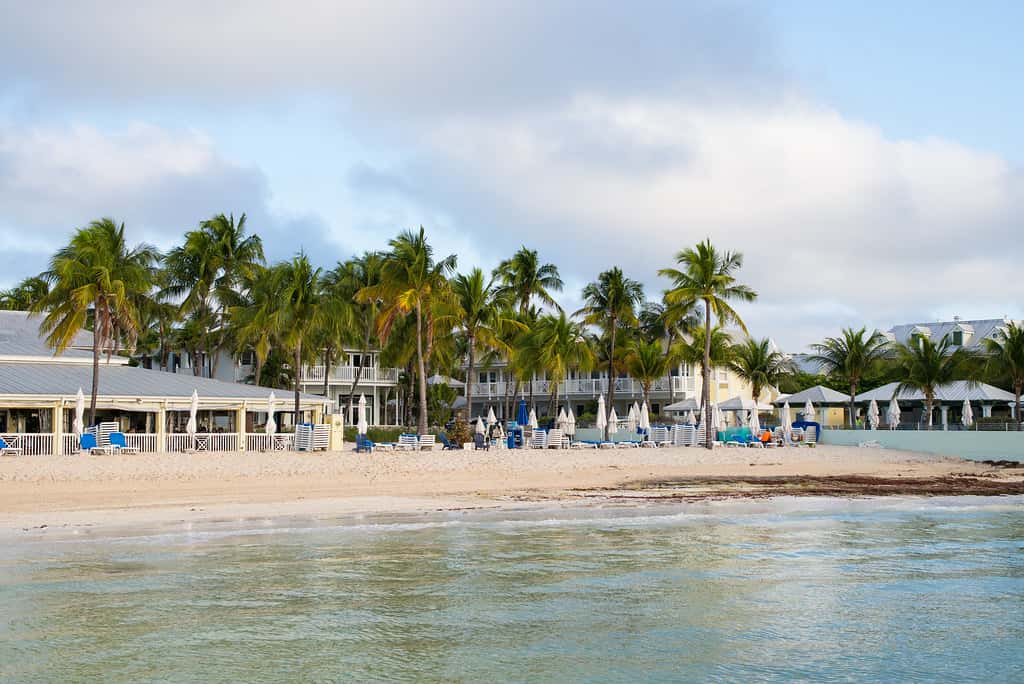
The Florida Department of Law Enforcement and the Monroe County Sheriff's Office have identified a suspect in the killings of two sisters in Key West more than half a century ago. According to an FDLE announcement dated September 2, investigators named David Allen Snyder as the suspect in the May 1973 homicides of Marguerite Jenkins, known as Maggie, who was 18, and Mary Jenkins, who was 16.
Snyder died in October 2008. Because he is deceased, no prosecution is possible, and the identification closes the investigative question without producing a courtroom proceeding in which the evidence would be tested.
The case had remained unsolved for more than 53 years, a span that placed it among the oldest active homicide investigations in Monroe County. For the families of victims in cases of that age, an identification is often the only resolution available.
How cold cases get solved
Homicide investigations that go unsolved for decades are typically reopened when one of a small number of things changes: a technology becomes available that did not exist before, a witness becomes willing to speak, or a systematic review by a dedicated cold case unit surfaces something the original investigation missed.
Forensic technology has been the dominant factor in recent years. Evidence collected and preserved decades ago can now be analyzed with methods that did not exist when it was gathered. DNA profiling itself was not available in 1973, and the techniques used today are far more sensitive than those available even in the 1990s.
Investigative genetic genealogy has been the most significant development. The method compares a DNA profile from crime scene evidence against genealogical databases to identify relatives of the unknown contributor, then builds family trees to narrow the possibilities to individuals who can be investigated conventionally.
The approach has resolved cases across the country that had been dormant for decades, including cases where the person identified had died years earlier. It depends entirely on evidence having been properly collected and preserved, sometimes for half a century.
Evidence preservation
The unglamorous work that makes cold case resolution possible is evidence storage. Agencies that maintained physical evidence from the 1970s in usable condition made choices decades ago whose value could not have been anticipated.
Preservation is not automatic. Evidence deteriorates, storage facilities flood or are damaged, and agencies operating under space and budget constraints have periodically purged old materials. Cases where evidence was destroyed cannot be solved by any technology.
Florida agencies have generally moved toward more rigorous retention policies for homicide evidence, recognizing that the technological trajectory means today's unusable sample may be tomorrow's identification.
The Monroe County context
Key West in 1973 was a different community than it is today, smaller and considerably more isolated, with a transient population connected to fishing, the military presence, and tourism.
Investigating a homicide in a community with substantial transient population is difficult in ways that persist. People move on, records are incomplete, and witnesses who might have been located within weeks become unfindable within years.
The Monroe County Sheriff's Office covers the entire Florida Keys, a geography that stretches more than a hundred miles across a chain of islands connected by a single highway. That geography shapes everything about how the agency operates.
What identification means without prosecution
When a suspect in a cold case has died, the legal system offers no mechanism for testing the conclusion. There is no trial, no defense, and no verdict. The agency's determination stands as an investigative conclusion rather than a judicial finding.
That distinction matters and law enforcement agencies generally acknowledge it. Announcing a deceased person as a suspect carries a responsibility to be confident in the evidentiary basis, because the person named cannot respond and their surviving family bears the consequences of the identification.
Agencies typically require that the evidence would have supported charges had the person been alive before making such an announcement. FDLE and the Monroe County Sheriff's Office have not detailed publicly the full evidentiary basis for the identification.
For victims' families, the value of an identification even without prosecution is real. Decades of not knowing carries its own weight, and an answer, even one that cannot be pursued in court, ends a particular kind of uncertainty.
Cold case work in Florida
FDLE operates as a resource for local agencies that lack the laboratory capacity or specialized personnel to pursue cold cases independently. Its laboratories handle forensic analysis for agencies across the state, and its investigative units assist on cases at local request.
That structure matters in a state with many small law enforcement agencies. A sheriff's office in a rural county cannot maintain a DNA laboratory or a genetic genealogy capability, and without state support, its cold cases would remain closed by default.
Funding for cold case work has expanded in recent years, both through state appropriations and through federal grant programs designed specifically to support the analysis of previously untested evidence.
The families
Maggie and Mary Jenkins were 18 and 16 when they were killed. Anyone who was a contemporary would now be in their seventies, and the parents who lost them are unlikely to have lived to see the identification.
That is the recurring difficulty with very old cases. Resolution frequently arrives after the people who most needed it are gone, and it lands instead on siblings, cousins, and a generation that knew the victims as family history rather than as people they lived alongside.
Agencies working these cases generally describe notification of surviving family as the most important part of the process, and they typically contact families before making any public announcement.
How genetic genealogy actually works
The technique that has driven the recent wave of cold case identifications is often described loosely, and the mechanics are worth stating accurately because they determine both its power and its limits.
Investigators begin with a DNA profile developed from crime scene evidence. Rather than searching law enforcement databases, which contain profiles only from people who have been arrested or convicted, they upload a profile to genealogical databases where users have consented to law enforcement matching.
Those databases return partial matches, people who share segments of DNA with the unknown contributor. A genealogist then builds family trees from those matches, working backward to common ancestors and forward to living descendants, narrowing the field to a set of people who could be the source.
Conventional investigation takes over at that point. Investigators identify which candidates were in the relevant place at the relevant time, and confirmation requires a direct DNA comparison, obtained from the person, from a relative, or in the case of a deceased individual, from remains or preserved samples.
The technique's limits follow from its structure. It requires usable DNA from the scene, it requires that relatives of the contributor have used consumer genealogy services, and it requires genealogical records sufficient to build trees. Cases missing any of those elements remain unresolved.
The privacy debate around the method
The rapid adoption of investigative genetic genealogy has raised questions that the legal system has only partly worked through.
The core concern is that a person who uploads their DNA to a genealogy service makes a decision that has consequences for relatives who made no such decision. A distant cousin's participation can lead investigators to a family, and from there to an individual who never interacted with the service.
Database operators have responded differently. Some require affirmative opt-in for law enforcement matching, others permit it by default, and some prohibit it entirely. Those policy choices determine what pool investigators can actually search.
Several states have enacted statutes governing the technique, typically limiting it to violent crimes and requiring supervisory approval. Florida has not comprehensively legislated in this area, which means practice is governed by agency policy and by the terms of service of the databases involved.
The debate has not much slowed adoption, largely because the results in cases like this one are difficult to argue against. The tension between that outcome and the privacy questions is genuine and unresolved.
Florida's unsolved case backlog
The Jenkins case is one of many, and the scale of Florida's unresolved homicide inventory is larger than most residents assume.
National clearance rates for homicide have declined substantially since the 1970s, from roughly 90% in that era to well under 60% in recent years. Florida's figures broadly track the national pattern, which means a substantial number of killings each year do not result in an arrest.
Cases accumulate. A department that fails to clear a portion of its homicides each year carries those files forward indefinitely, and over decades the inventory grows into hundreds of cases in large jurisdictions.
Dedicated cold case units address a fraction of that backlog. They are expensive, requiring experienced investigators working cases that may never resolve, and they compete for resources against current-year investigations that carry immediate public pressure.
Funding has improved. Federal grant programs specifically support DNA testing of evidence from unsolved cases, and Florida agencies have used those funds to submit decades-old material for analysis. Each submission is a possibility rather than a promise, and most produce nothing.
What identification changes for a community
Key West in 1973 was a place where a double homicide of two teenage sisters would have been felt by everyone, and communities carry unsolved cases in ways that persist across generations.
Local memory of an unresolved killing produces theories, suspicions directed at people who were never charged, and a diffuse unease that does not fade with time. Identification, even of a person who has died, replaces that with an answer.
For the Keys specifically, a case that had run more than half a century represented the outer boundary of what investigators expected to resolve. Its identification is a demonstration that evidence preserved for decades retains value, which is an argument for the practices that made it possible.
What's next
With the suspect deceased, the investigation reaches its practical conclusion. The case file will be updated to reflect the identification, and no further legal proceedings will follow.
Monroe County and FDLE continue working other unsolved cases, and the same techniques that produced this identification are being applied elsewhere. Agencies across Florida have submitted decades-old evidence for modern analysis, and additional identifications are likely.
Anyone with information about unsolved homicides in Florida can contact the investigating agency directly or FDLE, which maintains channels for tips on cold cases. In cases this old, a single recollection from someone who has never been asked can still matter.
Spotted an issue with this article?
Have something to say about this story?
Write us a letterComments
No comments yet. Be the first to weigh in.
Related Coverage

Self-Proclaimed Witch Shannon Ryan Sentenced to Life Without Parole for 2020 Murder of Young Mother Leila Cavett
2h ago

Retired Putnam County Teacher and Former School District Official Convicted of Sexual Battery on Child Under 12, Sentenced to Life
2h ago

Judge convicts Michigan inmate in 1985 Christmas Eve kidnapping and murder of Jacksonville teen Leslie McCray
1d ago
Houston Man Found Guilty in Mall at Millenia Tiffany Heist After Swallowing $770,000 in Earrings
1d ago