South Florida Communities Weigh Moratoriums as AI Data Centers Come Knocking
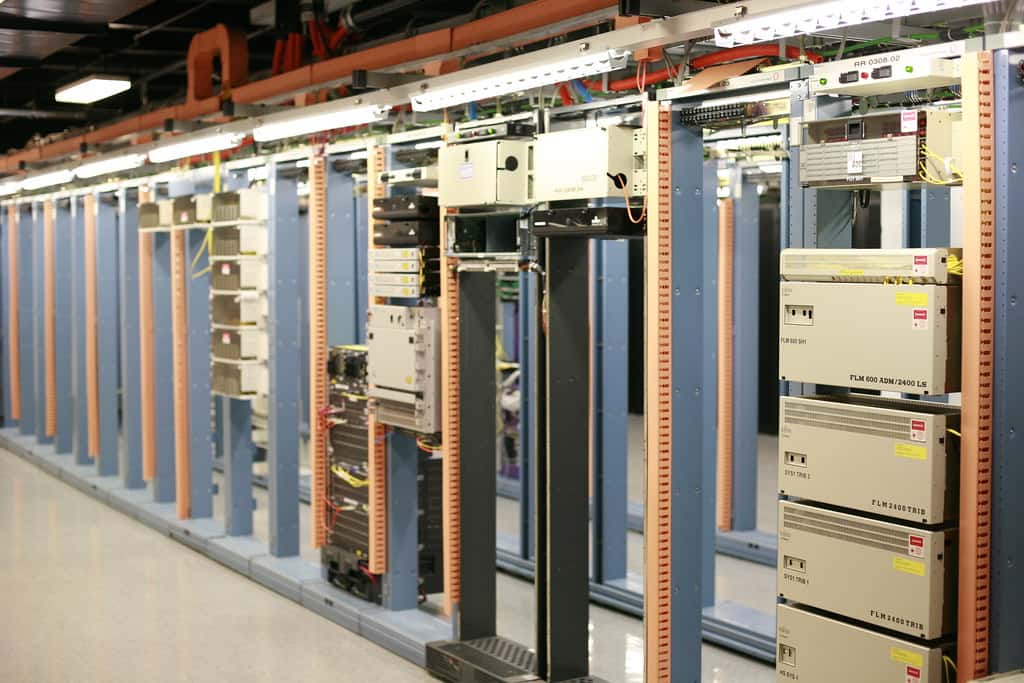
Local governments across South Florida are weighing temporary moratoriums on large artificial intelligence data centers, driven by resident concerns over noise, water consumption, and electric grid capacity. The debate has intensified ahead of the August 18 primary elections, with proposals including a controversial Palm Beach County project drawing both economic development interest and organized opposition.
What is being proposed in Florida
Florida currently has no hyperscale AI data centers in operation, which puts the state at an unusual decision point. Other regions, notably Northern Virginia, central Ohio, and parts of Arizona and Georgia, absorbed the first wave of large computing facilities and are now living with the consequences. Florida communities are making siting decisions with the benefit of watching how those buildouts went.
Developers have been active in the state. Site acquisition and utility interconnection inquiries have picked up across several Florida markets, and at least one high-profile proposal in Palm Beach County has moved far enough into the public process to generate organized community response.
Florida's appeal to data center developers is straightforward. The state has available land at prices below those in the established data center corridors, an accommodating tax structure, and substantial fiber infrastructure running through Miami as a landing point for international submarine cables. What it does not have is abundant fresh water or spare generating capacity.
The noise problem
Noise is the complaint that has proven most consistent across communities where large data centers already operate. The source is cooling equipment. Facilities of this scale generate enormous heat and run chillers and fans continuously, producing a low-frequency hum that carries and that does not stop at night.
Low-frequency noise is difficult to mitigate with the standard tools. Sound walls and setbacks address higher frequencies effectively but do less for the bass range, and low-frequency sound penetrates building envelopes more readily than higher-pitched noise does. Residents in other states have described the effect as constant and inescapable rather than intermittently loud.
Local noise ordinances in Florida generally set decibel limits at property lines measured on the A-weighted scale, which deliberately de-emphasizes low frequencies to approximate human hearing sensitivity. A facility can comply with an A-weighted ordinance while producing exactly the low-frequency profile residents find intolerable, a mismatch that has driven ordinance revisions elsewhere.
Water and the aquifer question
Water use is the concern with the sharpest Florida-specific edge. Many large data centers use evaporative cooling, which consumes water rather than circulating it, and consumption at hyperscale facilities can run to millions of gallons per day depending on design and climate.
Florida's water supply comes largely from the Floridan and Biscayne aquifers, and South Florida in particular faces saltwater intrusion pressure at the coast as freshwater levels drop. Water management districts already administer consumptive use permitting under conditions that have grown more restrictive over time, and a new industrial user seeking a large allocation enters a system where existing users are competing for a constrained resource.
Closed-loop and air-cooled designs consume far less water but cost more to build and use more electricity. That tradeoff, water versus power, is the central engineering decision in data center siting, and Florida's constraints on both sides make it a harder optimization here than in regions with slack in one dimension.
Grid capacity and what ratepayers absorb
The electricity question is where the public finance concern lives. A hyperscale facility can draw hundreds of megawatts, comparable to a small city, and connecting that load requires transmission and generation investment. Who pays for that investment, and over what period, is determined through utility rate proceedings before the Florida Public Service Commission.
Florida Power and Light operates under a multi-year rate settlement approved by the commission, which set base rate increases and established mechanisms for recovering costs of new solar generation and battery storage projects coming online in later years. Large new industrial loads interact with that framework in ways that are not always transparent to residential customers.
The concern raised in other states is that residential ratepayers end up subsidizing infrastructure built primarily to serve a single large customer. Utilities and data center operators generally negotiate special contracts intended to prevent that, but the terms of those contracts are frequently confidential, which makes independent verification difficult.
The state framework
Florida enacted legislation earlier this year addressing AI data center development, one of the first state-level frameworks of its kind. The law engages siting and infrastructure questions rather than attempting to regulate the technology itself, and state lawmakers have continued discussing whether additional oversight is warranted.
State-level rules interact with local land use authority in ways that will get tested. Florida counties and municipalities hold primary zoning authority, which is what makes local moratoriums possible in the first place, but the Legislature has preempted local regulation in a range of areas over the past decade when it concluded local rules were obstructing state priorities.
According to advocacy groups tracking the issue, roughly 120 jurisdictions across 38 states have adopted temporary moratoriums on new data center construction. In Florida, only some local governments have approved pauses so far, while state leaders continue evaluating broader policy.
The economic case being made
Data center proponents point to capital investment, property tax base expansion, and construction employment. Those benefits are real and substantial. A hyperscale facility represents a multibillion dollar investment and generates significant property tax revenue for the host county over decades.
The permanent employment figures are the weaker part of the case. Data centers are capital intensive rather than labor intensive, and a facility representing billions in investment may employ only dozens to low hundreds of permanent staff. The jobs are well compensated technical positions, but the count is small relative to the investment.
Gubernatorial candidate Frank J. Russo has proposed a Florida data center and AI infrastructure initiative aimed at positioning the state as a national leader while protecting water resources, the electric grid, and agricultural land. The proposal reflects the balancing act that state policy in this area requires.
What a moratorium actually accomplishes
A temporary moratorium does not block development permanently. It pauses new applications for a defined period, typically six months to a year, while the local government develops zoning standards specific to the use. The pause exists because land use codes written before hyperscale data centers existed frequently classify them under general industrial or warehouse categories that carry none of the relevant conditions.
What comes out of the pause is the substantive question. Jurisdictions that used moratoriums productively emerged with standards addressing noise limits measured on scales that capture low-frequency emissions, setback requirements from residential property, water use disclosure and caps, backup generator emissions limits, and requirements that the developer fund infrastructure upgrades.
Jurisdictions that used the pause less productively simply delayed and then approved projects under the same inadequate standards. The moratorium is a tool, not an outcome, and its value depends entirely on whether the local government does the drafting work during the window.
Developers generally oppose moratoriums but can live with clear standards. Certainty about what will be required is more valuable to a capital-intensive project than the absence of requirements, because uncertainty prices into financing. The industry's stronger objection is to case-by-case political decisions with no written rules.
Backup power and the emissions question
The element of data center operations that receives the least public attention is backup generation. Facilities of this scale maintain diesel generators sufficient to carry the entire load through a grid outage, which in Florida means capacity sized for hurricane season conditions.
Those generators are tested regularly, typically monthly, and testing produces both noise and diesel exhaust. In jurisdictions where data centers cluster, cumulative generator testing has become an air quality concern that permitting reviews evaluating each facility individually did not anticipate.
Florida's permitting for stationary emission sources runs through the Department of Environmental Protection, with thresholds determining what level of review applies. A facility with substantial generator capacity may require an air permit, and the terms of that permit govern testing frequency and duration.
Battery storage is emerging as a partial alternative for short-duration backup, though the fire safety considerations of large lithium installations introduce their own review requirements. The engineering tradeoffs here are genuine, and communities evaluating proposals benefit from asking specifically what the backup configuration is rather than treating it as a technical detail.
Why Miami is on the map at all
Miami's relevance to data infrastructure predates the AI boom by decades. The city is the primary landing point for submarine fiber optic cables connecting the United States to Latin America and the Caribbean, and the NAP of the Americas facility downtown has long served as a major interconnection hub.
That existing infrastructure is why Florida appears on siting lists at all. Latency matters for certain workloads, and a facility positioned near major interconnection points serves markets that a site in the interior of the country cannot serve as well.
AI training workloads, however, are relatively insensitive to latency. Training runs for weeks and does not require proximity to users, which is why training facilities have concentrated where power is cheap and abundant rather than where connectivity is dense.
Inference workloads are the opposite, benefiting from proximity to users. If Florida's data center growth concentrates in inference and edge deployment rather than in massive training clusters, the facilities would be smaller and the power and water demands correspondingly lower than the projects currently generating opposition.
What's next
Individual moratorium proposals move on local government calendars, and residents who want to weigh in should track their county commission and municipal council agendas. Land use decisions of this kind require public hearings, and those hearings are the practical point of influence.
The August 18 primary will determine nominees for county commission seats in a number of jurisdictions where data center siting has become a campaign issue. Local land use policy in Florida is set by county and city elected officials, which makes those down-ballot races more consequential on this issue than the statewide contests.
The Legislature reconvenes in January. Whether Florida adds requirements on water use disclosure, noise standards calibrated to low-frequency emissions, or ratepayer protection provisions will be decided there, and the shape of any bill will likely reflect how the local fights this fall resolve.
Spotted an issue with this article?
Have something to say about this story?
Write a letter to the editor