The Federal Reserve's First Rate Increase Since 2023 Lands Hardest on Florida
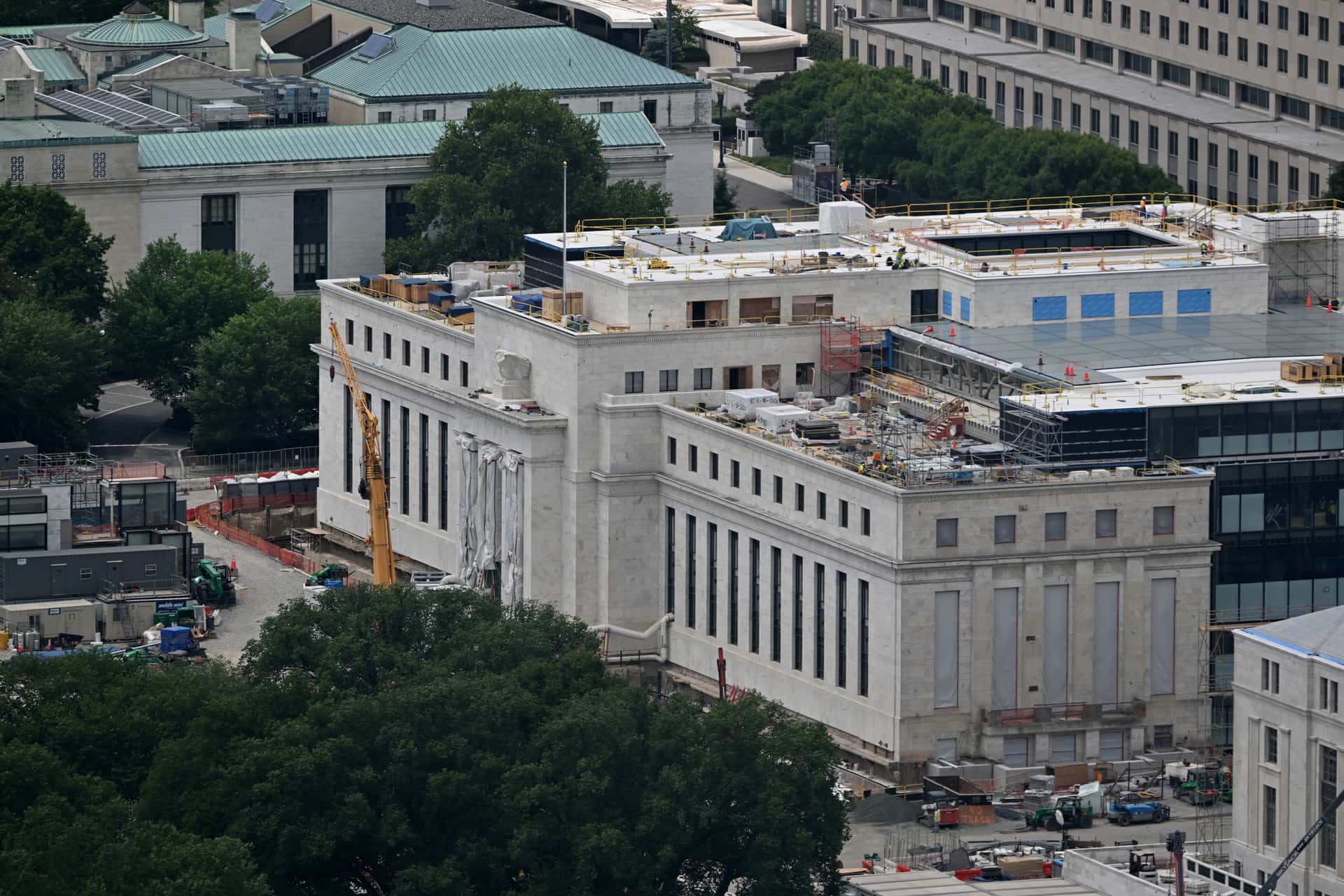
The Federal Reserve raised its benchmark interest rate by a quarter of a percentage point on September 16, lifting the target range to 3.75 percent to 4 percent in its first increase since 2023, and the decision arrives in Florida with more force than in almost any other state.
The Federal Open Market Committee voted 12-0 for the increase, citing inflation that remains above the central bank's 2 percent objective and describing the move as intended to support a more timely return to that target. Updated projections released with the decision left open the possibility of a further increase before the end of the year.
The transmission into Florida households is immediate and concrete. The average 30 year fixed mortgage rate has climbed above 7 percent, rising roughly 38 basis points since the Federal Reserve chair's remarks at Jackson Hole and standing more than a full percentage point above where it was a year ago. In a state where construction, real estate, finance and insurance carry an outsized share of employment and where housing affordability has been the dominant economic complaint for five years, that is not a distant policy adjustment.
What the Fed decided
The quarter point increase is modest in isolation. Its significance comes from direction. Markets, homebuyers and businesses had spent the preceding period positioned for an easing cycle, and the September decision reversed that expectation.
The unanimous vote is itself notable. Federal Open Market Committee decisions during periods of genuine uncertainty frequently produce dissents, and a 12-0 result signals that the committee's assessment of inflation risk was broadly shared rather than contested.
The accompanying projections matter as much as the decision. Central bank communication about the expected path of rates shapes long term borrowing costs more directly than any single move, because mortgage rates and corporate borrowing costs price off expectations rather than off the overnight rate itself.
That is why a quarter point increase produced a larger move in mortgage rates than the arithmetic would suggest. Lenders were pricing not just this decision but the possibility of another one.
Why the mortgage connection is indirect
The Federal Reserve does not set mortgage rates. The federal funds rate applies to overnight lending between banks, and 30 year mortgage rates track the yield on 10 year Treasury securities plus a spread that reflects lender costs and risk.
That relationship explains why mortgage rates sometimes fall when the Fed raises rates and sometimes rise when it cuts them. What moves mortgage rates is the market's expectation about inflation and rates over a long horizon, and central bank decisions influence that expectation without determining it.
In this case the transmission was direct because the decision changed expectations. A market that had priced in easing and received tightening repriced accordingly, and the 30 year rate moved with it.
The practical consequence for a Florida buyer is arithmetic. On a $400,000 mortgage, the difference between 6 percent and 7.2 percent is roughly $320 a month in principal and interest, or about $115,000 over the life of the loan.
Why Florida is more exposed than most states
Three features of the Florida economy amplify interest rate changes relative to the national average.
The first is employment composition. Construction accounts for a larger share of Florida employment than the national average, and residential construction responds to financing costs faster than almost any other sector. When rates rise, projects that penciled out at lower rates stop penciling out, and starts decline before layoffs follow.
The second is population growth. Florida's economy depends on continued in migration to sustain demand for housing, services and infrastructure. When mortgage rates rise, households in other states become locked into low rate mortgages they cannot replace, which reduces mobility nationally and therefore reduces the flow into Florida.
The third is the affordability squeeze that preceded this decision. Florida households already carry housing costs that rose sharply during the pandemic period, along with property insurance premiums that roughly doubled in many markets before beginning to moderate. A rate increase lands on top of that rather than on a clean slate.
The insurance interaction
Florida's housing affordability equation contains a variable that most states do not have to weigh, and interest rates interact with it in ways that compound the pressure.
Lenders qualify borrowers on total monthly housing cost, which includes principal, interest, taxes and insurance. In most of the country, insurance is a small component. In coastal Florida, it can approach or exceed the property tax line and in some cases rival a meaningful share of principal and interest.
That means a Florida buyer facing a 7 percent mortgage rate is qualifying with a monthly insurance figure that may be several hundred dollars higher than a comparable buyer in another state. The two costs together, rather than either alone, determine what the household can borrow.
There has been genuine improvement on the insurance side. Citizens Property Insurance Corporation implemented its first average rate decrease in roughly a decade this year, and private carriers have returned to parts of the market. Rising interest rates erode that relief before homeowners have fully felt it.
What it means for buyers and sellers
For buyers, the calculation has tightened again. Households that had been waiting for rates to decline before purchasing now face the question of whether to buy at current rates or continue waiting with no clear signal about when relief arrives.
The conventional advice in a rising rate environment is that a buyer who can afford the payment and intends to stay in the home for years should proceed, because refinancing is possible if rates fall later while the purchase price is not renegotiable. That advice depends heavily on affording the payment, which is exactly what has become harder.
For sellers, higher rates shrink the pool of qualified buyers and lengthen time on market. The offsetting factor in Florida right now is that inventory has tightened considerably, with single family supply down roughly 13 percent from a year earlier, which limits how much leverage buyers actually gain.
For homeowners not moving, the direct effect is minimal if they hold a fixed rate mortgage. Those with adjustable rate mortgages, home equity lines of credit or substantial credit card balances will see costs rise as those rates reset.
The construction and employment channel
The channel through which interest rates most affect Florida employment runs through construction, and it operates with a lag. Projects already financed and under way continue. New projects get delayed or shelved, and the effect on payrolls appears months later.
Florida added 21,800 jobs in August with unemployment easing to 4.5 percent, data that describe conditions before the rate decision took effect. The releases over the coming months will be the first to capture any response.
Commercial construction and multifamily development are particularly rate sensitive because they depend on debt financing where small changes in cost determine whether a project clears its return threshold. Multifamily construction slowing would eventually tighten the rental market, which is the other side of Florida's housing affordability problem.
The inflation question underneath
The Federal Reserve raised rates because inflation has remained above target, and Florida households have experienced that inflation in a particular form. The state's cost increases have been concentrated in housing, insurance and utilities rather than in the goods categories that dominate national inflation discussion.
That distinction matters because monetary policy works on aggregate demand, and the Florida cost drivers are substantially supply and risk driven. Higher interest rates do not reduce hurricane risk, do not increase the number of carriers willing to write coastal policies and do not build housing units.
What higher rates do is reduce demand generally, including demand for housing, which over time moderates price growth. The mechanism works, but it works by making borrowing more expensive for the same households that were already struggling with costs.
What to watch
The projections accompanying the September decision left open another increase this year, and whether that materializes is the single most consequential variable for Florida's housing market over the next several months.
Inflation data between now and the next meeting will drive that decision. Readings that show progress toward the 2 percent target reduce the likelihood of further tightening. Readings that do not increase it.
Mortgage rates themselves will move on those expectations rather than waiting for decisions, which means Florida buyers may see rates shift meaningfully before the Federal Reserve meets again.
Who benefits from higher rates
Rising rates are not uniformly bad news, and the beneficiaries in Florida are a substantial group. Retirees and savers holding certificates of deposit, money market funds and Treasury securities earn more on those holdings when rates rise, and Florida has one of the largest populations of retirees in the country.
For a household living on fixed income supplemented by interest earnings, the shift from near zero rates to yields approaching 4 percent on safe instruments represents a meaningful change in monthly income. That population has spent much of the past fifteen years earning very little on cash.
Cash buyers in the housing market also gain, in a relative sense. Roughly three in ten Florida home purchases have been all cash in recent years, a share far above the national average, and those buyers face less competition from financed buyers when rates rise.
The distributional effect is therefore not neutral. Higher rates transfer income toward households holding financial assets and away from households that need to borrow, which in Florida means toward established retirees and away from younger families trying to buy a first home.
The Florida angle on federal policy
Florida officials have limited tools to counter federal monetary policy, and the state's principal levers on housing affordability operate on the supply and cost side rather than on financing.
Those include state programs supporting affordable housing construction, the property insurance reforms that have begun to moderate premiums, and the property tax question that voters will weigh on the November ballot. Each addresses a component of monthly housing cost that interest rates do not touch.
The state's congressional delegation has more direct access to the federal questions, including flood insurance reauthorization and housing finance policy, though none of those reach the Federal Reserve's rate decisions, which are made independently of Congress by design.
What's next
Florida housing data for September will be published next month and will be the first to reflect purchase decisions made entirely in the higher rate environment. Because contracts close weeks after signing, the full effect will not appear until later in the fall.
The state's congressional delegation has periodically pressed federal policy on housing affordability and insurance costs, and rising rates increase the political salience of both. Whether that produces federal action beyond rhetoric is a separate question with a much longer timeline.
For Florida households, the practical situation is that borrowing costs have risen at a moment when the state's cost of living was already the dominant complaint of residents. The Federal Reserve's mandate does not include Florida's affordability problem, and the tool it used to address inflation makes that problem harder in the short run.
Spotted an issue with this article?
Have something to say about this story?
Write a letter to the editor