SpaceX Launches National Reconnaissance Office Satellites From Cape Canaveral, Adding to Florida's Busy Launch Year
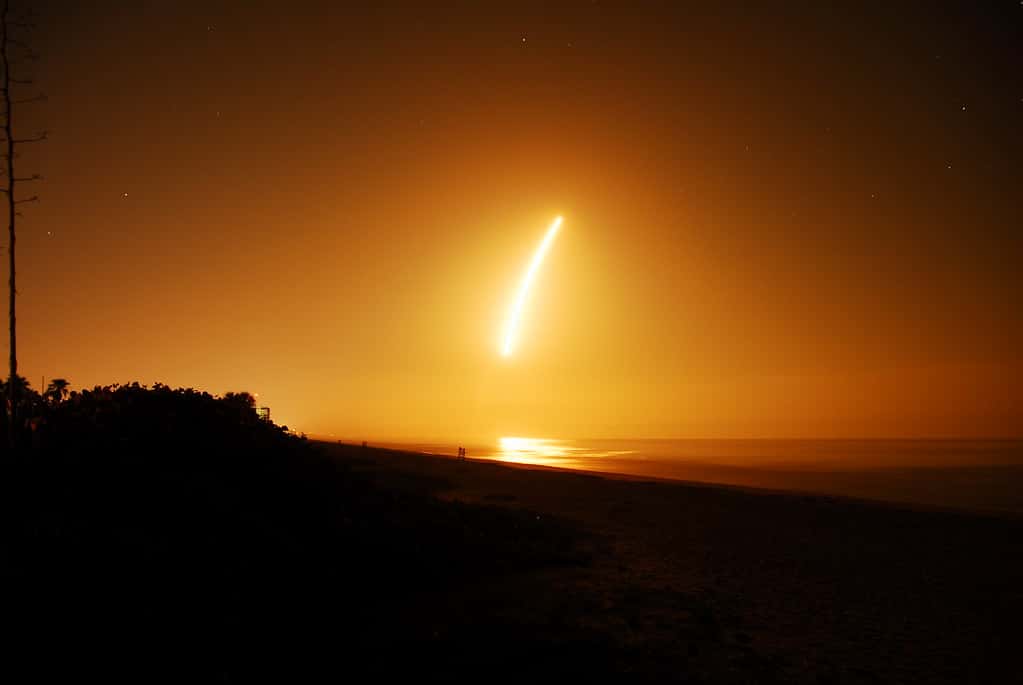
A SpaceX Falcon 9 rocket lifted off from Cape Canaveral carrying intelligence-gathering satellites for the National Reconnaissance Office, adding another national-security mission to Florida's relentless launch schedule. The flight from the Space Coast underscored the central role the region plays in both commercial spaceflight and the nation's defense and intelligence operations.
The National Reconnaissance Office, the agency responsible for the nation's spy satellites, has increasingly relied on SpaceX to deliver its payloads to orbit. The launch from Florida's coast continued a steady cadence of missions that has made Cape Canaveral and the surrounding area one of the busiest spaceports in the world. Each successful flight adds to a track record that has positioned the region as the preferred departure point for a wide range of government and commercial customers seeking dependable access to orbit.
For Florida's Space Coast, each launch reinforces the economic and strategic importance of the region's aerospace sector. The combination of commercial, civil, and national-security missions flowing through Cape Canaveral has cemented the area's status as a linchpin of American spaceflight. The breadth of activity, ranging from satellite deployments to sensitive government payloads, illustrates how thoroughly the region has woven itself into the fabric of the nation's space enterprise.
The mission
The Falcon 9 rocket carried satellites for the National Reconnaissance Office, an agency that builds and operates the reconnaissance satellites used for intelligence gathering. Such missions are part of the nation's defense and intelligence infrastructure, supporting capabilities that span surveillance and reconnaissance from orbit. The agency operates with a low public profile relative to the importance of its work, and launches of its payloads offer one of the few visible moments in an otherwise discreet enterprise.
National-security launches like this one are a significant component of the workload at Cape Canaveral, alongside commercial satellite deployments and crewed and uncrewed missions for civil space programs. The diversity of missions reflects the broad demand for access to space flowing through Florida. The same launch facilities that send astronauts toward orbit and deploy commercial constellations also serve the defense and intelligence community, a versatility that distinguishes the Space Coast among the world's launch sites.
SpaceX's role in launching sensitive government payloads illustrates how central the company has become to national space operations. Its reusable rockets and high launch cadence have made it a key partner for agencies seeking reliable and frequent access to orbit. The ability to recover and reuse boosters has reshaped expectations around the cost and frequency of spaceflight, and that capability has made the company a fixture in the plans of customers across the public and private sectors.
Entrusting reconnaissance satellites to a commercial provider reflects a level of confidence in the reliability of the launch system. National-security payloads represent substantial investments and carry significant strategic value, so the agencies that operate them place a premium on the proven performance of the rockets that carry them to orbit.
Florida's busy launch year
Cape Canaveral and the Kennedy Space Center have hosted a heavy schedule of launches, with missions occurring at a brisk pace throughout the year. The volume of activity has made the Space Coast a hub of near-constant rocket launches, drawing spectators and sustaining a robust aerospace economy. The frequency of liftoffs has become a defining feature of life along this stretch of Florida's coast, with launches now a routine rather than exceptional occurrence.
SpaceX has driven much of that cadence with frequent Falcon 9 flights, including deployments of its Starlink internet satellites and missions for a range of customers. The reusability of the company's boosters has enabled a launch rate that would have been unthinkable in earlier eras of spaceflight. Where launches were once rare and costly events, the maturation of reusable rocket technology has allowed providers to fly far more often, transforming the rhythm of operations at the spaceport.
Other providers also operate from the region, contributing to a launch calendar that keeps the Space Coast active. The concentration of launch infrastructure and expertise in Florida has reinforced its position at the center of the nation's growing space industry. The presence of multiple operators sharing the region's pads and ranges reflects the depth of the ecosystem that has developed there over decades of spaceflight.
The Florida economic angle
The aerospace sector is a major economic engine for Florida's Space Coast, supporting jobs, businesses, and a skilled workforce centered on Brevard County. The steady flow of launches sustains an industry that has grown substantially with the rise of commercial spaceflight. The sector provides employment across a spectrum of roles, from engineers and technicians to the support staff and services that keep launch operations running.
Beyond the direct employment at launch providers and contractors, the sector supports a broader ecosystem of suppliers, services, and tourism. Rocket launches draw visitors to the region, and the space industry's presence shapes the area's identity and economic prospects. Spectators travel to watch liftoffs, filling hotels and restaurants and contributing to a tourism draw built around the spectacle of spaceflight, an attraction few other regions can offer.
State and local leaders have worked to cultivate the aerospace sector, recognizing its importance to Florida's economy and its potential for continued growth. The region's infrastructure and expertise position it to capture an expanding share of the global space economy. Investments in facilities and workforce development reflect a long-term commitment to keeping the area competitive as the worldwide demand for launch services rises.
National security from Florida's coast
The launch of National Reconnaissance Office satellites highlights the role Cape Canaveral plays in the nation's defense and intelligence capabilities. The satellites the agency operates support critical functions, and getting them to orbit depends on the launch infrastructure concentrated on Florida's coast. The geographic advantages of the location, including its proximity to the equator and the clear range over the Atlantic, have long made it a favored site for reaching orbit.
The reliance on SpaceX for such missions reflects a broader shift in how the government accesses space, increasingly partnering with commercial providers. That partnership has expanded the pace and flexibility of national-security launches while drawing on the capabilities developed in the commercial sector. By leveraging the same rockets that serve commercial customers, the government gains access to a launch cadence and cost structure that would be difficult to replicate through dedicated systems alone.
Florida's spaceport thus serves dual roles, hosting both the commercial revolution in spaceflight and the missions that underpin national security. The convergence of those functions on the Space Coast underscores the strategic value of the region to the country. The same coastline that has captured public imagination through high-profile commercial and civil missions quietly supports the infrastructure on which the nation's intelligence-gathering capabilities depend.
What it means for the Space Coast
For residents of the Space Coast, the steady launch schedule is woven into daily life, with rocket launches a familiar and often celebrated occurrence. The activity sustains the local economy and reinforces the community's deep connection to the space program. Generations of families in the area have built their livelihoods around the space industry, giving the region a culture shaped by its proximity to the nation's launches.
The frequency of launches also reflects the health of an industry that has become central to the region's prosperity. As the pace of spaceflight accelerates, the demand for workers, facilities, and services in the area continues to grow. A rising launch tempo translates into sustained activity for the businesses and institutions that support the sector, strengthening the economic foundation of the surrounding communities.
The presence of national-security missions alongside commercial flights adds to the strategic significance of the region, drawing federal investment and attention. That combination positions the Space Coast for a prominent role in the nation's space future. The dual character of the spaceport, serving both private enterprise and government needs, ensures that the region remains relevant to the priorities of multiple stakeholders.
The rise of commercial spaceflight
The mission reflects a broader transformation in how the United States reaches orbit, one in which commercial companies have assumed a leading role that was once the domain of government programs alone. The development of reusable rockets and the growth of private launch providers have reshaped the economics of spaceflight, lowering barriers and increasing the frequency with which payloads can be sent to orbit. That shift has redefined the relationship between the government and the companies it relies on for access to space.
Florida has been a primary beneficiary of this evolution. The infrastructure built over the early decades of the space program provided a foundation that commercial operators could build upon, and the region adapted to accommodate the new pace and variety of missions. The result is a spaceport that bridges the legacy of past programs with the demands of a rapidly changing industry.
For the country, the growing reliance on commercial providers carries implications that extend well beyond any single launch. It reflects a model in which government agencies, including those responsible for national security, increasingly draw on the capabilities of private industry to meet their needs. The Space Coast sits at the heart of that arrangement, hosting the launches that bring the model to life and reinforcing Florida's centrality to the nation's spacefaring ambitions.
What's next
The Space Coast's launch calendar shows no sign of slowing, with additional missions from SpaceX and other providers scheduled in the weeks and months ahead. The relentless pace ensures that Cape Canaveral remains at the forefront of global spaceflight. The steady stream of upcoming flights reflects a demand for orbital access that continues to climb across commercial, civil, and government users.
Upcoming flights will continue to span commercial, civil, and national-security missions, reflecting the diverse demand for access to orbit. Each launch adds to Florida's record-setting activity and reinforces its standing as a center of the space industry. The variety of missions on the manifest illustrates the breadth of the region's role and the range of customers that depend on its facilities.
For Florida, the busy launch year is a testament to the region's central role in spaceflight and a driver of economic and strategic value. The latest National Reconnaissance Office mission is one more entry in a year defined by the steady roar of rockets departing the Space Coast. As the cadence continues, the region stands to deepen its position at the heart of an industry whose importance to the nation only continues to grow.
Spotted an issue with this article?
Have something to say about this story?
Write a letter to the editor