St. Johns Corrections Sergeant Arrested and Fired After Internal Investigation
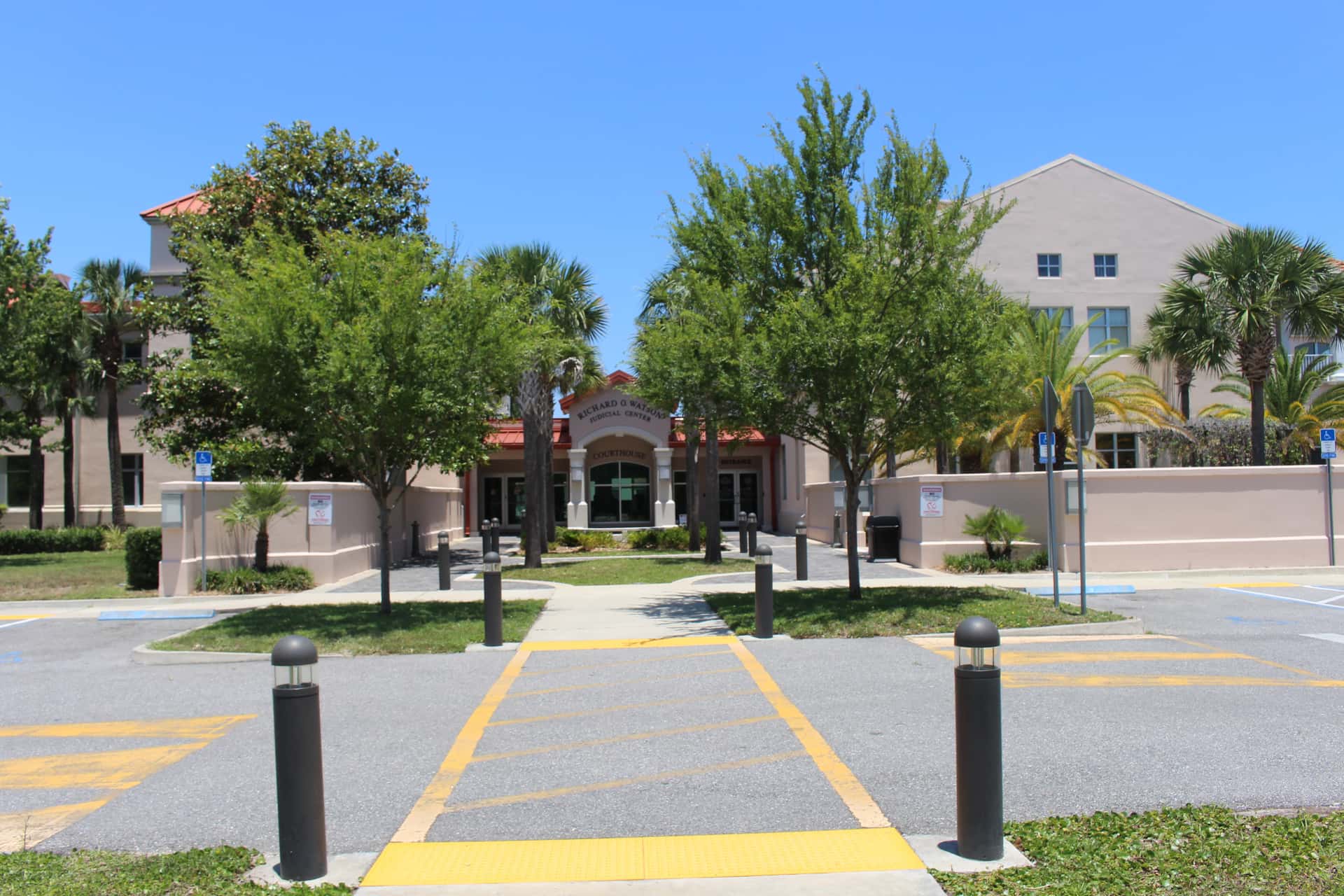
The St. Johns County Sheriff's Office has arrested and terminated a corrections sergeant following a criminal investigation conducted by the agency's Special Victims Unit, the office announced. The sergeant, identified by the agency as Michael Clark of the corrections division, was also served with a temporary injunction for protection.
According to the sheriff's office, information regarding the sworn employee came forward on July 23, prompting the investigation. The agency placed Clark on emergency suspension pending the legal process before his termination.
Clark is presumed innocent unless and until proven guilty. The Florida Press is withholding details of the underlying allegations pending the filing of formal charging documents.
What the sheriff's office has said
The agency's account describes a sequence that moved quickly. Information reached the sheriff's office on July 23. The Special Victims Unit, the division that handles cases involving crimes against vulnerable victims, opened a criminal investigation. An arrest and termination followed.
The temporary injunction for protection referenced by the agency is a civil court order, distinct from the criminal case. Florida law provides for several categories of protective injunction, including for domestic violence, dating violence, repeat violence, sexual violence, and stalking. A temporary injunction can be issued on an ex parte basis, meaning without the respondent present, when a judge finds an immediate danger, and a hearing on a longer-term injunction follows.
Emergency suspension is the mechanism Florida agencies use to remove a certified officer from duty immediately when circumstances warrant, ahead of a completed disciplinary process. Termination followed the arrest.
How Florida handles officer arrests
When a certified law enforcement or corrections officer in Florida is arrested, two parallel processes begin. The criminal case proceeds through the courts like any other prosecution. Separately, the officer's certification is reviewed by the Criminal Justice Standards and Training Commission within the Florida Department of Law Enforcement.
The commission has authority to revoke or suspend the certification that allows a person to work as a sworn officer in Florida. That authority operates independently of the criminal outcome, meaning an officer acquitted of criminal charges may still face certification consequences for conduct the commission finds violated moral character standards.
The certification system exists in part to prevent officers who leave one agency under investigation from being hired by another, a pattern documented across multiple states before certification databases were established.
Employing agencies are required to report separations and the reasons for them, which feeds the state's records on officer employment history.
Corrections officers and the certification framework
Florida certifies corrections officers separately from law enforcement officers, with distinct training curricula and standards, though both fall under the same commission's oversight. Corrections officers staff county jails and state prisons.
County jail operations in Florida are typically the responsibility of the sheriff, which places corrections divisions within sheriff's offices rather than as separate agencies. St. Johns County follows that model.
The corrections role carries authority over people in custody, a population with limited capacity to remove themselves from a situation or to report misconduct through ordinary channels. That structural vulnerability is why allegations involving corrections personnel receive particular scrutiny.
The Prison Rape Elimination Act, a federal statute, establishes standards for detecting, preventing, and responding to sexual abuse in confinement facilities, and imposes reporting and auditing requirements on jails and prisons that receive federal funds.
The Special Victims Unit's role
Special Victims Units within Florida sheriff's offices handle investigations involving sexual offenses, crimes against children, and crimes against elderly or disabled victims. The units are staffed by investigators with specialized training in interviewing and evidence handling for these categories of case.
When an investigation involves an agency's own employee, agencies face a structural question about whether internal investigation is appropriate or whether the case should be referred to an outside body such as the Florida Department of Law Enforcement.
Practices vary across Florida. Some agencies refer all criminal investigations of their own personnel to FDLE as a matter of policy. Others conduct them internally through units organizationally separated from the employee's chain of command. The St. Johns County Sheriff's Office has described this investigation as conducted by its own Special Victims Unit.
What happens next in the case
Following arrest, a defendant appears before a judge for a first appearance, at which conditions of release are set. The State Attorney's Office for the Seventh Judicial Circuit, which covers St. Johns, Flagler, Putnam, and Volusia counties, would make the charging decision.
Prosecutors are not bound by the charges listed at arrest. The State Attorney's Office reviews the investigative file and files an information specifying the charges it will pursue, which may differ from the arrest charges.
The civil injunction proceeds on its own track. Temporary injunctions in Florida are typically set for a hearing within a defined period, at which a judge determines whether to enter a longer-term injunction.
Cases involving allegations of this category frequently proceed with limited public detail during the investigative phase, since Florida public records law exempts certain information including material that would identify victims of sexual offenses.
The accountability picture
This case is one of two involving Florida law enforcement personnel in recent days. A Sumter County Sheriff's Office detective was arrested July 23 on charges of official misconduct and offenses against computer users, accused of misusing restricted law enforcement databases including the Flock license plate recognition network for personal purposes. That agency suspended its Flock program in response.
Agencies generally point to cases in which they investigate and charge their own employees as evidence that internal accountability functions operate. The counterpoint raised by accountability advocates is that self-investigation creates inherent tension, and that the cases which become public may not represent the full universe of complaints.
Florida's public records law provides broader access to law enforcement disciplinary records than many states, though exemptions apply to active criminal investigations and to certain personal information.
How protective injunctions work in Florida
The temporary injunction referenced by the sheriff's office operates through Florida's civil court system rather than the criminal one, and the two proceed independently. A person may obtain an injunction without any criminal charge being filed, and criminal charges may proceed without an injunction.
A petitioner files in circuit court, and a judge reviews the petition to determine whether it alleges facts showing an immediate and present danger. If so, the judge may enter a temporary injunction that takes effect immediately, before the respondent has an opportunity to be heard.
Temporary injunctions are short in duration by design, generally not exceeding 15 days, with a hearing set within that window at which both parties appear. At that hearing the court determines whether to enter a final injunction, which may impose conditions including no contact, distance requirements, and surrender of firearms.
Violation of an injunction is itself a criminal offense in Florida, which means an injunction creates an additional enforcement mechanism separate from whatever conduct prompted it.
Public records and what stays sealed
Florida has one of the broader public records laws in the country, and law enforcement records are generally accessible. That baseline is subject to significant exemptions, several of which apply in cases like this one.
Information that would identify the victim of a sexual offense is exempt from disclosure, and that exemption extends to material within investigative files that could reveal identity indirectly. Active criminal investigative information is also exempt while an investigation remains open.
Arrest reports are generally public, though agencies may redact exempt material before release. Probable cause affidavits, which set out the factual basis for an arrest, are filed with the court and typically become accessible, again subject to redaction.
The result is that coverage of cases in this category often proceeds with limited factual detail during the early phase, not because agencies are withholding information improperly but because the statutory exemptions are doing what they were written to do.
The staffing context in Florida jails
Florida county jails have operated under persistent staffing pressure in recent years, a condition shared with corrections systems across the country. Recruitment and retention of corrections officers has been difficult, with agencies competing against both law enforcement roles and private sector employment.
Understaffing affects supervision ratios, the frequency of rounds, and the amount of mandatory overtime officers work. Corrections researchers have consistently identified staffing levels as a factor in facility safety for both inmates and staff.
Several Florida sheriff's offices have raised corrections officer pay in recent budget cycles to address recruitment, and the Legislature has appropriated funds for state corrections officer pay increases at the Department of Corrections, which operates the prison system separately from county jails.
The connection to oversight is indirect but real. Agencies operating with thin staffing have less capacity for supervision and internal review, and accountability functions compete with operational demands for the same limited personnel.
St. Johns County in context
St. Johns County sits along Florida's northeast coast, anchored by St. Augustine, and has been among the state's fastest-growing counties over the past decade. Population growth has driven expansion across county services including the sheriff's office.
The county consistently ranks among Florida's highest performing on measures including school quality and household income, a profile that shapes both the demands placed on law enforcement and public expectations of it.
The sheriff's office serves as the county's primary law enforcement agency across unincorporated areas and operates the county jail, alongside municipal departments in St. Augustine and St. Augustine Beach.
Rapid growth creates staffing pressure in agencies that must expand while maintaining hiring standards. Agencies that grow quickly face a recurring tension between filling positions and screening applicants thoroughly, and background investigation quality is the mechanism by which that tension is managed.
What's next
The formal charging decision by the State Attorney's Office is the immediate step, followed by arraignment. Court records will reflect the case as it proceeds through the Seventh Judicial Circuit.
The certification review through the Criminal Justice Standards and Training Commission runs on a separate and generally slower timeline, often following resolution of the criminal case.
The sheriff's office has not indicated whether the investigation extends beyond the single employee. Agencies conducting investigations of this type typically review whether other conduct or other individuals are implicated, and any expansion would ordinarily become public through subsequent arrests or agency statements.
Spotted an issue with this article?
Have something to say about this story?
Write us a letterComments
No comments yet. Be the first to weigh in.
Related Coverage
Five Brevard County men sentenced to 13 to 18 years in federal prison for armed robbery of Ybor City nightclub
15h ago
Coral Gables developer sentenced to six years in prison for DUI crash into home that killed sleeping 82-year-old
16h ago

St. Johns County inmate accused of trying to arrange murder of witness in his drug case
1d ago

Six killed in fiery Florida's Turnpike crash after SUV strikes Road Ranger truck in Orange County
1d ago