Supreme Court Upholds Birthright Citizenship, Splitting Florida's Leaders
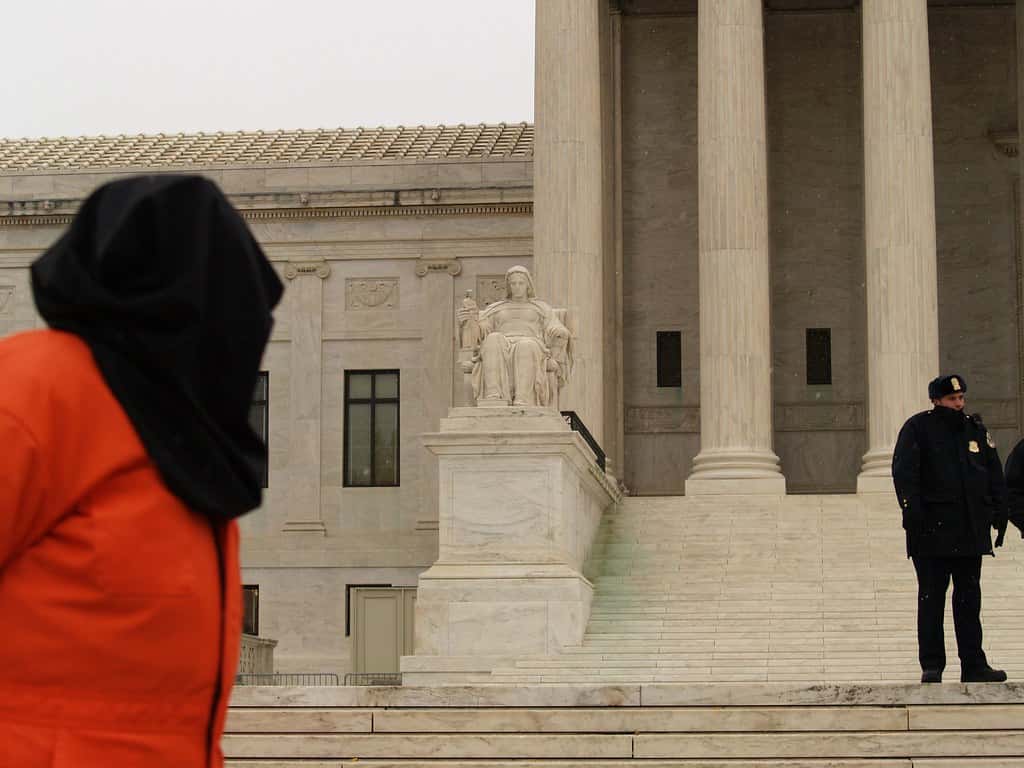
The U.S. Supreme Court has upheld birthright citizenship, striking down an executive order that sought to deny citizenship to children born in the United States to parents who are in the country illegally or temporarily. The decision, handed down by a 6-3 vote, reaffirms a long-settled understanding of the 14th Amendment and lands squarely in the middle of Florida's charged debate over immigration.
The ruling immediately drew sharply divided reactions from Florida's elected officials, reflecting the state's central role in national immigration politics. Florida is home to large immigrant communities, has pursued some of the most aggressive state-level immigration enforcement policies in the country, and sends a congressional delegation deeply engaged on the issue, all of which make the decision especially consequential here.
What the court decided
The justices rejected an executive order signed at the start of the current presidential term that declared children born in the country to people present illegally or temporarily are not American citizens. By a 6-3 vote, the court struck down the order, leaving intact the traditional interpretation of birthright citizenship.
The opinion for the court was written by Chief Justice John Roberts, with a majority holding that the long-settled understanding of the 14th Amendment, adopted after the Civil War, makes a citizen of nearly anyone born in the country, subject to very limited exceptions. One justice concurred in the outcome but based his reasoning on a federal statute rather than the Constitution.
The case reached the court on appeal from a lower-court ruling that had struck down the citizenship restrictions. The decision represents a significant setback for efforts to reinterpret the scope of birthright citizenship through executive action.
The 14th Amendment question
At the heart of the case is the Citizenship Clause of the 14th Amendment, ratified in the aftermath of the Civil War, which provides that persons born in the United States and subject to its jurisdiction are citizens. For well over a century, that language has been understood to confer citizenship on nearly all children born on American soil.
The executive order challenged that understanding, arguing that children of parents present illegally or temporarily fall outside the amendment's reach. The court's rejection of that argument reaffirms the broad, traditional reading and forecloses, at least for now, an attempt to narrow it through executive action.
The concurrence grounded in a federal statute rather than the Constitution adds a nuance to the ruling, but the practical result is clear: birthright citizenship as traditionally understood remains the law. The decision closes off a major avenue that had been pursued to restrict it.
Florida's divided reaction
The ruling provoked strong and divided reactions from Florida lawmakers, splitting along familiar lines. The decision touches directly on issues that have animated Florida politics, where immigration enforcement has been a defining theme of state policy in recent years.
For officials who have championed strict immigration measures, the ruling is a disappointment and a check on efforts to reshape citizenship policy. Some signaled they would continue to pursue their broader immigration agenda through other means, framing the decision as one battle in a longer fight.
For those who opposed the executive order, the ruling is a vindication of constitutional principle and a relief for immigrant communities that would have faced profound uncertainty had the order been upheld. The split reaction underscores how deeply the issue divides Florida's political landscape.
Why Florida is at the center
Florida's stake in the birthright-citizenship debate is substantial. The state has some of the largest immigrant communities in the country, including significant populations with roots in Cuba, Venezuela, Haiti, and across Latin America, making questions of citizenship and immigration status intensely personal for many residents.
At the same time, Florida has positioned itself at the forefront of state-level immigration enforcement, pursuing laws and policies that have repeatedly drawn legal challenges. That aggressive posture has made the state a focal point in national immigration litigation and politics.
The combination of large immigrant communities and assertive enforcement policies ensures that any major immigration ruling reverberates powerfully in Florida. The birthright-citizenship decision is no exception, landing in a state where the issue is both a lived reality for many families and a central axis of political conflict.
What it means for Floridians
For Florida families, particularly those with mixed immigration status, the ruling removes a source of profound uncertainty. Had the executive order been upheld, children born in the United States to certain parents could have faced questions about their citizenship, a prospect with far-reaching consequences for family stability and legal status.
The decision preserves the status quo, meaning children born in Florida, as elsewhere in the country, remain citizens under the traditional understanding of the 14th Amendment. That continuity provides clarity for hospitals, government agencies, and families navigating the practical realities of citizenship.
More broadly, the ruling shapes the terrain on which Florida's immigration debates will continue to play out. State officials committed to enforcement will look to other tools, while advocates for immigrant communities will point to the decision as a constitutional bulwark.
The broader legal and political landscape
The decision is part of a wave of consequential rulings as the court concluded its term, addressing a range of contested issues. For immigration policy specifically, it marks a significant moment, reaffirming a foundational principle amid efforts to reshape it.
Politically, the ruling ensures that immigration will remain a defining issue in Florida and nationally. With an open race for governor drawing a crowded field, and with the state's congressional delegation actively engaged, immigration policy will continue to feature prominently in campaigns and legislative debates.
The interplay between federal constitutional rulings and Florida's state-level enforcement efforts will remain a source of tension and litigation. The birthright-citizenship decision settles one major question while leaving the broader conflict very much alive.
The dissent and the divide
The 6-3 ruling, while decisive, was not unanimous, and the division on the court reflects the deep disagreements the issue provokes. The justices in dissent took a different view of the constitutional and legal questions, and their reasoning will be studied by those who continue to argue for a narrower interpretation of birthright citizenship.
The split on the court mirrors the broader national divide over immigration, an issue that has generated intense debate for years. The differing views among the justices underscore that, even with the matter settled for now, the underlying legal and philosophical questions remain contested in the wider political arena.
The concurrence that rested on a federal statute rather than the Constitution adds nuance to the outcome, suggesting that the legal foundations of birthright citizenship could remain a subject of discussion. For now, though, the practical result is clear and binding, reaffirming the traditional understanding despite the disagreement among the justices.
What advocates and communities are saying
For immigrant-rights advocates and the communities they serve, the ruling brought relief and a sense of vindication after a period of profound uncertainty. Advocacy organizations that had opposed the executive order welcomed the decision as a protection of constitutional principle and of the families who would have been affected.
In Florida, home to large and diverse immigrant communities, the ruling resonates deeply. Families with mixed immigration status, and the organizations that support them, had watched the case closely, aware that the outcome could reshape the lives of children born in the country. The decision removes that particular threat.
At the same time, advocates recognize that the broader landscape of immigration policy remains challenging, with enforcement efforts continuing at the state and federal levels. The ruling addresses one significant question, but the communities most affected remain attentive to the many other policies and debates that shape their lives and futures.
The road ahead for immigration policy
The ruling settles a major question, but immigration policy will remain a dynamic and contested arena in Florida and nationally. Officials committed to enforcement retain a range of tools and are likely to pursue their objectives through other avenues, ensuring that the broader debate continues.
At the state level, Florida has demonstrated a willingness to legislate aggressively on immigration, and the interplay between state measures and federal constitutional limits will keep the issue in the courts and in the political arena. The birthright-citizenship decision is one chapter in a longer, ongoing story.
For residents, advocates, and officials alike, the road ahead involves navigating a landscape shaped by competing priorities and unresolved tensions. The ruling provides clarity on one important point, but the larger questions surrounding immigration, enforcement, and the rights of immigrant communities will continue to define the debate in the years to come.
What's next
With the executive order struck down, attention turns to how officials committed to immigration enforcement will respond and what other avenues they may pursue. The ruling forecloses one approach but does not end the broader policy debate.
In Florida, the decision will feed into ongoing political and legal battles over immigration, an issue that shows no sign of receding. State enforcement policies, federal litigation, and the positions of candidates in the coming elections will all continue to shape the landscape.
For now, birthright citizenship stands reaffirmed, and Florida, a state where the issue is deeply felt and fiercely contested, absorbs a ruling that resolves one question even as it sets the stage for the next chapter in an enduring debate.
Spotted an issue with this article?
Have something to say about this story?
Write us a letterComments
No comments yet. Be the first to weigh in.
Related Coverage

Isaias Shuts Pensacola and Okaloosa Airports as Airlines Waive Fees and Tolls Lift on Panhandle Bridges
1h ago

Ex-CIA official pleads guilty in $194 million fraud, will forfeit $102 million in Palm Beach and Hobe Sound real estate
1h ago

11th Circuit voids septic permit ban in Indian River Lagoon manatee case after federal 'harm' rule rollback
1h ago
Trump ties disaster aid to midterm campaign as Hurricane Isaias nears Florida Panhandle
21h ago