World Cup Arrives in Miami as Hard Rock Stadium Hosts Seven Matches
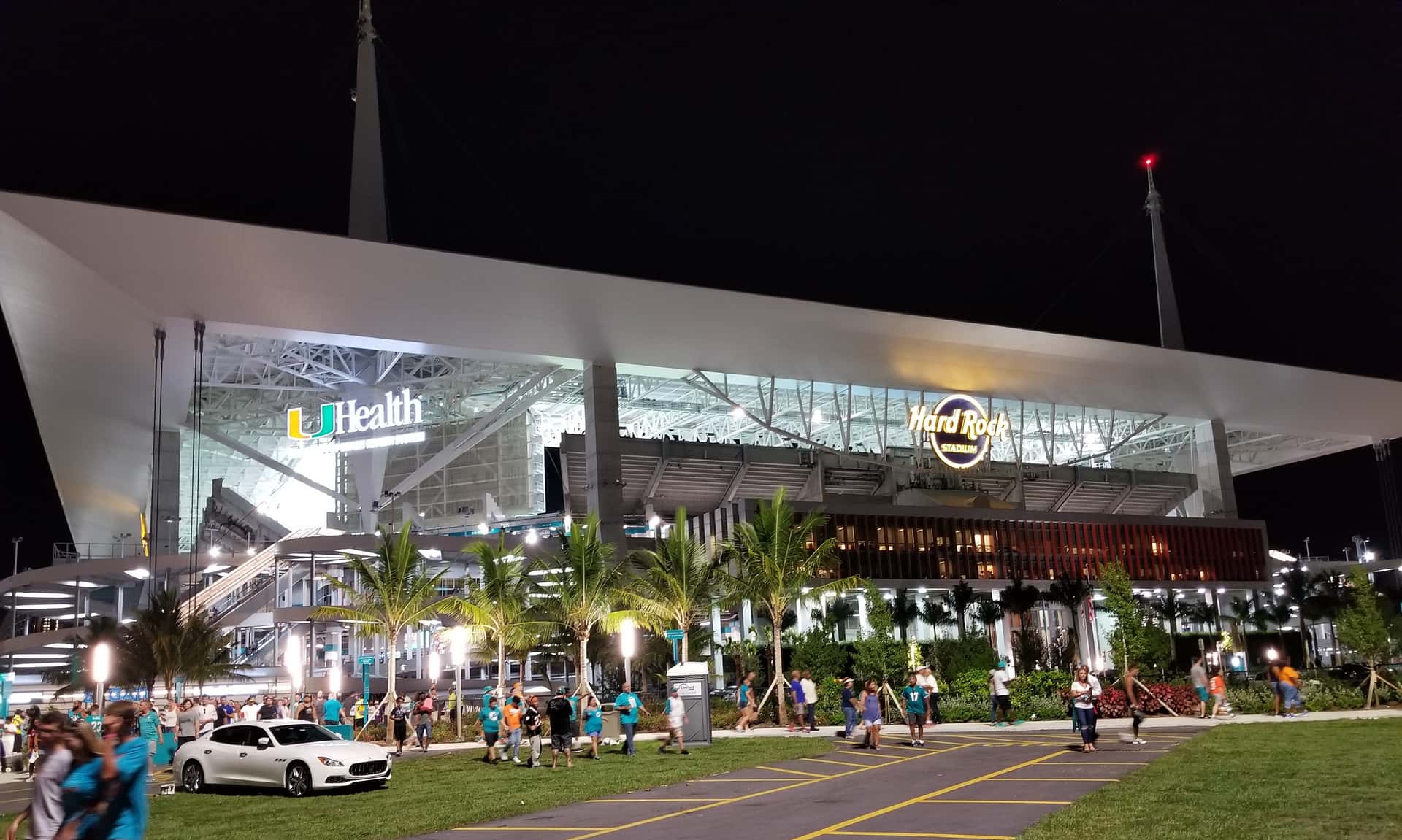
The FIFA World Cup has arrived in Miami, and Hard Rock Stadium in Miami Gardens sits at the center of South Florida's turn on the world stage. The venue is hosting seven matches of the expanded 48-team, 104-game 2026 World Cup, a slate running from June 15 to July 18 that includes marquee group games, a Round of 32 fixture, a quarterfinal and the third-place playoff. For a region that has embraced soccer with growing fervor, the tournament's largest edition ever has landed close to home.
The next marquee match looms quickly. On June 24, Brazil faces Scotland at Hard Rock Stadium with a 6 p.m. ET kickoff, pitting one of the sport's most storied powers against a spirited opponent in a game certain to fill the stands. It headlines a Miami group slate stacked with international names, part of a tournament that has brought Brazil, Portugal, Colombia and Uruguay through South Florida during the group stage.
Beyond the football, the World Cup represents an economic and logistical event of the first order for South Florida. Hotels, restaurants, transit and security all bend to accommodate an influx of visitors drawn by the planet's most-watched sporting competition. The matches at Hard Rock Stadium are the visible centerpiece, but the impact radiates far beyond the stadium gates.
Seven matches across five weeks
Hard Rock Stadium's role in the 2026 World Cup is substantial. The venue is slated to host seven matches between June 15 and July 18, a stretch that carries Miami from the opening days of the group stage through the late rounds of the knockout bracket. That allocation places Miami Gardens among the busier host sites of a tournament spread across multiple countries and cities.
The variety of those matches is part of the appeal. In addition to group-stage games, Hard Rock Stadium is set to host a Round of 32 fixture, a quarterfinal and the third-place playoff, meaning the venue stays relevant deep into the tournament. A quarterfinal in particular guarantees a high-stakes knockout clash on Miami soil, the kind of single-elimination drama that defines a World Cup.
The scale reflects the tournament's expansion. The 2026 edition has grown to 48 teams and 104 games, a dramatic enlargement that distributes more matches across more venues than any previous World Cup. Miami's seven-match haul is a meaningful slice of that expanded pie, ensuring South Florida is woven through the competition from group play to the closing weekend.
For local fans, the spread means weeks of world-class soccer rather than a fleeting visit. From mid-June through mid-July, Hard Rock Stadium operates as a recurring stage for the global game, a rhythm of marquee dates that keeps the tournament present in the region's life for well over a month.
The confirmed Miami group slate
The June group-stage schedule at Hard Rock Stadium reads like a roll call of international heavyweights. The slate opened on June 15 with Saudi Arabia facing Uruguay, followed on June 21 by Uruguay against Cape Verde. The marquee dates come later in the month: June 24 brings Brazil versus Scotland at 6 p.m. ET, and June 27 features Colombia against Portugal. As with all tournament logistics, these details are best treated as accurate as reported.
Each fixture carries its own draw. Uruguay, a perennial South American power, appears twice in the early Miami slate, giving the region a strong dose of one of the continent's traditional forces. The presence of Cape Verde and Saudi Arabia widens the global flavor, the kind of cross-confederation matchups that the World Cup uniquely delivers and that introduce local fans to teams they might rarely see otherwise.
The late-June pairings are the headliners. Brazil, five-time world champions, against Scotland is the sort of name-brand clash that sells out stadiums, and the June 27 meeting of Colombia and Portugal pits a rising South American side against a European power led by global stars. Together they ensure that Miami's group stage ends with a flourish of marquee football.
For South Florida's diverse and soccer-loving population, the lineup is tailor-made. Communities with deep ties to South America, Europe and beyond can each find a team to follow, turning Hard Rock Stadium into a gathering point for the region's many footballing allegiances over the course of the group stage.
Brazil vs Scotland: the next big stage
The June 24 meeting between Brazil and Scotland stands as the next showcase event in Miami, and it carries the kind of marquee weight that defines a host city's World Cup. Brazil's pedigree needs little introduction: the most successful nation in World Cup history arrives as a perennial favorite, and any appearance by the Seleção is an event in itself. A Brazil match at Hard Rock Stadium is a magnet for fans far beyond Miami.
Scotland brings the underdog's energy and a passionate traveling support known throughout the sport. The contrast, a global superpower against a determined challenger, is exactly the kind of matchup that fills a World Cup with drama, and the 6 p.m. ET kickoff sets the stage for a primetime atmosphere in Miami Gardens. For neutrals, it is a chance to watch one of soccer's giants up close.
The match also functions as a preview of how Miami handles its biggest tournament moments. A Brazil game tests the full apparatus of a host city: the crowds, the transit, the security and the surrounding festivities all face their stiffest demand when a side of Brazil's stature comes to town. How smoothly June 24 runs offers a glimpse of what the later knockout matches will require.
For South Florida, the game is both spectacle and showcase. It puts the region in front of a worldwide audience tuned in to watch Brazil, and it gives local fans a marquee occasion to claim as their own, a Selecao appearance in their backyard on a Wednesday evening in late June.
Tourism and economic impact
The World Cup's footprint in South Florida extends well beyond the pitch. An influx of visitors for seven matches over five weeks ripples through the regional economy, filling hotels, restaurants and businesses that benefit from the surge of fans, both international travelers and domestic visitors, drawn to the tournament. Major events of this scale concentrate spending in ways that local economies prize.
Hotels stand among the most direct beneficiaries. A tournament that brings repeated marquee dates over more than a month generates demand for lodging across the region, and restaurants and entertainment venues capture the spending of fans who travel for the football and stay for the experience. Fan zones and watch parties extend that activity beyond the stadium, spreading the tournament's energy and economic effect across South Florida.
Transportation is a central piece of the logistical puzzle. South Florida's Brightline passenger rail offers a connection that can help move fans around the region, easing some of the strain of accommodating large crowds at a stadium event. Efficient transit is more than a convenience during a World Cup; it shapes how smoothly the whole operation runs and how visitors remember their time in the area.
Security underpins all of it. Hosting matches of a global tournament demands extensive planning and coordination to keep crowds safe, and that effort runs quietly beneath the festivities, an essential if less visible part of staging an event of this magnitude. Together, the lodging, transit, hospitality and security operations turn each match day into a region-wide undertaking.
A region built for the moment
South Florida arrives at this World Cup primed for the occasion. The region's soccer culture has surged in recent years, and the presence of a globally famous club in the area has only deepened local enthusiasm for the game. A population woven from communities with roots across the soccer-mad world gives Miami a built-in audience for a tournament that gathers nations from every continent.
That cultural readiness amplifies the tournament's impact. Where some host cities must work to generate excitement, South Florida brings existing passion, neighborhoods that will rally behind Brazil, Portugal, Colombia, Uruguay and others as if the teams were their own. The diversity of allegiances turns the World Cup into a shared regional celebration rather than a series of isolated matches.
The infrastructure has been building toward moments like this as well. A modern stadium capable of hosting knockout-round matches, regional rail to move visitors, and a hospitality sector accustomed to major events give South Florida the foundation to stage a World Cup credibly. The tournament is a test of that foundation and a showcase for it.
For the region, hosting seven World Cup matches is both an honor and an opportunity, a chance to present South Florida to a global audience while celebrating the sport its communities already love. The convergence of passionate fans, capable infrastructure and the world's biggest tournament has rarely felt so natural.
What's next
The immediate focus falls on June 24, when Brazil and Scotland meet at Hard Rock Stadium at 6 p.m. ET in the next marquee Miami fixture. It is the headline event of the venue's group-stage slate and a measuring stick for how the region handles its biggest crowds, followed three days later by Colombia against Portugal to close out June's marquee dates in Miami Gardens.
Beyond the group stage, Miami's role in the tournament only grows in significance. With a Round of 32 match, a quarterfinal and the third-place playoff still to come, Hard Rock Stadium will host increasingly high-stakes football as the bracket narrows toward July 18. Those knockout fixtures promise the most dramatic moments of Miami's World Cup, single-elimination games with a place in the tournament on the line.
For South Florida, the weeks ahead are a sustained showcase. The region will keep welcoming visitors, filling its venues and presenting itself to a worldwide audience as the expanded 2026 World Cup plays out in part on its doorstep. From the next big match against Brazil to the late-round drama still to come, Miami's turn on soccer's grandest stage is well underway.
Spotted an issue with this article?
Have something to say about this story?
Write a letter to the editor