DeSantis Moves to Brand CAIR, Muslim Brotherhood and Antifa as Domestic Terror Groups
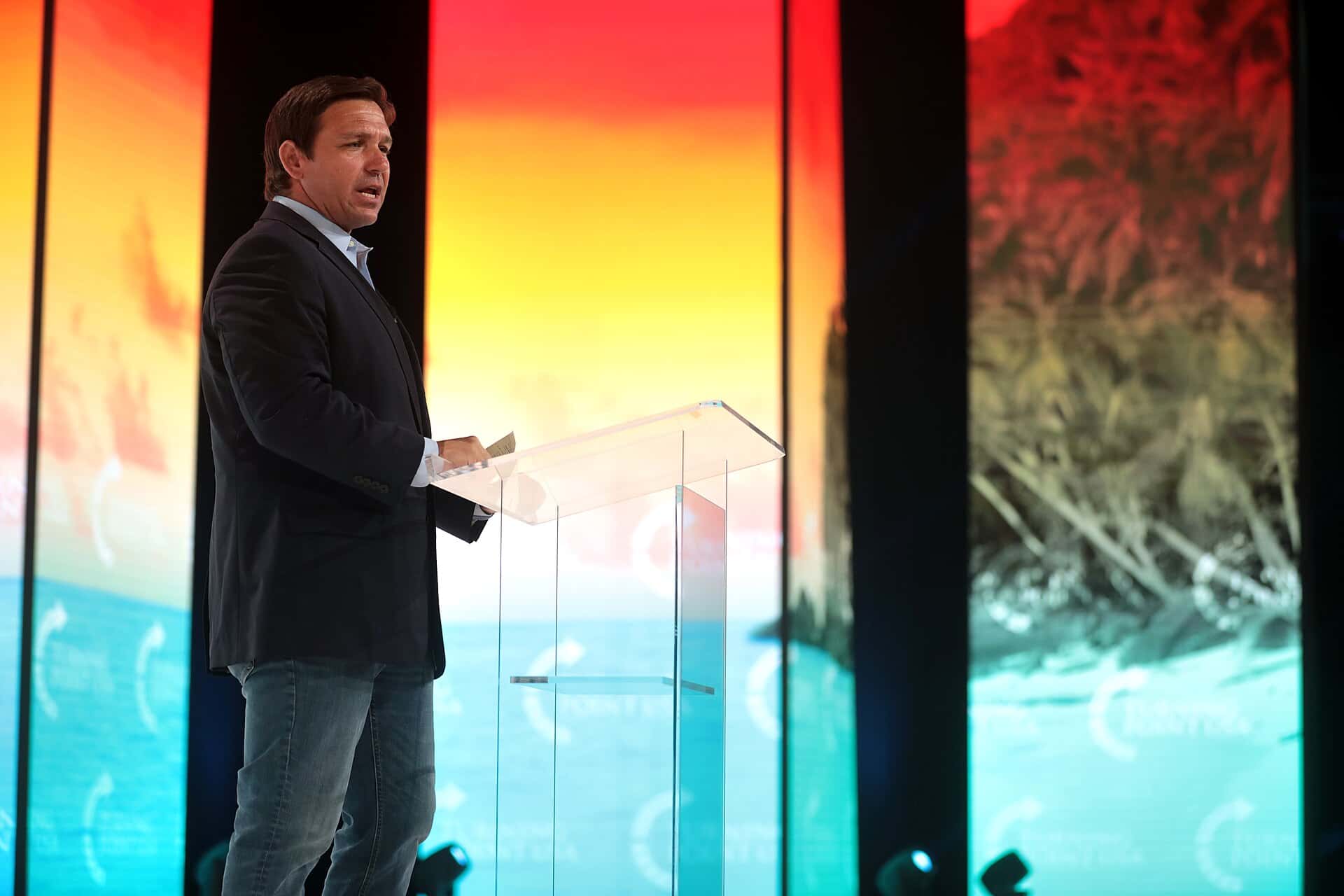
Governor Ron DeSantis moved this week to make Florida the first state in the country to formally brand advocacy organizations as domestic terrorist groups, announcing that the Florida Department of Law Enforcement has recommended designating the Council on American-Islamic Relations, the Muslim Brotherhood and Antifa under a sweeping new state law. The announcement, made at an event in Tampa alongside law enforcement officials, set off an immediate legal fight, with a federal lawsuit filed within a day seeking to stop the designation before it takes effect.
What the governor announced
The designation flows from House Bill 1471, one of a pair of measures the Legislature passed and the governor signed earlier this year that created an unprecedented state framework for labeling organizations as domestic or foreign terrorist entities. Under the law, the commissioner of the Florida Department of Law Enforcement, currently Mark Glass, can recommend a designation when an organization is found to engage in terrorist activity as defined by Florida statute, is based in or operates in Florida, and poses what officials describe as an ongoing threat to the security of the state or the nation.
According to the governor's office, the process now requires written notice to the governor and the Florida Cabinet, which then has seven days to approve or reject each recommendation. The governor framed the effort as an extension of the state's broader push against groups it accuses of fomenting political violence or supporting extremism, and he said the state had separately identified more than 90 foreign organizations, including several drug cartels such as the Sinaloa Cartel and Tren de Aragua, for potential foreign terrorist designation.
Officials said the domestic designations targeting CAIR, the Muslim Brotherhood and Antifa were the first to advance under the new statute. The move drew immediate praise from supporters who argue the state needs stronger tools to disrupt organizations they view as dangerous, and sharp condemnation from civil liberties groups who see it as a direct attack on constitutionally protected speech and association.
What a designation would mean
The practical consequences of a designation are significant. Under the new law, state and local governments would be barred from providing taxpayer funding, contracts or other public support to any designated organization. Public colleges, universities, school districts and other publicly funded institutions would be prohibited from using public resources to support or promote a designated group in any way.
The statute goes further, opening the door to the potential dissolution of a designated organization and creating criminal exposure for individuals who knowingly provide what the law calls material support or resources. Legal analysts have noted that the breadth of those provisions is what makes the Florida approach distinct from the federal terrorism designation system, which applies almost exclusively to foreign organizations and does not reach domestic advocacy groups in the same way.
For the organizations named, the stakes are immediate. CAIR operates chapters across Florida and describes itself as the nation's largest Muslim civil rights and advocacy organization, running legal clinics, voter registration drives and anti-discrimination programs. A designation could sever the group's ability to interact with public institutions and expose donors, volunteers and partners to legal risk, which is precisely the harm its lawyers argue is unconstitutional.
The lawsuit filed in federal court
Within a day of the governor's announcement, CAIR and its Florida affiliate filed suit in the U.S. District Court for the Northern District of Florida in Tallahassee, asking a judge to declare the designation unconstitutional and to issue an injunction halting its enforcement. The organizations are represented by a coalition that includes the American Civil Liberties Union, the ACLU of Florida, the Southern Poverty Law Center and private law firms.
According to the complaint, the designation violates the First Amendment by punishing the groups for protected advocacy and by attempting to coerce third parties, including universities, local governments and private partners, into cutting ties with them. The plaintiffs argue that labeling a civil rights nonprofit a terrorist organization based on its speech and political positions crosses a constitutional line that no state has previously attempted to cross.
This is not the first courtroom clash over the issue. In December, the governor issued an executive order attempting a similar designation of CAIR and the Muslim Brotherhood. CAIR sued, and in March a federal judge issued a preliminary injunction blocking that order, finding the group was likely to succeed on its claim that the state had impermissibly tried to suppress its speech. The new lawsuit contends that the fresh designation under the statute suffers from the same constitutional defects.
The Florida political context
The designation lands in the middle of an unusually active political season in Florida. The governor is term-limited and leaves office in early 2027, and the effort to wield the new terrorism law is consistent with a governing style that has emphasized aggressive use of executive and legislative power on hot-button cultural and security issues. Supporters within the Republican-controlled Legislature have cast the law as a national model, while Democratic lawmakers and civil rights organizations have warned that it could be turned against a wide range of advocacy groups depending on who holds power.
The state has emphasized that the law contains procedural steps, including Cabinet review, that it says guard against arbitrary use. Critics counter that the Cabinet is composed entirely of statewide elected officials from the same party as the governor, and that a seven-day review window offers little meaningful check. The dispute over process is likely to feature prominently in the litigation, alongside the core First Amendment questions.
Reaction across the state
Reaction to the announcement broke along familiar lines. Organizations representing Muslim Floridians described the designation as an attempt to stigmatize an entire community and warned it could chill participation in civic life, from mosque programs to student groups on public campuses. Some faith leaders and interfaith coalitions urged the Cabinet to reject the recommendation, arguing that conflating advocacy with terrorism sets a dangerous precedent.
Supporters of the designation, including some law enforcement voices and conservative advocacy groups, argued that the state is right to take a hard line against organizations they accuse of extremism, and they pointed to the separate cartel designations as evidence that the law is aimed at genuine security threats. Business and higher education leaders, meanwhile, have quietly raised questions about compliance, given the law's restrictions on any public institution interacting with a designated group.
The designation has also drawn commentary from constitutional law experts across the country, many of whom see the case as an important test of the limits of state authority over domestic advocacy. Some have warned that a framework allowing a state to brand advocacy organizations as terrorist entities could, if upheld, be deployed against a wide range of groups depending on which party controls state government. Others have argued that the courts have well-established doctrines to distinguish protected speech from unprotected conduct, and that those doctrines will guide the resolution of the dispute. The breadth of the commentary reflects the significance of the questions the case raises, and it signals that the litigation will be followed far beyond Florida's borders as a potential precedent for the boundaries of state power in an area long governed by federal authority and constitutional protection.
How Florida compares nationally
The federal government maintains a formal system for designating foreign terrorist organizations, a process administered by the State Department with significant legal consequences for the groups named. But the federal framework has long stopped short of applying formal terrorist designations to domestic organizations, in part because of the constitutional protections that shield domestic political and religious advocacy. That gap is precisely the space Florida's new law seeks to fill, and it is what makes the state's approach so legally novel.
Legal scholars have noted that domestic groups accused of violence are typically addressed through criminal prosecution of individuals rather than through the wholesale labeling of an organization as a terrorist entity. The criminal justice system already provides tools to prosecute those who commit or conspire to commit acts of violence. Critics of the Florida law argue that the designation regime bypasses those established mechanisms in favor of a broad label that sweeps in protected advocacy alongside any genuinely criminal conduct.
Supporters counter that the traditional tools have proven inadequate against organizations they believe foster extremism, and they contend that states have a legitimate interest in protecting their residents. They point to the separate effort to flag foreign cartels as evidence that the law is aimed at real threats. The disagreement reflects a deeper divide over where the line falls between security policy and constitutionally protected expression, a line that the courts will now be asked to draw.
The outcome carries implications well beyond Florida. Because the state has often pioneered policies that spread to other Republican-led states, a ruling upholding the designation framework could encourage similar laws elsewhere, while a decision striking it down would reaffirm the limits on state power in this area. Legal advocates on both sides are watching the case as a potential landmark in the ongoing national debate over the boundaries of domestic security policy.
What happens next
The immediate question is procedural. The Cabinet must decide whether to approve or reject the recommendations within the statutory window, and the federal court in Tallahassee will weigh the request for an injunction that could freeze the designation before it takes effect. Given the earlier ruling that blocked the executive order, legal observers expect the plaintiffs to press hard for a similar order this time.
Beyond the courtroom, the outcome could shape whether other states adopt similar frameworks. Florida has frequently served as a testing ground for policies that later spread to other Republican-led states, and the terrorism designation law is being watched closely by legislators and legal advocates across the country. A ruling that upholds the law would hand states a powerful new tool; a ruling that strikes it down would reinforce the longstanding principle that domestic advocacy, however controversial, remains protected speech.
For now, the designation exists in a legal limbo, recommended but contested, announced but not final. Floridians on all sides of the issue are likely to hear a great deal more about it in the weeks ahead, as the Cabinet acts and the federal court begins to weigh a case that touches the boundary between security policy and the First Amendment.
Spotted an issue with this article?
Have something to say about this story?
Write a letter to the editorComments
No comments yet. Be the first to weigh in.
Related Coverage
Uthmeier stretches money lead with $500K from Perlmutters as Democrats push hidden insurer report in AG race
4h ago

DeLand and Volusia County say goodbye to former state Rep. Pat Patterson as flags fly at half-staff
10h ago

Vance rallies Florida Republicans in Lakeland as governor's race tightens
1d ago

Amendment 3: Osceola, Orange counties warn of cuts to mosquito control, EMS
1d ago