DeSantis Signs FIRE Act Targeting Cuban, Chinese and Russian Influence in Florida Government and Institutions
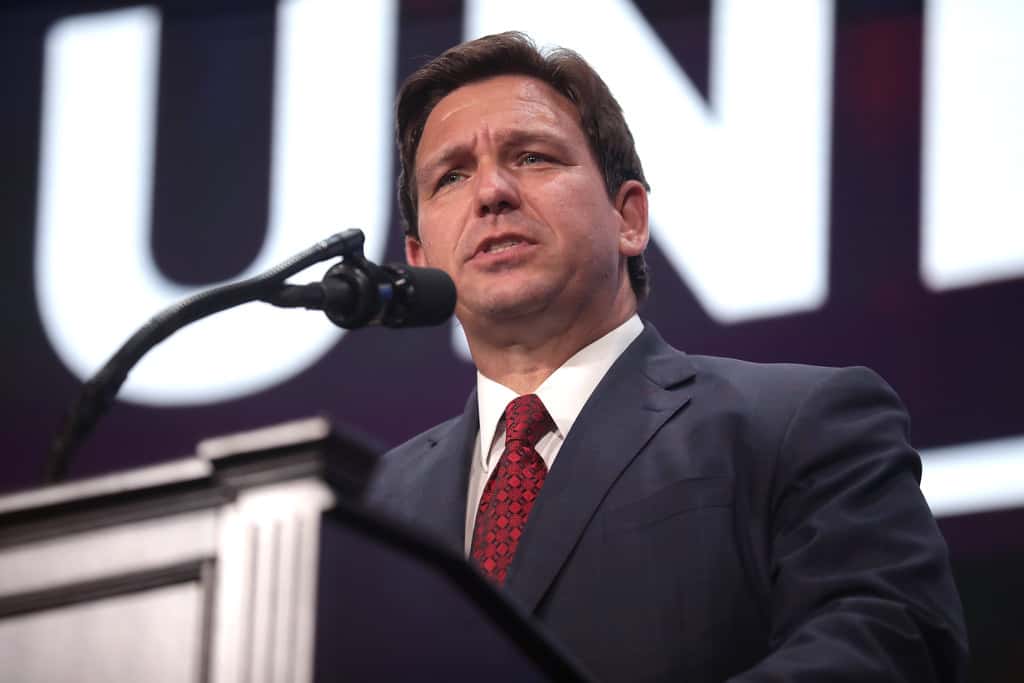
Governor Ron DeSantis signed HB 905 into law on May 8, 2026, at Miami's Bay of Pigs Museum, enacting the Foreign Interference Restriction and Enforcement Act, known as the FIRE Act, a sweeping measure that places new restrictions on interactions between Florida government entities, public institutions, and foreign countries identified as adversaries or countries of concern. The legislation targets nations including Cuba, China, Russia, Iran, and North Korea, and expands Florida's existing framework for limiting foreign influence across a range of public and private activities.
The Signing Ceremony and Its Symbolism
DeSantis chose the Bay of Pigs Museum in Miami's Little Havana neighborhood as the setting for the signing, a deliberate symbolic choice given the museum's connection to Cuban exiles who participated in the failed 1961 CIA-backed invasion of Cuba. The location underscored the bill's specific provisions targeting Cuban government influence in Florida, which the governor described as a long-standing and ongoing threat to the state's security and economic integrity.
Speaking at the signing ceremony, DeSantis framed the FIRE Act as a necessary expansion of protections that Florida had been developing over multiple legislative sessions. He argued that foreign adversaries, particularly China and Cuba, had been systematically attempting to infiltrate Florida's government, universities, businesses, and critical infrastructure, and that existing laws had left too many gaps for those efforts to exploit.
The governor cited specific concerns about technology transfer through university research programs, about foreign nationals from countries of concern occupying positions with access to sensitive government systems, and about the use of business and cultural exchange agreements as cover for intelligence gathering. The FIRE Act, he said, addresses each of those vectors with specific legal prohibitions and enforcement mechanisms.
The law takes effect July 1, 2026, giving affected entities, including government agencies, local governments with existing sister city agreements, and businesses operating in regulated sectors, several weeks to come into compliance before the new restrictions become enforceable.
What the FIRE Act Actually Does
The legislation creates several distinct legal regimes, each targeting a different type of foreign influence activity. Government employees and officials are prohibited from accepting gifts, travel, or anything of value from representatives of foreign countries of concern. The prohibition extends to indirect gifts channeled through intermediaries or third-party organizations with ties to FCOCs, closing a loophole that critics said had allowed improper foreign relationships to be maintained in ways that skirted earlier gift ban provisions.
The FIRE Act also terminates all existing sister city and sister state agreements between Florida municipalities and entities in foreign countries of concern, effective July 1. Florida cities had maintained a number of such cultural and economic exchange agreements with cities in China, Cuba, and other nations on the list. Those agreements, which facilitate reciprocal visits, cultural programs, and business exchanges, will no longer be legally authorized under the new law. Local governments wishing to maintain international relationships must do so only with partners in countries not designated as foreign countries of concern.
In the adoption and surrogacy context, the law prohibits any surrogacy or adoption contract in which any party, including the intended parents, surrogate, or child, is a citizen or permanent resident of a foreign country of concern. The provision addresses concerns that birth tourism and surrogacy arrangements have been used by nationals of adversary nations to establish legal ties to the United States, a practice sometimes described as a vector for intelligence activity or for circumventing foreign travel restrictions.
The law gives local governments and county tax collectors new authority to revoke or refuse to renew business tax receipts for any entity found to be conducting business with Cuba in violation of federal law. Making a knowingly false declaration about business activities with Cuba becomes a third-degree felony under the new statute, punishable by up to five years in prison.
The Cuban Provisions and South Florida's Diaspora Community
The sections targeting Cuban government influence carry particular resonance in South Florida, home to one of the largest Cuban diaspora communities in the world. Many Cuban Americans who fled the Castro regime or whose families left Cuba after 1959 have long advocated for stronger federal and state measures against the Cuban government's influence activities, arguing that Havana has historically used cultural, business, and academic channels to maintain influence over Cuban American communities and to gather intelligence.
The FIRE Act's Cuba provisions build on existing Florida statutes that already restricted business dealings with the Cuban government and prohibited Florida state agencies from contracting with companies that did business in Cuba in violation of federal law. The new law adds enforcement mechanisms and extends the prohibitions to additional categories of activity, including the business tax receipt revocation authority.
Some business groups and academics raised concerns that the law's broad language could inadvertently create obstacles for legitimate cultural exchanges, academic research, or humanitarian activities involving Cuban citizens. They argued that the law needed to include clearer exemptions for activities that do not implicate national security concerns. DeSantis's office said the law was drafted to target government-to-government or intelligence-linked activities rather than private cultural and humanitarian work.
The choice of the Bay of Pigs Museum as the signing location generated significant attention in Miami's Cuban American community, with many longtime exile advocates expressing support for the governor's action and arguing that stronger state-level measures against Cuban government influence were long overdue.
The China and Technology Transfer Dimensions
While Cuba received the most symbolic attention at the signing ceremony, the FIRE Act's provisions targeting Chinese influence were described by state officials as among the most substantively significant components of the law. Florida has a large and growing technology sector, a network of research universities, and several major military installations, all of which have been identified by federal intelligence agencies as targets for Chinese government intelligence collection efforts.
The law's restrictions on government employees and officials accepting gifts or benefits from Chinese government-linked entities extend to interactions at academic conferences, business forums, and cultural events where the lines between legitimate exchange and influence activity are often blurry. State officials said the new provisions would give Florida a clearer legal framework for identifying and sanctioning improper relationships.
Florida's public universities, which have already been required under earlier legislation to disclose foreign gifts above certain thresholds and to terminate Confucius Institutes (Chinese government-funded cultural and language programs), will see additional compliance obligations under the FIRE Act. The law expands the definition of activities that must be disclosed and tightens the deadlines for reporting foreign contributions and contracts with FCOC-linked entities.
National security researchers and federal law enforcement officials have for several years identified Florida's research universities as significant targets for intellectual property theft and technology transfer by Chinese government-linked actors. The FIRE Act's provisions, supporters said, would give state authorities additional tools to complement federal enforcement efforts and would send a clear signal to university administrators about the state's expectations for managing FCOC relationships.
Legal Challenges and Civil Liberties Concerns
The FIRE Act drew criticism from civil liberties organizations and some academic groups who argued that several of its provisions raised constitutional concerns. The adoption and surrogacy restrictions, in particular, were flagged by family law attorneys as potentially running into equal protection and due process challenges, since they create legal disabilities based on national origin that would affect individuals who may themselves have no connection to foreign government activities.
The sister city agreement termination provision was criticized by some local government officials who said it removed municipal autonomy over international relationships that had been productive for their communities for decades. Several Florida cities had maintained sister city agreements with Chinese cities that had facilitated legitimate trade and educational exchanges, and local officials expressed concern about losing those relationships without any alternative pathway for maintaining international connections.
Free speech and academic freedom advocates argued that the broadly worded restrictions on accepting gifts and benefits from FCOC-linked entities could create a chilling effect on academic exchange and research collaboration, making it more difficult for Florida universities to attract international scholars and participate in globally collaborative research programs. They urged the governor and legislature to clarify the law's exemptions to protect legitimate academic activity.
DeSantis administration officials defended the law as a reasonable and necessary response to documented threats to Florida's security and economic interests, arguing that the provisions were narrowly targeted at government-linked entities and activities that had been identified through intelligence assessments as genuine risks. The administration said it expected legal challenges and was confident the law would withstand constitutional scrutiny.
The Broader Context of Florida's Foreign Influence Framework
The FIRE Act is the latest in a series of measures Florida has enacted over the past several legislative sessions to address foreign influence concerns. Earlier laws had addressed specific areas, including restrictions on foreign nationals purchasing agricultural land, prohibitions on certain technology applications with FCOC connections, and disclosure requirements for universities receiving foreign gifts. The FIRE Act represents an attempt to consolidate and expand those protections into a more comprehensive framework.
Florida's aggressive stance on foreign influence reflects both the state's unique geographic and demographic position, with large diaspora communities from Cuba, Venezuela, Nicaragua, and other nations with adversarial governments, and the presence of major military installations, ports, and technology centers that are attractive intelligence targets. State officials have argued that Florida's exposure to foreign influence threats exceeds that of most other states and justifies a more proactive legislative response.
The state's efforts have been broadly consistent with federal legislative activity, including the RESTRICT Act and other congressional proposals addressing foreign technology and influence concerns. Florida officials have said they see the FIRE Act as complementing federal measures while filling gaps where federal law does not reach state government activities and institutions.
With the law taking effect July 1, state agencies, local governments, and affected businesses and institutions will need to move quickly to conduct compliance reviews, terminate prohibited agreements, and adjust their policies and procedures to meet the new requirements. The Florida Department of Law Enforcement and the Attorney General's office are expected to issue guidance documents in the coming weeks to help entities navigate the new statutory framework before the effective date.
Spotted an issue with this article?
Have something to say about this story?
Write us a letterComments
No comments yet. Be the first to weigh in.
Related Coverage

Miami shuts enclosed park slides after 13-year-old dies following Shenandoah Park incident
1d ago
Appeals Court Orders Hope Florida Grand Jury Report Expunged, Rules $10 Million Was Never Public Money
2d ago

Jacksonville Council Committees Clear $30 Million Gas Tax Loan to Rescue JTA Ahead of Oct. 13 Final Vote
2d ago
Florida Supreme Court Suspends Pinellas-Pasco Judge Jennifer Cruz Dubbeld 20 Days Over 2024 Campaign Misconduct
2d ago