DeSantis Signs Florida Congressional Redistricting Map After Supreme Court Weakens Voting Rights Act
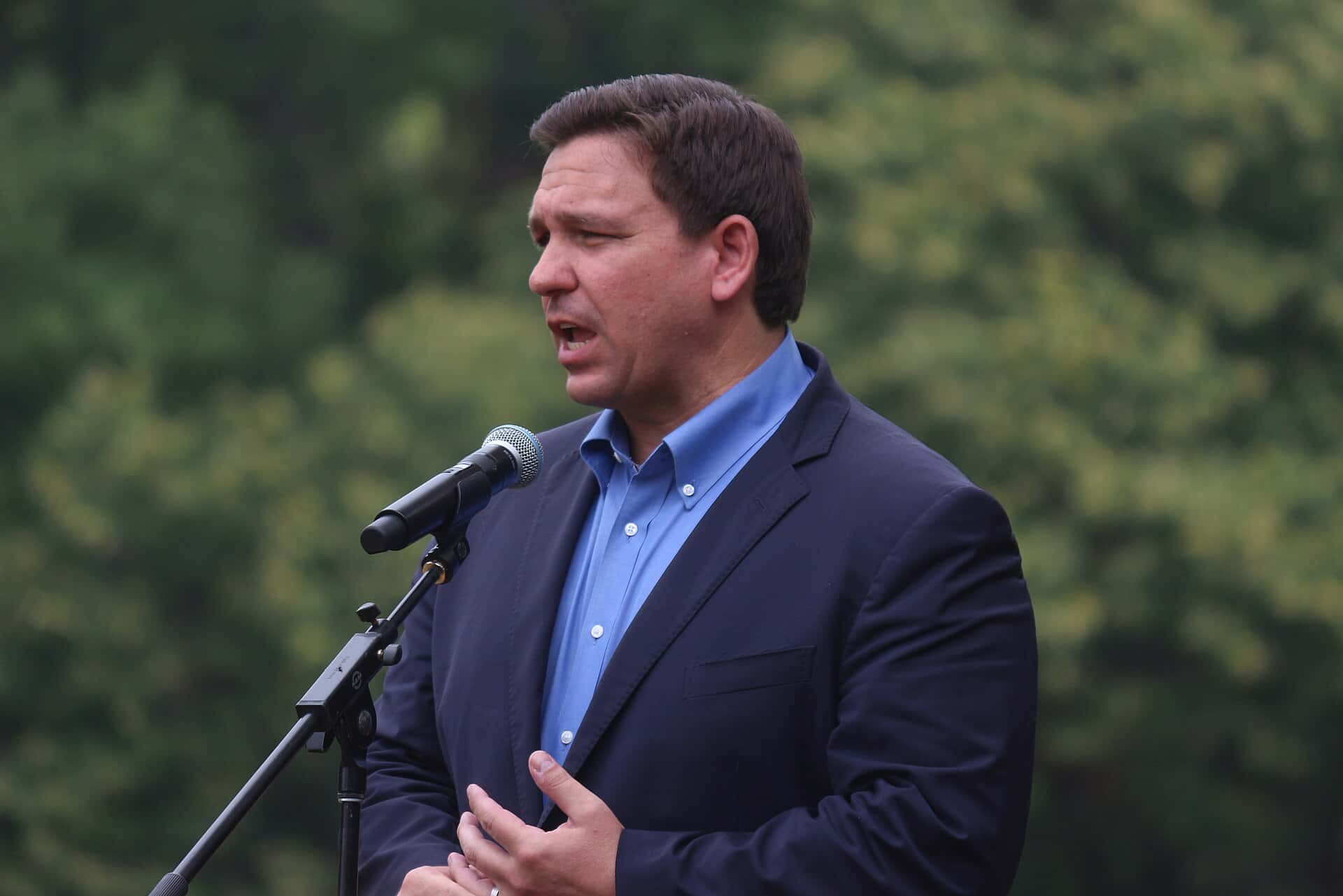
Florida Gov. Ron DeSantis signed a new congressional redistricting map into law on May 4, 2026, in a move that could shift the state's U.S. House delegation from the current 20-to-8 Republican advantage to as many as 24 Republicans and just four Democrats. The signing came days after the Florida Legislature approved the map in votes that broke largely along party lines, and just hours after the U.S. Supreme Court delivered a landmark ruling that significantly curtailed the reach of the Voting Rights Act in redistricting cases.
A New Congressional Map Takes Shape in Tallahassee
The Florida House of Representatives passed the redistricting plan in an 83-to-28 vote on April 29, 2026, and the Florida Senate followed with a 21-to-17 vote that also ran largely along party lines. The final Senate vote came just hours after the Supreme Court issued its decision in a Louisiana redistricting case, a ruling that DeSantis and Republican lawmakers said they had been waiting for before proceeding with their long-planned overhaul of the state's congressional boundaries.
DeSantis characterized the new map as a necessary correction after years of what he called court-imposed distortions to Florida's congressional lines. His office argued that the previous maps, which included several majority-minority congressional districts, were drawn under legal requirements that the Supreme Court has now substantially weakened. The Governor convened a special legislative session specifically to address the redistricting, linking the timing to the anticipated court decision.
The Legislature moved with unusual speed once the Supreme Court ruling was released. Floor votes in both chambers occurred the same day as the decision, and DeSantis signed the bill into law within days. Supporters of the map praised the efficiency of the process. Critics called it a deliberate rush to lock in electoral advantages before courts could intervene.
The Supreme Court Ruling That Changed the Calculus
The U.S. Supreme Court issued a 6-to-3 decision that significantly limited the power of plaintiffs to challenge congressional maps under Section 2 of the Voting Rights Act. The ruling stemmed from a Louisiana case in which a federal court had ordered the state to draw a second majority-Black congressional district. The high court's majority held that the Voting Rights Act did not require Louisiana to create that district, reversing the lower court's order.
Voting rights advocates said the ruling effectively guts one of the most powerful legal tools used to challenge racially discriminatory maps. The three liberal justices dissented, warning that the decision would make it far harder for minority voters to seek judicial relief when they believe congressional lines have been drawn to dilute their political power. The majority opinion, written by the court's conservative bloc, emphasized that race cannot be the predominant factor in drawing congressional districts.
DeSantis argued publicly that the ruling invalidated Florida's Fair Districts Amendments, which Florida voters approved in 2010 and which prohibit maps that diminish minority access or are drawn with partisan intent. Voting rights groups and several legal scholars disputed that interpretation, noting that the Fair Districts provisions are independent Florida constitutional protections that exist separately from federal statute and federal court doctrine.
What the New Map Does to Florida's Congressional Districts
Under the newly signed map, Florida's 28 congressional districts are redrawn in ways that analysts say will substantially increase Republican representation. The current delegation stands at 20 Republicans and 8 Democrats. Under the new lines, projections indicate the Republican advantage could grow to 24 seats, with Democrats holding only four.
The map eliminates or dilutes several majority-minority districts that were previously drawn to ensure Black and Hispanic voters had meaningful representation in Congress. Critics of the map say that communities of color in North Florida, the Jacksonville corridor, and the Tampa Bay region will see their political influence substantially diminished under the new lines. Some districts that previously elected Black representatives to Congress have been cracked and packed in ways that supporters of the map say simply reflect demographic realities.
Republican backers of the redistricting argue the new districts more accurately reflect the state's overall political composition, which has trended Republican in recent election cycles. They contend the prior maps were legally imposed constructs rather than products of Florida's authentic political will. DeSantis described his role in crafting the map as consistent with his authority as governor and the Florida Constitution's redistricting process.
How Democrats and Voting Rights Groups Are Responding
Florida Democrats immediately condemned the new map as an unconstitutional partisan gerrymander, noting that the state's Fair Districts Amendment specifically prohibits drawing maps with the intent or effect of favoring a political party. House minority leaders argued during floor debate that no Supreme Court ruling about federal law can override what Florida voters themselves placed in the state constitution in 2010 through a direct ballot initiative.
Voting rights organizations announced plans to challenge the map in Florida state courts, where advocates say the Fair Districts provisions still provide independent grounds to strike down partisan gerrymanders. Because the legal challenges will proceed under Florida constitutional law rather than the federal Voting Rights Act, the U.S. Supreme Court's ruling about federal law may not insulate the Florida map from judicial review. Legal observers said that distinction is significant and could ultimately determine whether the map survives court scrutiny.
Several Democratic members of the current Florida congressional delegation held a press conference to warn that the new map was designed to silence voters of color and lock in one-party dominance of the state's federal representation ahead of the November 2026 midterm elections. Minority communities in affected districts are expected to be heavily engaged in the litigation that follows.
The Fair Districts Amendment and State Constitutional Questions
Florida voters approved the Fair Districts Amendments in 2010 by wide margins, establishing two provisions: one prohibiting maps that diminish minority voting access, and another banning maps drawn with the intent or effect of favoring a political party. These provisions are embedded in the Florida Constitution, not in federal statute, meaning their legal status is governed by Florida courts rather than federal courts.
DeSantis and his legal team argued that the Supreme Court's Voting Rights Act ruling implicitly invalidates the minority-access prong of Fair Districts. Legal scholars are divided on whether a federal statutory ruling can override a state constitutional provision passed directly by voters. The question of how the Fair Districts Amendments interact with the new Supreme Court doctrine is expected to be central to the state court litigation that is now being prepared.
Previous Florida redistricting battles produced notable court victories for voting rights plaintiffs. After the 2010 census, Florida courts struck down portions of the state's congressional map for violating the Fair Districts provisions. Voting rights lawyers say they will press similar arguments this cycle, though they acknowledge the political and legal environment has shifted and court timelines may make it difficult to get a new map in place before November.
National Context: A Republican Redistricting Wave
Florida's rapid redistricting move was part of a broader national Republican strategy following the Supreme Court ruling. Texas lawmakers also moved to redraw congressional lines to maximize their party's advantage, with projections showing the GOP could gain five additional House seats in that state alone. California Democrats responded with their own partisan redraw intended to offset Republican gains nationally.
President Trump publicly urged Republican-led states to redraw their congressional maps before the November 2026 midterms, calling it an opportunity to strengthen the GOP's House majority. Florida, with its 28 congressional seats and large Republican legislative majorities, was identified as one of the states offering the most potential gains. Analysts said a successful Florida redraw, combined with Texas changes, could represent the largest mid-decade partisan redistricting shift in the nation's modern history.
Democrats have accused Republicans of weaponizing the redistricting process to entrench minority-rule outcomes, arguing that the new maps across multiple states will result in an electorate that is far less competitive than the underlying partisan preferences of the population would otherwise produce. Republicans counter that their states are simply drawing maps that reflect legitimate political majorities.
What's Next for Floridians
Florida courts are expected to take up legal challenges to the new map in the coming weeks. Voting rights attorneys said they plan to seek injunctions to block the new lines before the qualifying deadline for the November 2026 elections. Courts in prior Florida redistricting cycles have shown some willingness to intervene, though blocking a signed map this close to an election requires a high threshold of constitutional violation.
The Florida League of Women Voters, the NAACP, and several other advocacy organizations are among the groups preparing legal filings. Their core argument will center on the Fair Districts Amendment's prohibition on partisan gerrymanders, which they say stands independently of anything the U.S. Supreme Court has said about federal law. The state courts will need to decide quickly whether to put the new map on hold while litigation proceeds.
Floridians who live in affected districts should expect changes to their congressional representation in the next election cycle. Residents in the Jacksonville region, central Florida, and parts of the Tampa Bay area may find their congressional district lines altered significantly. County election supervisors will update voter registration materials and precinct assignments once the new boundaries take legal effect. The outcome of the court challenges will determine whether those new lines are in place for November 2026 or whether a court-imposed alternative map is used instead.
Spotted an issue with this article?
Have something to say about this story?
Write us a letterComments
No comments yet. Be the first to weigh in.
Related Coverage

Miami shuts enclosed park slides after 13-year-old dies following Shenandoah Park incident
1d ago

Appeals Court Orders Hope Florida Grand Jury Report Expunged, Rules $10 Million Was Never Public Money
2d ago

Jacksonville Council Committees Clear $30 Million Gas Tax Loan to Rescue JTA Ahead of Oct. 13 Final Vote
2d ago

Florida Supreme Court Suspends Pinellas-Pasco Judge Jennifer Cruz Dubbeld 20 Days Over 2024 Campaign Misconduct
2d ago