FDLE Reviews Okaloosa Deputy Shooting That Killed Armed Crestview Man
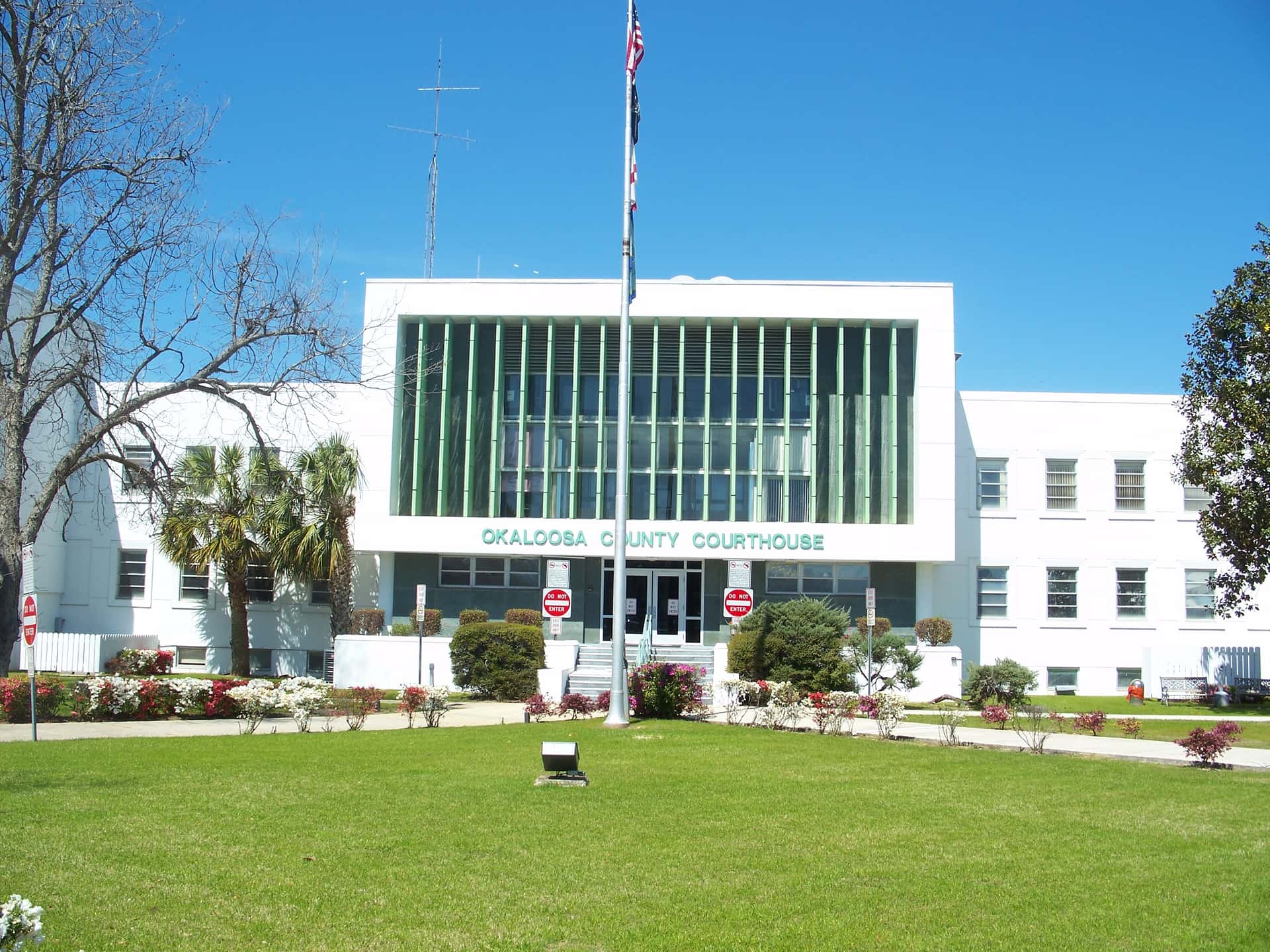
The Florida Department of Law Enforcement is conducting an independent investigation into a shooting in which Okaloosa County deputies killed a 29-year-old man during an attempt to serve warrants at a Crestview home. The Sheriff's Office identified the man as Antonio Austin Haner and said he fired multiple rounds at deputies before he was killed.
The incident happened around 5 a.m. on Saturday, August 8, at a residence on Alabama Street near Richburg Middle School. Deputies had gone to the home to serve a search warrant, an arrest warrant, and a risk protection order. No deputies or other officers were injured.
FDLE's involvement came at the request of the Okaloosa County Sheriff's Office, which is standard practice in Florida for shootings involving law enforcement officers. The investigation is ongoing and no findings have been released.
What authorities have said
According to the Sheriff's Office, the warrants stemmed from a series of escalating threats, including allegations of discharging a firearm within 1,000 feet of a school and firing a gun in a residential neighborhood. Discharging a firearm in public or on residential property is a felony under Florida law, and the proximity to a school is an aggravating circumstance.
When an Okaloosa County Sheriff's Office SWAT team attempted to serve the warrants Saturday morning, authorities said Haner refused to leave the home and surrender, and then began firing multiple rounds at deputies. Sheriff Eric Aden described the response as involving SWAT tactics used to neutralize the threat, and Haner was pronounced dead at the scene.
The three separate legal instruments deputies were serving indicate the scope of the case. A search warrant authorizes a search of a specific location for specified evidence. An arrest warrant authorizes taking a named person into custody. A risk protection order is a civil order specific to firearms.
The Sheriff's Office has not released additional detail about the number of deputies who fired or the sequence of events inside the residence, information that typically emerges through the FDLE investigation and any subsequent State Attorney review.
What a risk protection order is
Florida's risk protection order statute was enacted as part of the Marjory Stoneman Douglas High School Public Safety Act following the 2018 Parkland shooting. It allows a law enforcement agency to petition a court to temporarily prohibit a person from possessing or purchasing firearms when there is evidence they pose a significant danger to themselves or others.
The process requires a court hearing. A temporary order can be issued ex parte, meaning without the respondent present, and lasts up to 14 days pending a full hearing. A final order after that hearing can last up to one year and is renewable. The respondent has the right to counsel and to contest the petition.
Florida law enforcement agencies have filed thousands of risk protection petitions since the statute took effect, with Polk, Pinellas, and Broward counties among the heaviest users. Research on the statute's effect has generally found it is used most often in cases involving threats of self-harm or threats against specific individuals.
Serving a risk protection order requires surrendering firearms, which is precisely the point at which these encounters carry elevated risk. Law enforcement agencies have developed specific protocols around service, and the use of a SWAT team in this case reflects a threat assessment made before deputies arrived.
How Florida investigates officer-involved shootings
Florida does not have a single statewide mandate governing how every agency handles a shooting by one of its officers, but the prevailing practice is for the involved agency to request an outside investigation. FDLE is the most common choice, and the agency maintains investigative teams that respond statewide.
The independent investigator collects physical evidence, conducts interviews, obtains any available video from body-worn cameras or other sources, and produces an investigative report. That report goes to the State Attorney for the judicial circuit where the incident occurred.
The State Attorney then determines whether the use of force was legally justified under Florida law, which permits law enforcement officers to use deadly force when they reasonably believe it is necessary to defend themselves or another from imminent death or great bodily harm.
In cases where an armed subject fires at officers, that determination is typically straightforward, but the process still runs its full course. The First Judicial Circuit State Attorney's Office covers Okaloosa, Escambia, Santa Rosa, and Walton counties and would handle the review.
Okaloosa County and the Panhandle
Crestview is the largest city in Okaloosa County by population and sits inland from the Gulf coast resort communities of Destin and Fort Walton Beach. The county's population is heavily influenced by Eglin Air Force Base and Hurlburt Field, two major military installations that anchor the local economy.
The Okaloosa County Sheriff's Office serves the unincorporated county and contracts with several municipalities. Sheriff Eric Aden was elected in 2020 and has led the agency through a period that has included several high-profile incidents.
The Panhandle's law enforcement landscape differs from South Florida's in scale and resources. Agencies are smaller, jurisdictions cover more territory with fewer officers, and specialized units like SWAT teams may serve multiple jurisdictions through mutual aid agreements.
Alabama Street's proximity to Richburg Middle School was a factor in the timing and the tactical approach. Serving warrants at 5 a.m. reduces the risk to the surrounding community by conducting the operation before students and residents are moving through the area.
What is not yet known
Several material questions remain open. FDLE has not released the number of deputies who discharged firearms, the total rounds fired, or the specific sequence of events. Body-worn camera footage, if it exists and was activated, has not been publicly released.
Florida's public records law generally makes law enforcement records available, but active criminal investigative information is exempt while an investigation is ongoing. That exemption typically lifts when the investigation concludes and the State Attorney makes a determination.
The underlying threats that produced the warrants have not been detailed beyond the general description provided by the Sheriff's Office, and the identities of any complainants have not been disclosed.
Information about whether Haner had a documented history of mental health crisis, which is often relevant in risk protection order cases, has not been released.
Body cameras and public records
Florida's approach to law enforcement video sits at the intersection of one of the nation's broader public records laws and a set of exemptions that limit access in exactly the circumstances where interest is highest.
The state does not require every agency to deploy body-worn cameras. Adoption is an agency-by-agency decision, driven by budget, policy, and in some cases local political pressure, which means practice varies considerably between a large metropolitan sheriff's office and a smaller rural agency.
Where cameras are in use, the footage is a public record, but active criminal investigative information is exempt from disclosure while an investigation remains open. Additional exemptions apply to recordings made inside a private residence, at a scene of a medical emergency, or in a location where a person has a reasonable expectation of privacy, and those can require redaction before release.
The practical consequence is that footage from an incident like this one typically does not become public until the outside investigation concludes and the State Attorney announces a determination. Agencies sometimes release video earlier at their discretion, particularly when they judge that doing so serves public confidence.
Families of people killed in encounters with law enforcement can generally obtain access earlier under provisions addressing next of kin, though the process is not automatic and often requires a formal request.
Why warrant service is high risk
Serving a warrant at a residence is among the more dangerous routine functions in law enforcement, and the tactical decisions that surround it have been the subject of substantial national scrutiny over the past decade.
The core problem is that officers are entering a space the occupant knows and they do not, against a person who has reason to anticipate an adverse outcome. Agencies mitigate that through pre-operation intelligence gathering, threat assessment, and in higher-risk cases the use of specialized teams trained for the scenario.
The decision to use a SWAT team reflects a formal risk assessment. Agencies typically apply a scoring matrix considering the subject's criminal history, known access to weapons, prior violence, mental health indicators, and the presence of others in the residence. A case involving alleged firearm discharge near a school and a risk protection order would score high on several of those factors.
Timing is also a deliberate choice. Early morning service, as occurred here, is standard practice because subjects are typically home, less likely to be armed and alert, and neighborhood activity is minimal, which reduces the risk to bystanders if the encounter goes wrong.
What's next
Okaloosa County residents seeking information about the incident can request records from the Sheriff's Office once the investigative exemption lifts. FDLE also publishes case information following the conclusion of its independent reviews.
Officer-involved shootings in Florida are reported to the state's use-of-force data collection, which feeds into national reporting. Those datasets have historically been incomplete because participation has not been uniformly mandatory, an issue that criminal justice researchers have raised repeatedly.
FDLE will complete its investigation and forward findings to the State Attorney for the First Judicial Circuit, a process that in Florida typically takes weeks to several months depending on the complexity of the evidence.
The State Attorney's determination on whether the use of force was justified will be the formal conclusion of the criminal review. That determination does not preclude civil litigation, which operates on a separate track and under a different legal standard.
The Okaloosa County Sheriff's Office will also conduct an internal administrative review examining whether the deputies involved followed agency policy, which is distinct from the question of criminal liability.
The Florida Press will report the findings when FDLE and the State Attorney's Office release them.
Spotted an issue with this article?
Have something to say about this story?
Write a letter to the editor