Pinellas Judge Finds Plastic Surgeon Guilty of Murdering Attorney Whose Body Was Never Found
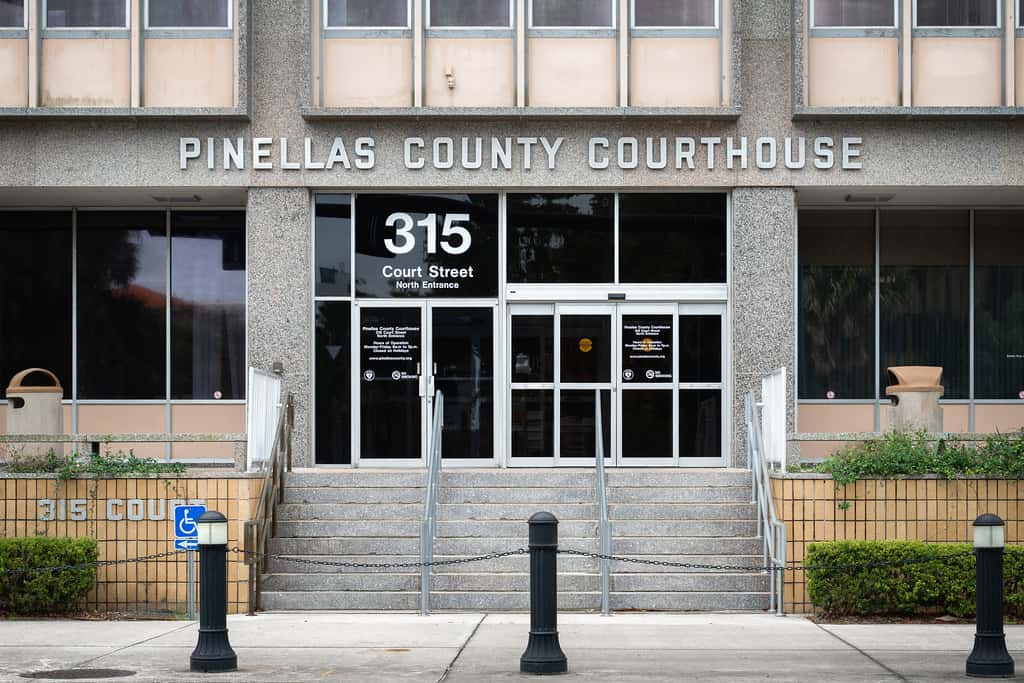
A Pinellas County judge found plastic surgeon Tomasz Kosowski guilty of first-degree murder on Wednesday in the 2023 death of 41-year-old attorney Steven Cozzi, whose body has never been recovered. Circuit Judge Joseph Bulone delivered the verdict following closing arguments in a case that was unusual on several counts: Kosowski represented himself, waived his right to a jury trial, and has also waived his right to counsel and to a jury for the penalty phase in a case where the state is seeking the death penalty. A hearing is scheduled for October 8.
The verdict and how it was reached
Judge Bulone issued the guilty finding after closing arguments concluded, deciding the case himself rather than sending it to a jury. That structure was the product of Kosowski's own decisions. A defendant in Florida may waive the right to a jury trial, and when that waiver is accepted the judge serves as the finder of fact, weighing evidence and determining guilt in what is known as a bench trial.
Bench trials are uncommon in serious felony cases and rarer still in capital cases, where defense strategy almost universally favors a jury because a death sentence in Florida requires jury involvement in the penalty determination. Kosowski's decision to waive that protection, in a case where the state is pursuing the death penalty, was described in coverage of the trial as a highly unusual move with few modern parallels.
The self-representation decision compounded the unusual posture. A defendant has a constitutional right to represent himself if a court finds the waiver of counsel knowing and voluntary, and courts typically conduct an extensive inquiry before permitting it in a capital case. Kosowski conducted his own defense through the trial, including pressing at one point for a courtroom demonstration of his theory of the case.
The case against him
Prosecutors argued that Kosowski had what they described as a malicious and personal obsession with Cozzi and that he planned the killing methodically and systematically. The relationship between the two men was adversarial and professional: Cozzi was representing defendants in litigation that Kosowski had brought.
Cozzi disappeared in March 2023 from the law firm where he worked. The absence of a body meant the state built its case on circumstantial evidence rather than on the physical proof that ordinarily anchors a homicide prosecution. No-body homicide cases are legally viable in Florida but place a heavier evidentiary burden on prosecutors, who must establish that a death occurred and that the defendant caused it without the central piece of physical evidence.
Those cases typically rest on a combination of forensic evidence from the scene, digital records including phone and vehicle location data, financial and communication records, and evidence of motive and planning. The state rested its case after presenting its evidence, and the defense followed before the matter went to closing arguments.
Because the verdict came from the bench rather than a jury, the judge's reasoning will carry particular weight on appeal. Judges in bench trials make findings that become part of the record in a way jury deliberations never do, which gives appellate courts more to review.
What comes next in the penalty phase
Kosowski now faces either life in prison without the possibility of parole or a death sentence. Judge Bulone has scheduled a hearing for October 8, at which final arguments are expected ahead of the sentencing determination.
Florida's capital sentencing framework requires findings on aggravating and mitigating circumstances. Aggravating factors are statutorily enumerated and include elements such as whether the killing was cold, calculated and premeditated. Mitigating circumstances cover the defendant's history, mental health and any other factor the defense offers in favor of a life sentence.
The mitigation phase is ordinarily the most intensive part of a capital defense, involving expert witnesses, extensive investigation into the defendant's background and sometimes months of preparation. A defendant who has waived counsel is conducting that work himself, without the investigative and expert resources a capital defense team ordinarily deploys.
Florida changed its capital sentencing law in 2023 to permit a death sentence on a jury recommendation of at least eight of twelve jurors, ending the unanimity requirement that had been in place. That change is not directly implicated here, because Kosowski waived the jury for the penalty phase as well.
The no-body prosecution
Cases in which a victim's body is never recovered occupy a distinct category in criminal law. Prosecutors must prove the corpus delicti, meaning that a crime occurred, before evidence connecting a defendant to it carries full weight, and the absence of remains removes the most direct route to that proof.
Florida courts have upheld convictions in such cases where the circumstantial evidence was strong enough to exclude reasonable alternatives. The evidentiary theory generally runs through demonstrating that the victim's disappearance is inconsistent with any explanation other than death, often supported by the abrupt cessation of phone, financial and social activity.
For the victim's family, a conviction without recovery of remains resolves the legal question while leaving the practical one open. Families in comparable cases have described the absence of a body as an obstacle to closure that a verdict does not address, and law enforcement agencies typically keep recovery efforts open after a conviction.
The conviction does not end the legal process. A first-degree murder conviction in Florida carries an automatic direct appeal to the Florida Supreme Court if a death sentence is imposed, which means the case will be reviewed at the state's highest court should the penalty phase conclude that way.
Why self-representation matters legally
The right to self-representation was established in federal constitutional law and is available to defendants found competent to make the choice. Courts must ensure the waiver of counsel is knowing, intelligent and voluntary, typically through a detailed colloquy in which the judge explains the risks.
Appellate courts have generally been reluctant to reverse convictions on the basis that a self-represented defendant performed poorly, reasoning that a defendant who chooses to proceed without counsel accepts the consequences. The narrower appellate questions usually concern whether the trial court adequately advised the defendant and whether he was competent to make the waiver.
In capital cases, the stakes make the issue more fraught. Legal commentators have long noted the tension between honoring a defendant's autonomy and the reliability concerns that arise when the most serious penalty available is imposed after a trial in which one side had no professional representation.
Because Kosowski also waived the jury, both at trial and for sentencing, the case removes two structural safeguards at once. That combination is likely to feature in any appellate review.
The Pinellas County context
The case was prosecuted in Florida's Sixth Judicial Circuit, which covers Pinellas and Pasco counties. Cozzi worked at a law firm in the Largo area, and Kosowski practiced in the Tarpon Springs area, placing the case within the north Pinellas legal community where both men were known.
The disappearance of an attorney from his own workplace generated substantial local attention when it occurred in March 2023, and the case has been followed closely in the Tampa Bay legal community through the arrest, the pretrial litigation and the trial itself.
State attorneys in Florida decide whether to seek the death penalty, and that decision in this circuit placed the case in the small category of Florida prosecutions where capital punishment is actually pursued to trial. Most Florida first-degree murder cases resolve without a death sentence, either through plea or through a state decision not to seek it.
The October 8 hearing will take place in the same courtroom, before the same judge, who will now determine the sentence after having determined guilt.
What it means for Floridians
For Florida residents, the case illustrates how the state's criminal process handles its most serious charges and how much of that process rests on decisions the defendant controls. The right to a jury, the right to counsel and the decision whether to testify all belong to the defendant, and a court's role is to ensure those choices are made competently rather than to override them.
It also demonstrates that Florida prosecutors will bring homicide charges without a recovered body where the circumstantial record supports it. That has practical significance for how missing persons cases are investigated, because the evidentiary path runs through digital records, forensics at the scene and reconstruction of movement rather than through recovery.
The capital sentencing framework is likewise a live matter of Florida policy. The 2023 change to the jury recommendation threshold moved Florida away from a unanimity standard that most death penalty states apply, and the state's capital docket has grown as a result.
Nothing about the verdict resolves the question of where Cozzi's remains are, and that question remains open.
What's next
The October 8 hearing is the next scheduled step, with final arguments expected ahead of the sentencing determination. Judge Bulone will decide between life without parole and a death sentence.
If a death sentence is imposed, the case proceeds automatically to the Florida Supreme Court for direct review, a process that takes years and examines both the conviction and the sentence. If a life sentence is imposed, Kosowski retains ordinary appellate rights but the case leaves the capital track.
Any appeal will likely raise the waiver issues, both of counsel and of the jury, given how central those decisions were to the shape of the trial. Appellate courts will examine whether the trial court's inquiries into competence and voluntariness met the standard Florida law requires.
Law enforcement has not indicated that efforts to locate Cozzi's remains have concluded, and such searches in comparable Florida cases have continued after conviction.
Spotted an issue with this article?
Have something to say about this story?
Write a letter to the editor