Suspended Osceola Sheriff Heads Toward November Racketeering Trial
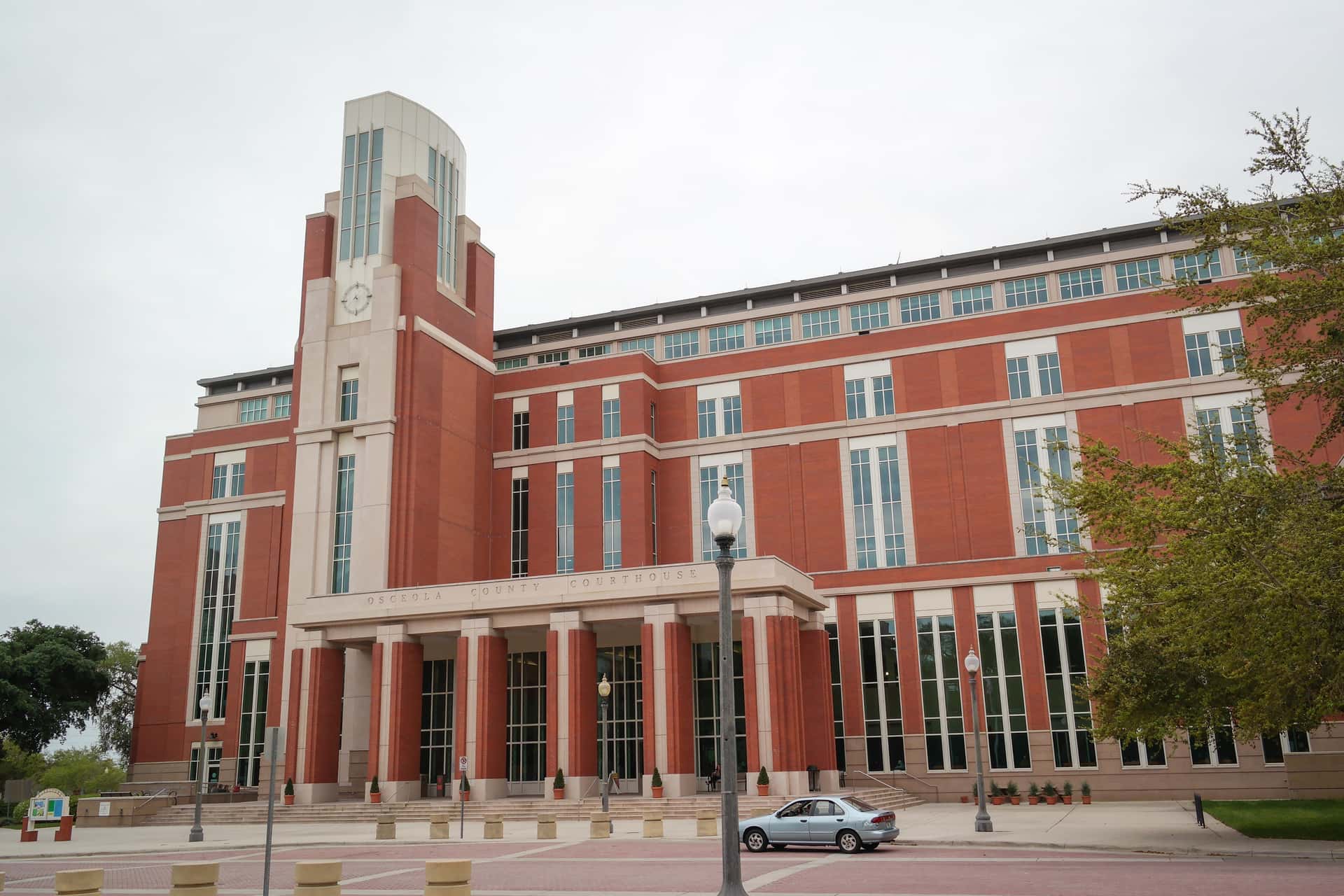
Suspended Osceola County Sheriff Marcos Lopez is scheduled to stand trial November 10 on racketeering charges stemming from what state prosecutors allege was a multimillion-dollar illegal gambling network operating through arcades and gaming rooms in Lake and Osceola counties. Lopez has pleaded not guilty and is the only named defendant in the case who is proceeding to trial.
Lopez was arrested in 2025 and suspended from office by executive order. He faces charges of racketeering and conspiracy to commit racketeering. He is presumed innocent, and the allegations against him have not been proven in court.
The case is among the most significant public corruption prosecutions in Florida in recent years, involving a sitting elected sheriff in a county of more than 400,000 residents in the Orlando metropolitan area.
What prosecutors allege
The Office of Attorney General James Uthmeier has stated that the alleged illegal gambling operation generated more than $21.6 million, with activity extending from Lake County into Osceola County.
Prosecutors have accused Lopez of using his position as sheriff to collect more than $600,000 in improper payments, and have connected him to the Eclipse Social Club, a now-closed gaming room in Kissimmee that they allege housed slot machines and other illegal gambling devices.
Florida law restricts gambling sharply, with legal gaming limited to specific authorized venues including tribal facilities operated under the Seminole Tribe's compact, licensed pari-mutuel operations and the state lottery. Gaming rooms operating outside that framework, sometimes described as adult arcades, have been a recurring subject of law enforcement attention.
The racketeering statute under which Lopez is charged, Florida's version of the RICO framework, permits prosecutors to charge a pattern of criminal activity conducted through an enterprise rather than charging individual acts separately.
How the case has proceeded
The case has moved through pretrial proceedings over more than a year. Lopez bonded out following his arrest and has appeared in court repeatedly as the parties worked through motions.
In February, a judge denied a defense motion to compel evidence. In March, the defense appeared in court as it prepared for trial. By the anniversary of the arrest in June, a trial date had still not been finalized, reflecting the complexity of a racketeering case with multiple defendants and substantial documentary evidence.
More recently, Lopez waived a potential conflict of interest involving one of his attorneys after prosecutors raised the issue in court. Conflict waivers of this kind are handled on the record specifically so that a conviction cannot later be challenged on the ground that the defendant did not understand the arrangement.
Co-defendants have been identified in the case, and Lopez is the only one planning to go to trial, which typically indicates that others have resolved their cases through plea agreements.
The suspension and the office
Under the Florida Constitution, the governor may suspend a county officer charged with a felony, and the Senate may later remove or reinstate the officer. Lopez was suspended following his arrest, and an appointed sheriff has been leading the Osceola County Sheriff's Office since.
That arrangement leaves the office in an unusual position. An appointed sheriff operates without the electoral mandate an elected officeholder carries, and the agency's leadership remains provisional pending the outcome of the criminal case and any subsequent Senate action.
Osceola County's population has grown substantially over the past two decades, driven by expansion around Kissimmee and St. Cloud and by the tourism corridor along U.S. 192. The sheriff's office serves a jurisdiction that has changed considerably in scale and character.
What a racketeering trial involves
Racketeering prosecutions differ from ordinary criminal trials in structure. Prosecutors must establish the existence of an enterprise and a pattern of racketeering activity, which typically requires presenting evidence of multiple predicate acts connected to a common purpose.
That structure generally produces longer trials with more witnesses and more documentary evidence than single-count cases. Financial records, communications and testimony from cooperating witnesses commonly form the core of the government's presentation.
For the defense, the strategy in such cases often focuses on disputing the connection between the defendant and the alleged enterprise, or on challenging the credibility of cooperating witnesses whose testimony was obtained through plea agreements.
Trial dates in complex cases move frequently, and a November 10 setting does not guarantee proceedings begin on that date.
What it means for Central Florida
Public corruption cases involving law enforcement leadership carry consequences beyond the individual prosecution. A sheriff's office depends on public confidence to function, and allegations against its leadership affect the agency's standing in ways that outlast any verdict.
For Osceola County residents, the practical question is agency operation during the interim period. Day-to-day law enforcement continues under appointed leadership, and the sheriff's office has maintained its normal functions throughout.
The case has also drawn attention to the broader question of illegal gaming rooms in Central Florida, an enforcement area that has generated repeated investigations across multiple counties.
Florida's gambling framework
The legal boundary the case turns on is drawn by Florida's gambling statutes, which permit specified forms of gaming and prohibit the rest.
Legal gaming in Florida includes the state lottery, pari-mutuel wagering at licensed facilities, and casino gaming operated by the Seminole Tribe under a compact between the tribe and the state. That compact has been the subject of extensive litigation over the years and governs which games may be offered and where.
Outside that framework, gambling is generally prohibited. The category commonly described as adult arcades or internet cafes has occupied a contested space, with operators arguing their machines constitute games of skill or promotional sweepstakes rather than gambling devices.
The Legislature has tightened those definitions multiple times in response to enforcement difficulties, and a substantial statewide enforcement action years ago shut down a large network of such establishments.
Prosecutions in this area frequently turn on technical questions about how specific machines operate, which is why cases often involve expert testimony about device mechanics.
Public corruption enforcement in Florida
Cases involving elected officials draw particular scrutiny because they implicate public trust in institutions rather than only individual conduct.
Florida's Attorney General maintains authority to prosecute certain offenses statewide, and the Office of Statewide Prosecution handles cases spanning multiple judicial circuits, which fits allegations of activity crossing county lines.
The Florida Department of Law Enforcement conducts investigations of public officials, a function that requires independence from the local agencies that ordinarily handle criminal investigation.
Sheriffs occupy an unusual position within that structure. They are independently elected constitutional officers rather than appointees, which insulates them from local political removal but places them under the governor's suspension authority when charged.
Osceola County today
The county has grown rapidly, with population expansion driven by the Orlando metropolitan area's outward development and by substantial in-migration including a large Puerto Rican community.
That growth has strained infrastructure and public services, and the sheriff's office serves a jurisdiction considerably larger and more complex than it was two decades ago.
Tourism along the U.S. 192 corridor near the theme parks generates a transient population that shapes the agency's workload, adding demands that differ from those of a purely residential county.
The county's budget, like every Florida county's, depends substantially on property tax revenue, which places Amendment 3 on the November ballot among the issues its commission is watching.
What suspension and removal involve
The constitutional process governing a suspended officer proceeds on a track separate from the criminal case, and the two can reach different outcomes.
A governor's suspension order takes effect immediately upon issuance and remains in place pending further action. The Florida Senate holds authority to remove the officer permanently or to reinstate them, and it typically waits for the criminal proceeding to conclude before acting.
Because the standards differ, an acquittal does not automatically produce reinstatement, and a conviction does not automatically produce Senate removal, though in practice the criminal outcome heavily influences the result.
The Senate process involves the appointment of a special master who develops a record and makes recommendations, followed by consideration by the full chamber.
Defense and the presumption of innocence
Lopez has pleaded not guilty, and the allegations described in charging documents represent the state's position rather than established fact.
The burden rests entirely with the prosecution to prove each element beyond a reasonable doubt. A defendant has no obligation to present evidence, testify or offer an alternative account.
In racketeering cases built substantially on cooperating witnesses, defense strategy frequently centers on the incentives those witnesses received. A witness testifying under a plea agreement has an interest in the prosecution's success, and juries are instructed to weigh that.
Financial evidence presents its own contested terrain, with disputes commonly arising over whether transactions reflect the criminal purpose the state alleges or ordinary business activity.
What to expect at trial
Jury selection in a case with this much local coverage will likely take longer than in an ordinary felony trial, as attorneys work to seat jurors who have not formed opinions from media reports.
The state's case will need to establish both the existence of the alleged enterprise and the defendant's connection to it, which typically requires presenting the enterprise's structure before addressing individual conduct.
Trial length in racketeering cases of this scope commonly runs into weeks rather than days, depending on the volume of evidence and the number of witnesses each side calls.
What's next
Pretrial proceedings will continue in advance of the November 10 date, including any remaining motions and the jury selection process. Cases of this profile frequently involve extended jury selection given the publicity the charges have received in the community.
If Lopez is convicted, sentencing would follow and the Florida Senate would then take up the question of removal from office. If he is acquitted, the reinstatement question would proceed on a different track.
Under Florida law and the presumption of innocence, Lopez stands charged and not convicted. The allegations described here reflect the state's position as set out in charging documents and public statements by the Attorney General's office, and have not been tested before a jury.
Spotted an issue with this article?
Have something to say about this story?
Write a letter to the editor