Florida Orange Crop Climbs to Nearly 13 Million Boxes in First Real Gain in Years
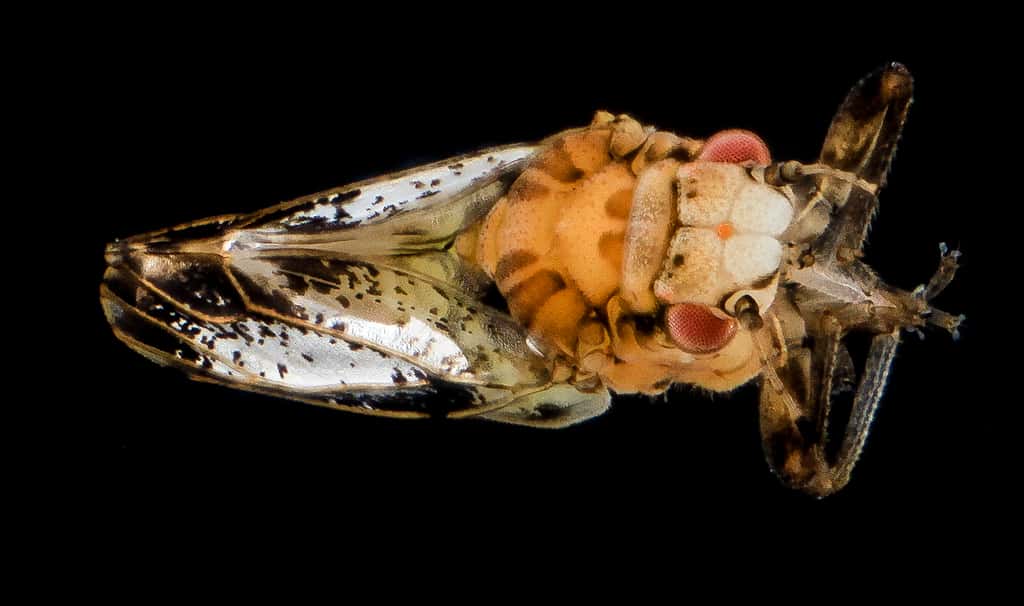
Florida's orange crop for the 2025-26 season came in at roughly 12.9 million boxes, about 6 percent above the previous season's final total, according to the final forecast from the U.S. Department of Agriculture's Agricultural Statistics Board. It is the first meaningful increase for an industry that has spent nearly two decades in decline.
The gain extended across every citrus category the agency tracks. Grapefruit production rose about 4 percent to close to 1.4 million boxes. Tangerines and mandarins climbed 15 percent to 460,000 boxes. Lemon production increased 34 percent to 900,000 boxes.
The orange total breaks down into 4.77 million boxes of non-Valencia varieties and 8.15 million boxes of Valencias, the late-season variety that supplies most of Florida's juice production. Florida Citrus Mutual, the industry's grower trade association, characterized the projection as another encouraging sign of continued recovery, particularly given that the season included a damaging freeze event in early 2026.
How far the industry fell
The scale of the increase requires context to interpret correctly. Florida's citrus industry produced well over 200 million boxes of oranges annually at its peak in the late 1990s. A crop of 12.9 million boxes represents a fraction of that output.
The primary cause of the collapse is citrus greening, known scientifically as Huanglongbing and abbreviated HLB. The bacterial disease is spread by an invasive insect, the Asian citrus psyllid, first detected in Florida in 1998, with the disease itself confirmed in the state in 2005. Infected trees produce smaller, bitter, misshapen fruit that drops prematurely, and the trees eventually die. There is no cure.
Hurricanes compounded the damage. Storms in recent years caused direct fruit loss, damaged trees, and flooded groves, and each event fell on an industry already weakened by disease. Land economics added further pressure, as Florida's population growth made grove land more valuable for residential and commercial development than for agriculture, encouraging owners to sell rather than replant.
The combined effect has been the loss of hundreds of thousands of acres of citrus and the closure of processing facilities, packinghouses, and supporting businesses across the interior counties where citrus was the economic foundation.
What changed this season
Growers and researchers point to several developments that may be contributing to stabilization. Trunk injection of antibiotics directly into infected trees has been deployed in Florida groves in recent years and has shown effects on tree health and fruit retention that growers have found encouraging.
Individual protective covers on young trees, essentially mesh enclosures that physically block psyllids from reaching new plantings, have allowed replanted groves to establish before exposure to infection. That addresses one of the industry's central problems: newly planted trees historically became infected before they reached productive maturity.
Research programs at the University of Florida's Institute of Food and Agricultural Sciences and at USDA facilities have pursued rootstock and scion development aimed at tolerance to the disease, along with nutritional and horticultural management practices that keep infected trees productive longer.
None of these approaches constitutes a cure. What they collectively represent is a management strategy that may allow a smaller industry to operate sustainably rather than continue contracting.
The freeze that tested the season
The 2025-26 season included a significant freeze event in early 2026, and the fact that production increased despite it is part of why the industry has treated the final forecast as meaningful. Freezes damage citrus in two ways: they can destroy fruit on the tree, and severe events can damage or kill the trees themselves.
Florida's citrus belt shifted southward over the decades following devastating freezes in the 1980s, moving production away from the historically colder central and northern parts of the peninsula. That geographic shift has reduced but not eliminated freeze exposure, and growers still deploy protective measures including irrigation for heat release during cold events.
Producing an increased crop through a freeze year suggests underlying tree health and grove management improved enough to absorb the loss, which is a more meaningful signal than a good number in a benign year would be.
Why this matters beyond the groves
Citrus occupies a place in Florida's identity that exceeds its current economic weight. The orange blossom is the state flower, orange juice is the state beverage, and citrus appears on the state's license plates. The industry's decline has been experienced across rural Florida as a cultural loss as much as an economic one.
The economic dimension remains real in the counties where citrus is concentrated. Polk, DeSoto, Hendry, Highlands, and Hardee counties, along with others across the interior of the peninsula, depend on agriculture for employment and for the tax base that funds local services. Grove work, harvesting, hauling, processing, and packing employ thousands.
Land use is the longer-term question. Once a grove is sold for development, it does not return to agriculture. Each acre converted is permanently removed from the industry's productive base, which means the industry's floor is set partly by decisions individual landowners make about whether to hold on.
The juice market dimension
Most Florida oranges go to juice rather than to fresh consumption, which distinguishes Florida from California, where the industry is oriented toward fresh fruit. The dominance of Valencias in this year's forecast, at 8.15 million boxes against 4.77 million for non-Valencia varieties, reflects that orientation.
Reduced Florida production has meant that domestic orange juice supply increasingly depends on imports, principally from Brazil and Mexico. That shift affects pricing at the retail level and exposes the U.S. juice supply to weather and agricultural conditions in other countries.
Consumer demand for orange juice has also declined over the past two decades as dietary preferences shifted, meaning the industry faces a demand-side challenge alongside its production problems. A recovering crop enters a market that is smaller than the one Florida citrus once supplied.
What growers are watching
The immediate variable is the coming season's weather. Hurricane season runs through November, and the historical peak of Atlantic activity falls in September and October, when Valencia oranges are developing on the tree. NOAA's preseason outlook called for a below-normal season with 8 to 14 named storms, and the basin has been quiet through July.
The second variable is whether disease management approaches continue to hold. Growers are evaluating the durability of trunk injection results and whether protective covers on young trees translate into productive mature groves several years out.
The third is policy. State support for citrus research, marketing through the Florida Department of Citrus, and land conservation programs that keep agricultural land in production all affect the industry's trajectory and are set through the Legislature and the Florida Department of Agriculture and Consumer Services.
How the forecast is produced
USDA's citrus forecasts are not estimates assembled from grower reports. The National Agricultural Statistics Service conducts an objective yield survey built on physical measurement, which is why the numbers carry weight with an industry that treats them as authoritative.
Surveyors count fruit on sampled trees across a statistically designed set of groves, measure fruit size at intervals through the season, and track fruit drop, the rate at which fruit falls from trees before harvest. Drop has been an especially important variable since citrus greening became widespread, because premature fruit drop is one of the disease's characteristic effects.
Forecasts are issued monthly through the season, beginning in October and revised as measurement data accumulates. Early forecasts carry more uncertainty because fruit size and drop rates through the remaining months are projected rather than observed.
The final forecast, issued in July, reflects the season's actual outcome and is the figure used for year-over-year comparison. That is what makes the current number meaningful: it is a measured result rather than a projection.
What a box actually measures
Citrus production is reported in boxes, a unit that predates modern packaging and that varies by fruit type. A box of Florida oranges is defined as 90 pounds. Grapefruit boxes are 85 pounds. The convention persists because it allows continuous comparison across more than a century of records.
Converting to more familiar terms, 12.9 million boxes of oranges represents roughly 1.16 billion pounds of fruit. That sounds substantial in isolation, and the comparison to the industry's peak output is what puts it in perspective.
Yield per acre is the metric that reveals disease impact most directly. An industry can lose production either by losing acreage or by producing less on the acreage it retains, and Florida has experienced both. Separating the two is essential to understanding whether disease management is working.
Acreage data, collected through separate USDA surveys, has shown sustained decline. A production increase achieved on stable or declining acreage indicates improving per-tree performance, which is the signal growers are watching for.
The processing infrastructure question
An industry's viability depends on more than trees. Florida citrus requires processing plants to convert fruit into juice, packinghouses for fresh fruit, harvesting crews, and hauling capacity, and each of those has contracted alongside production.
Processing facilities operate on scale economics. A plant designed for a volume of fruit that no longer exists cannot operate profitably, and several have closed over the past two decades. Each closure raises hauling distances and costs for remaining growers, which can push marginal operations out of business in turn.
That dynamic creates a threshold effect. An industry can decline gradually until it crosses a point where supporting infrastructure becomes unsustainable, after which decline accelerates regardless of what individual growers do.
Whether Florida citrus has stabilized above that threshold is the underlying question the recent forecast speaks to. A single season's increase does not answer it, but continued decline would have moved the industry closer to it.
What's next
USDA will begin issuing forecasts for the 2026-27 season in October, providing the first indication of whether this season's gain marks a turning point or a single favorable year within a longer decline.
Growers will make replanting decisions in the interim, and those decisions are the clearest signal of industry confidence. Planting a citrus tree is a multi-year commitment before any return, and a grower who replants is making a judgment that the disease can be managed.
For Floridians, the practical effect of a recovering crop is modest in the near term. The larger significance is whether an industry that helped build the state retains a viable future in it.
Spotted an issue with this article?
Have something to say about this story?
Write us a letterComments
No comments yet. Be the first to weigh in.
Related Coverage
Florida Single-Family Home Sales Slip 3.5% in September as Rising Mortgage Rates Stall Growth
1d ago

Miami Cites Club at Brickell Bay Over Short-Term Rentals, Warning of Fines Up to $5,000 a Day
2d ago
Lennar to Buy Boynton Beach Mall, Plans Homes, Shops and Civic Space on 91-Acre Site
2d ago
Florida Supreme Court Rules 2021 Pre-Suit Notice Law Does Not Apply to Older Homeowner Insurance Policies
2d ago