Florida's $1.8 Trillion Economy Climbs to 14th Largest in the World
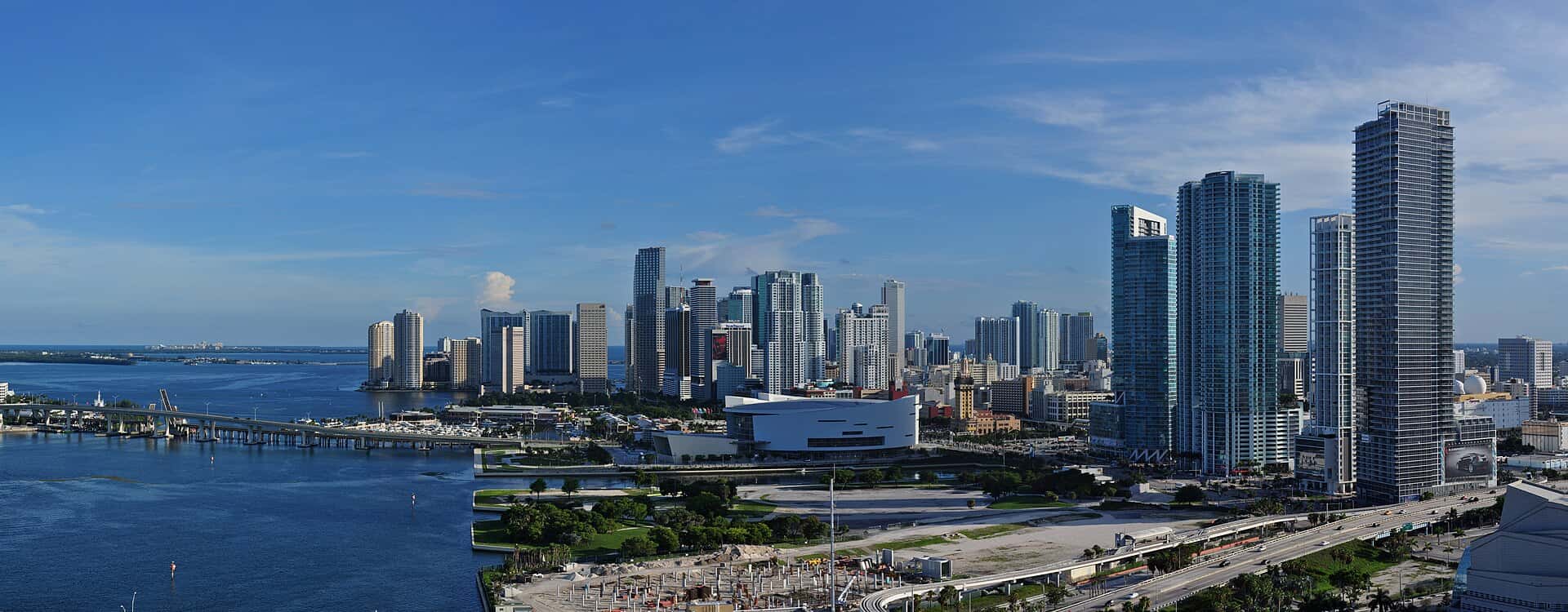
Florida's economy has risen to become the 14th largest in the world, passing both Australia and Mexico, according to an analysis released by the Florida Chamber Foundation. The state's annual economic output now exceeds $1.8 trillion, a figure that would place Florida among the wealthiest nations on earth if it were counted as an independent country.
The Chamber Foundation reported that Florida's economy grew 6.3 percent over the past year. That pace moves the state closer to a target the organization has promoted for several years under its Florida 2030 Blueprint, which sets a goal of ranking among the world's 10 largest economies by the end of the decade.
The milestone is a useful shorthand for something Floridians have experienced directly over the past several years: a state whose population, employment base, and cost structure have all changed rapidly. What the ranking does not capture is how unevenly that growth has been distributed across regions, industries, and households.
What the ranking measures
Comparisons between a U.S. state and sovereign nations rest on gross domestic product, the total value of goods and services produced within a geography over a year. Ranking a state against countries is a legitimate exercise in scale, and economists routinely make such comparisons, but the analogy has limits worth understanding.
A state does not control its own currency, monetary policy, trade policy, or immigration policy. Florida's economic performance is shaped substantially by decisions made in Washington, by Federal Reserve interest rate policy, and by national economic conditions. When Florida is compared to Australia, the comparison is measuring output, not economic sovereignty.
The Chamber Foundation noted that Florida would need roughly 2 percent additional growth to overtake South Korea for the 13th position. Reaching the top 10 would require something closer to 21 percent additional growth, with Canada currently occupying the 10th spot. Those figures illustrate how the gaps widen considerably toward the top of the list.
Florida Chamber of Commerce President and Chief Executive Mark Wilson framed the achievement as validation of the organization's long-term planning effort, describing the rise as part of the Florida 2030 Blueprint and as evidence for the effectiveness of free enterprise policies.
What drives Florida's output
Florida's economy is diversified in ways that surprise people who think of the state primarily through tourism. Tourism and hospitality remain enormously important, supporting hundreds of thousands of jobs and drawing well over 100 million visitors annually in recent years, but they represent a smaller share of total output than the state's popular image suggests.
Real estate, construction, and the financial activities sector collectively account for a substantial portion of Florida's gross domestic product. The state's population growth, sustained over decades and accelerated during the early 2020s, generates continuous demand for housing, commercial space, and the professional services that surround property transactions.
Healthcare represents another major pillar, driven in part by demographics. Florida's older population supports large hospital systems, physician networks, specialty care providers, and long-term care operations. Systems including AdventHealth, BayCare, HCA Florida, Orlando Health, and Jackson Health rank among the state's largest employers.
Trade and logistics contribute significantly through Florida's seaports and airports. PortMiami, Port Everglades, Port Tampa Bay, JAXPORT, and Port Canaveral together handle container cargo, cruise passengers, and energy products, positioning the state as a gateway for commerce with Latin America and the Caribbean.
The aerospace and technology dimension
Florida's Space Coast has become a genuine growth engine rather than a legacy government installation. Cape Canaveral Space Force Station and Kennedy Space Center support a launch cadence that has expanded dramatically as commercial providers have scaled up operations, and the supporting industrial base in Brevard County has grown alongside it.
That activity generates high-wage employment in engineering, manufacturing, and technical operations, categories that raise average productivity across the state's economy. The defense sector adds further, with major installations including MacDill Air Force Base in Tampa, Eglin Air Force Base and Tyndall Air Force Base in the Panhandle, Naval Air Station Pensacola, Naval Station Mayport in Jacksonville, and Patrick Space Force Base in Brevard County.
Research universities contribute both directly and through spillover effects. Florida State University's Center for Advanced Power Systems recently secured an $88 million U.S. Navy contract running through 2031 to develop modeling and testing capabilities for shipboard power systems, an example of the kind of federally funded research that anchors technical employment in the state.
What growth has cost Floridians
Rapid economic expansion has coincided with sharp increases in the cost of living, and the two are connected. Housing costs have risen substantially. The statewide median sales price for existing single-family homes reached $432,000 in June, up 4.9 percent year over year, while the condominium and townhouse median stood at $305,000.
Property insurance has been the more distinctive Florida burden. Premiums rose steeply through the early 2020s before recent reforms began to moderate them. Citizens Property Insurance Corporation, the state-backed insurer, implemented a statewide average reduction of roughly 8.8 percent on multiperil policies and 5.5 percent on wind-only policies effective July 1, with more than 330,000 policyholders across all 67 counties seeing decreases. That relief follows years of increases.
Wage growth has not uniformly kept pace with these costs, particularly in the service occupations that staff Florida's hospitality and retail sectors. The result is a state that ranks 14th in the world by output while many of its households experience persistent affordability pressure.
Regional differences within the state
Florida's economic gains have not been distributed evenly. The Miami metropolitan area, which combines finance, international trade, real estate, and a growing technology presence, generates a disproportionate share of state output. Orlando's economy rests heavily on tourism, hospitality, and an expanding simulation and training cluster. Tampa Bay has developed strength in financial services, healthcare, and defense.
Rural Florida presents a different picture. Agricultural counties in the interior of the peninsula and across the Panhandle have not experienced the same growth, and several face persistent challenges around employment, healthcare access, and infrastructure. The citrus industry, historically a defining Florida sector, has contracted sharply over the past two decades under pressure from citrus greening disease, hurricanes, and land conversion, though the 2025-26 crop showed the first meaningful increase in years at roughly 12.9 million boxes of oranges.
These regional divergences mean statewide aggregates can obscure as much as they reveal. A resident of Wauchula or Perry experiences a materially different Florida economy than a resident of Brickell.
Headwinds ahead
Several factors could slow the trajectory the Chamber Foundation has projected. Interest rates remain elevated by the standards of the prior decade, with the Federal Reserve holding its benchmark rate in a target range of 3.50 to 3.75 percent through recent meetings while inflation has run above target. Mortgage rates around 6.5 percent have shaped buyer behavior in the housing market.
Insurance and construction costs continue to affect where and whether development happens, particularly in coastal areas. Climate-related risk is increasingly priced into both insurance and lending decisions, a dynamic that affects long-term investment patterns in a state with more than 1,300 miles of coastline.
Federal policy adds further variables. Florida's economy is unusually exposed to immigration policy through its agricultural, construction, and hospitality labor forces, and to trade policy through its ports and its extensive commercial ties to Latin America.
The demographic engine
Florida's growth over the past several decades has been driven principally by migration rather than by natural increase, and the composition of that migration shapes the economy in specific ways.
Retirement migration remains substantial and brings a distinctive economic profile. Retirees arrive with accumulated assets and income streams originating outside the state, generating consumption without competing for local employment. They also generate demand for healthcare, which is part of why the sector is among Florida's largest employers.
Working-age migration accelerated during the early 2020s as remote work loosened the connection between employment and location. Those arrivals brought incomes earned in higher-cost markets into Florida's housing market, contributing to price increases.
International migration adds a third component, particularly in South Florida, where communities with origins across Latin America and the Caribbean have shaped the region's business landscape and its role as a commercial gateway.
The economic significance of migration is that it drives demand across essentially every sector simultaneously. Each new household needs housing, healthcare, retail, and services, which is why population growth translates so directly into output growth.
What the absence of an income tax means
Florida's tax structure is a defining feature of its economy and is frequently cited as a driver of the migration that produces its growth.
The state constitution prohibits a personal income tax, which means Florida funds state government principally through sales tax, corporate income tax, documentary stamp taxes on real estate transactions, and various fees. Local governments rely primarily on property taxes.
That structure has distributional consequences. Sales taxes take a larger share of income from lower-income households, which spend a greater proportion of their earnings on taxable goods. Property taxes fall on property owners and, indirectly, on renters.
It also produces revenue volatility tied to consumption and real estate activity. When tourism weakens or real estate transactions slow, state revenue responds quickly, in contrast to income tax systems that track wages more steadily.
The November ballot measure on homestead property taxes would alter the local side of this structure substantially, shifting a larger share of local funding onto non-homesteaded property or requiring service reductions.
Where the vulnerabilities sit
An economy of this size has diversification that protects against sector-specific shocks, but Florida retains concentrated exposures worth identifying.
Climate risk is the most structural. A state with more than 1,300 miles of coastline and substantial low-lying development faces increasing insurance costs, rising reinsurance pricing, and lender caution in exposed areas. Those factors affect property values and development feasibility independent of any single storm.
Tourism sensitivity is the second. A sector employing hundreds of thousands of Floridians responds quickly to national economic conditions, fuel prices, and travel sentiment.
Labor supply is the third. Sectors including agriculture, construction, and hospitality depend on immigrant workers, and enforcement policy affects labor availability in ways that flow into costs and output.
Affordability is arguably the binding constraint on continued growth. An economy that depends on in-migration requires that people be able to afford to arrive, and the gap between Florida wages and Florida housing costs is the variable most likely to slow the trajectory the Chamber Foundation projects.
What's next
The Chamber Foundation's stated goal of reaching the world's top 10 economies by 2030 would require sustained growth well above recent national averages. Whether Florida gets there depends substantially on whether population growth continues at recent rates, which itself depends on affordability.
The more immediate questions facing the state's economy involve the November ballot, where voters will decide a constitutional amendment that would sharply reduce homestead property taxes and reshape local government finance, and the trajectory of the insurance market, where recent rate decreases will be tested by the remainder of the hurricane season.
Updated national and state-level economic data through the summer will offer the next read on whether the 6.3 percent growth rate the Chamber Foundation reported is holding.
Spotted an issue with this article?
Have something to say about this story?
Write us a letterComments
No comments yet. Be the first to weigh in.
Related Coverage
Florida Single-Family Home Sales Slip 3.5% in September as Rising Mortgage Rates Stall Growth
1d ago

Miami Cites Club at Brickell Bay Over Short-Term Rentals, Warning of Fines Up to $5,000 a Day
2d ago
Lennar to Buy Boynton Beach Mall, Plans Homes, Shops and Civic Space on 91-Acre Site
2d ago
Florida Supreme Court Rules 2021 Pre-Suit Notice Law Does Not Apply to Older Homeowner Insurance Policies
2d ago