Quarry 2 Fire Burns 17,200 Acres Near Doral as Florida's 2026 Wildfire Season Rages
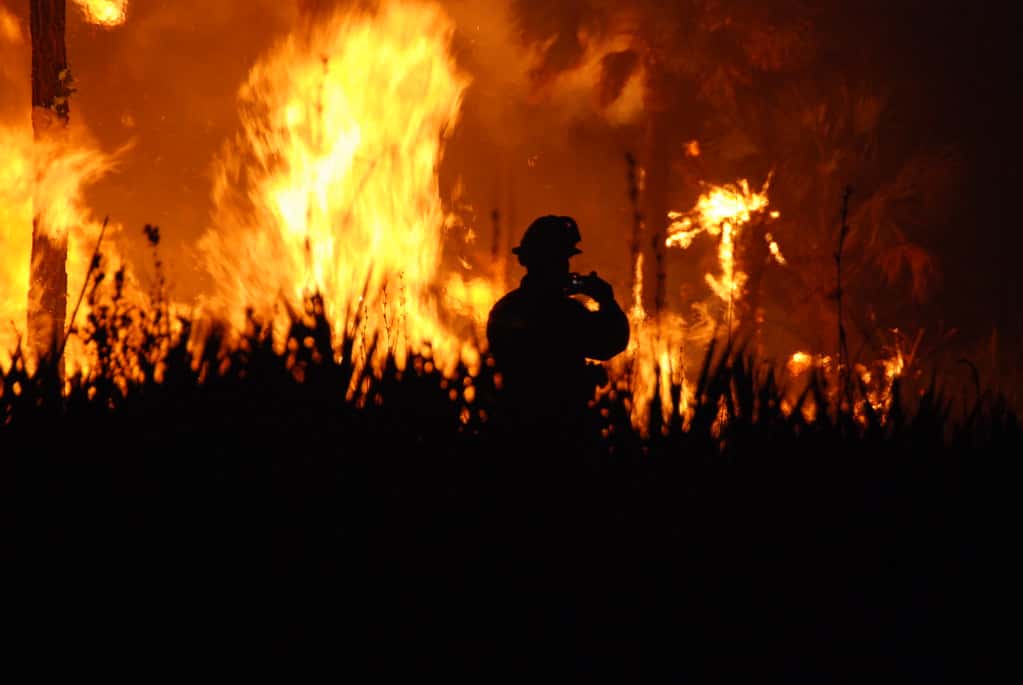
A wind-driven brush fire burning through Everglades sawgrass just west of Doral has scorched roughly 17,200 acres in Miami-Dade County and stood about 75 percent contained late this week, a stark sign of how severe Florida's 2026 wildfire season has become. The Quarry 2 Fire ignited Monday, June 15, around 2:56 p.m. near Northwest 137th Avenue and Northwest 41st Street, and it grew with alarming speed in the days that followed.
State officials believe the blaze traces back to a lightning strike days earlier that smoldered quietly in parched brush before flaring into an open fire. The conditions on the ground, bone-dry vegetation after months of drought, turned that smoldering ember into one of the largest fires the region has seen this year. For a county better known for hurricanes and flooding, a fast-moving wildfire on its western edge is a jarring reminder that South Florida is not immune to the same dry-season threats that grip the interior of the state.
The fire matters for Florida because it has forced localized evacuations, degraded air quality across a populous metro area, and stretched firefighting resources at a time when crews are already battling blazes statewide. It also burned close to critical infrastructure, including the Metro West Detention Center and major power lines, raising the stakes for emergency managers working to keep the fire from jumping containment lines.
How the Fire Grew So Fast
The Quarry 2 Fire expanded dramatically over a short window. On June 16, the day after ignition, it covered about 3,500 acres and was roughly 20 percent contained. By late this week it had ballooned to approximately 17,200 acres while containment climbed to about 75 percent, a sign that crews had begun to get the upper hand even as the footprint widened.
Much of the fire's spread has been through Everglades sawgrass and marsh, terrain that can carry flames quickly when the underlying peat and vegetation dry out. Sawgrass prairies that normally sit in standing water became tinder after a prolonged rainfall deficit, allowing the fire to push across the landscape west of the developed Doral corridor.
The growth prompted responders to upgrade the incident to a third alarm, bringing together Miami-Dade Fire Rescue and the Florida Forest Service in a coordinated response. Crews ran burnout operations, deliberately removing fuel ahead of the main fire to deprive it of material to consume, a common tactic in wildland firefighting that helps establish defensible containment lines.
A companion blaze, the Well Fire, burned about 500 acres nearby, adding to the demands on firefighters working the same stretch of western Miami-Dade. The proximity of the two fires underscored how a single dry landscape can generate multiple ignitions and tax local resources quickly.
Evacuations and Threatened Infrastructure
As the fire advanced, officials ordered localized evacuations of nearby trailer parks and conservation areas, moving residents out of harm's way while crews fought to hold the line. Evacuations of this kind, even when limited in scope, disrupt lives and signal that the threat is real and immediate for those living closest to the fire's edge.
The blaze burned close to the Metro West Detention Center, a major Miami-Dade corrections facility, and to major power lines that feed the surrounding area. Fires near such infrastructure carry compounding risks: a loss of power lines can ripple across the grid, and a fire pressing toward a detention facility creates complex logistical and safety concerns for officials managing the response.
Smoke and ash from the fire degraded air quality across Doral and drifted north into Broward County, affecting residents far from the flames themselves. Wildfire smoke can aggravate respiratory conditions and reduce visibility, prompting health advisories and complicating daily life for people across a wide swath of the metro area.
A Record-Dry Year Across Florida
The Quarry 2 Fire did not emerge in isolation. It is part of a 2026 wildfire season that follows one of the worst droughts Florida has seen in decades, a dry stretch tied in part to a lack of landfalling tropical systems in 2025. Tropical storms and hurricanes, for all their destructive power, deliver the heavy rains that normally recharge Florida's wetlands and reservoirs. Their absence left the state parched.
By mid-February 2026, roughly 99 percent of the state was in drought, and about 85 percent was in severe drought or worse, according to drought-monitoring data. Those figures describe a landscape primed to burn, where ordinary ignition sources can spark fires that spread far beyond what they might in a wetter year.
The statewide toll has been substantial. More than 2,000 fires have ignited since January, burning roughly 150,000 acres across Florida by mid-June, according to the Florida Forest Service. That volume of fire activity has kept state and local crews in near-constant motion, responding to new ignitions while still working to contain larger established blazes like the one near Doral.
Federal Help and Earlier Fires
The federal government has already stepped in to support Florida's firefighting efforts earlier in 2026. The Federal Emergency Management Agency issued Fire Management Assistance declarations for other Florida fires, including the Railroad Complex Fire, declared April 22, and the Cow Creek Fire, declared April 23.
Such declarations make federal funding available to help cover the costs of fighting fires that threaten to become major disasters, easing the financial burden on state and local agencies. Their issuance earlier in the year signaled that the 2026 season was shaping up to be unusually demanding well before the Quarry 2 Fire ignited.
The pattern of federal involvement, combined with the sheer number of fires statewide, illustrates how the drought has transformed Florida's fire posture in 2026. Agencies that often coordinate primarily around hurricane response have spent much of the year managing wildland fire instead, a shift that reflects the unusual dryness gripping the peninsula.
Why South Florida Is Vulnerable
South Florida's wetlands are not the first place many residents associate with wildfire, but the Everglades ecosystem is fire-adapted, and its sawgrass prairies can burn readily when water levels drop. In a normal year, standing water across much of the marsh limits fire spread. In a drought year, that natural barrier disappears.
The Quarry 2 Fire's position on the western edge of dense suburban development put it at the seam between wildland and urban areas, the zone where fires pose the greatest risk to people and property. Burnout operations and aggressive containment work aimed to keep the fire on the wildland side of that seam, away from homes and infrastructure.
For Miami-Dade and Broward residents, the episode is a reminder that drought changes the risk calculus across the entire state, not just in the rural interior. Air quality alerts, evacuation orders, and smoke drifting over urban neighborhoods all became part of life in a region more accustomed to tropical weather threats.
How Crews Fought the Blaze
Containing a fire of this scale in marsh terrain demands a blend of ground and aerial tactics, and the joint response by Miami-Dade Fire Rescue and the Florida Forest Service drew on both. The third-alarm designation reflected the seriousness of the incident, marshaling additional personnel and equipment to a fire that quickly outgrew the resources of any single agency.
Burnout operations sat at the center of the strategy. By setting controlled fires to consume vegetation between the main blaze and a chosen containment line, crews deprived the advancing flames of fuel, in effect meeting fire with fire. The technique is demanding and weather-dependent, requiring careful timing so that the deliberate burns do not themselves escape control, but it can be the most effective way to halt a fire moving through continuous sawgrass.
The marsh environment complicated the work. Soft, waterlogged ground in some areas and tinder-dry vegetation in others created an uneven battlefield, and the smoke that degraded air quality for residents also hampered visibility for the crews working the lines. Holding containment at roughly 75 percent across a 17,200-acre footprint represented substantial progress under difficult conditions.
A Season Straining Resources
The Quarry 2 Fire arrived at a moment when Florida's firefighting capacity was already stretched thin. With more than 2,000 fires statewide since January and roughly 150,000 acres burned by mid-June, the Florida Forest Service and local departments have cycled through an exhausting tempo of response, often managing multiple incidents at once.
That sustained demand carries practical consequences. Equipment wears down, crews tire, and the resources available to fight any single fire are spread across the many ignitions competing for attention. A drought year transforms firefighting from a series of discrete events into a continuous campaign that taxes agencies for months on end.
The presence of a companion blaze, the Well Fire, burning about 500 acres nearby, illustrated the challenge. When a single dry landscape produces multiple fires in close proximity, responders must divide their attention and resources, complicating the effort to contain any one of them. For Florida's fire agencies, 2026 has been a test of endurance as much as tactics.
What's Next
With containment around 75 percent, crews from Miami-Dade Fire Rescue and the Florida Forest Service will continue working to fully secure the fire's perimeter, monitoring hot spots and reinforcing containment lines to guard against flare-ups. Burnout operations and patrols are likely to continue until the fire is declared fully contained.
The broader risk remains as long as the drought persists. With roughly 150,000 acres already burned statewide and the dry season still in force, the Florida Forest Service is expected to stay on high alert for new ignitions, particularly from lightning strikes that can smolder unseen before erupting into open fire. Residents near wildland areas have been urged to stay aware of evacuation guidance and air quality advisories.
Relief, ultimately, may depend on the weather. A return of regular rainfall, including any tropical systems that bring soaking rains to the peninsula, would help recharge the parched landscape and ease the conditions that have made 2026 such a punishing fire year. Until then, fires like the Quarry 2 Fire near Doral are likely to remain a recurring threat across a state still waiting for its wetlands to fill back up.
Spotted an issue with this article?
Have something to say about this story?
Write a letter to the editor