SpaceX Launches CRS-34 to ISS from Cape Canaveral, Booster Logs Sixth Flight
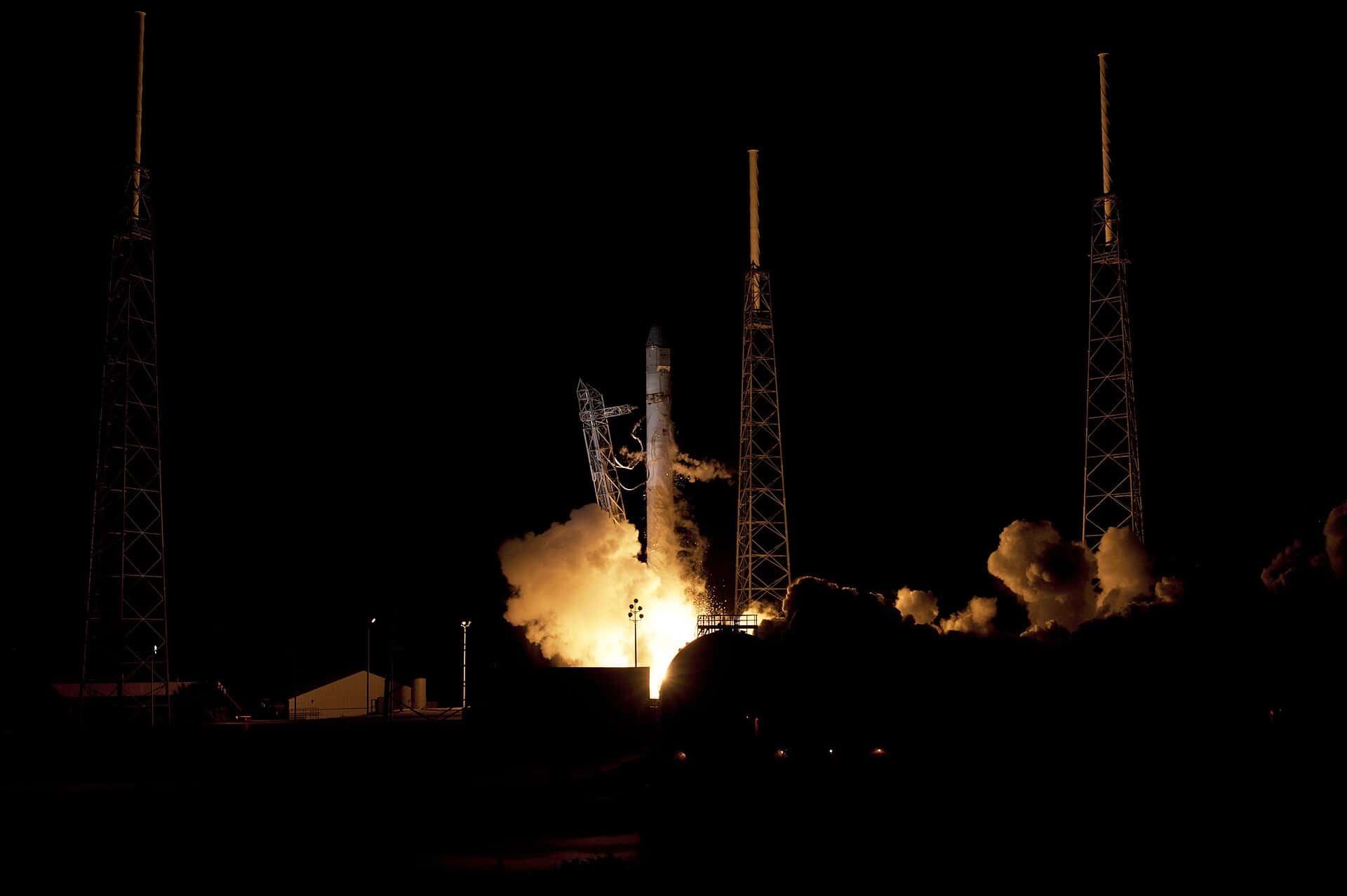
SpaceX's 34th cargo resupply mission for NASA roared off the pad at Space Launch Complex 40 at Cape Canaveral Space Force Station on May 15 at 6:05 p.m. EDT, sending roughly 6,500 pounds of science gear, food, and hardware on a two-day chase of the International Space Station. The flight, designated CRS-34, marked another routine but important step in the steady cadence that has made Florida's Space Coast the busiest launch site in the world.
The Falcon 9 first stage booster, tail number B1096, completed its sixth flight and returned for an on-shore landing at Landing Zone 1 a few minutes after liftoff. SpaceX officials confirmed the touchdown as the 108th land landing for the company since the first successful Falcon 9 recovery in December 2015. The booster will be inspected, refurbished, and prepared for a future mission, continuing the reuse model that has reshaped the economics of access to low-Earth orbit.
The Dragon cargo capsule separated from the Falcon 9 second stage roughly 12 minutes after liftoff and began a series of orbital maneuvers designed to bring it alongside the ISS for a docking attempt at the Harmony module's forward port. The capsule was scheduled to arrive at the station around 9:30 a.m. EDT on May 17, where it will remain for approximately one month before returning to Earth with research samples and used hardware.
What's Aboard CRS-34
The 6,500-pound cargo manifest for CRS-34 leans heavily on science, a deliberate emphasis from NASA as the agency continues to extract maximum research value from the aging orbital laboratory. Among the experiments riding to orbit are studies of plant growth in microgravity, an investigation into how stem cells behave in space, and a series of materials science tests designed to inform the manufacture of advanced semiconductors. The cargo also includes spare parts for the station's life support systems and a fresh supply of crew provisions.
A notable payload on this flight is a set of new air filtration cartridges intended to address persistent concerns about cabin air quality on the station. NASA has been working through a series of minor air leaks in the Russian-built Zvezda service module for several years, and while the leaks do not pose an immediate threat to the crew, they have prompted increased attention to the station's environmental control and life support systems. The new filters are part of a broader effort to keep the station operational through its planned decommissioning at the end of the decade.
Crew supplies make up a significant portion of any resupply run. CRS-34 carries fresh produce, holiday treats, and personal items for the seven astronauts and cosmonauts currently aboard. The fresh food supply is particularly welcome between resupply flights, when the crew otherwise relies on shelf-stable rations. Letters and care packages from family members are also folded into the manifest, a small but meaningful piece of crew morale management.
Booster B1096 and the Reuse Question
The Falcon 9 first stage that powered CRS-34 made its public debut last summer and has now flown six times in less than a year, an aggressive turnaround cadence even by SpaceX standards. The company says it is qualifying its fleet of boosters for up to 40 flights apiece, well beyond the 10 flights initially certified. Each flight tightens the data set on how the aluminum-lithium alloy structures, the Merlin engines, and the avionics behave across multiple thermal cycles.
Routine reuse has driven down the cost of access to space and is now considered a core enabler of the planned Starlink constellation, NASA's commercial crew and cargo programs, national security launches, and a growing roster of commercial customers. The Falcon 9 has flown more than 400 missions since its debut in 2010, the vast majority since the introduction of routine first-stage recovery. The 108 land landings logged through this mission represent only a portion of total recoveries, as many missions land the booster on autonomous drone ships positioned in the Atlantic.
Landing Zone 1 at Cape Canaveral Space Force Station, the destination for this mission's booster, sits roughly nine miles south of SLC-40. The sonic booms produced by the returning rocket are now a familiar sound for residents of Brevard County and beyond, occasionally rattling windows in Orlando and along the Space Coast. SpaceX coordinates landings with the Space Force and notifies local communities through the company's website and social channels.
SLC-40 and the Pace at Cape Canaveral
Space Launch Complex 40, originally built in the 1960s for Titan rockets, has become the workhorse of the Cape since SpaceX leased the pad in 2007. The complex underwent significant upgrades after a Falcon 9 explosion during a static fire test in September 2016, and it now supports both cargo Dragon and crewed Dragon missions, the latter capability added in 2024 to give NASA flexibility between SLC-40 and the historic Launch Complex 39A at Kennedy Space Center.
Across the Cape, launch cadence has reached record levels. SpaceX accounts for the bulk of activity, with launches several times a week now common. United Launch Alliance flies its Vulcan rocket from Space Launch Complex 41, and Blue Origin operates from Launch Complex 36, with the company's New Glenn vehicle scheduled for additional flights this year. Smaller companies, including Relativity Space and ABL Space Systems, also have pad infrastructure on the Eastern Range.
The 45th Space Wing, which manages the Eastern Range, has been investing in infrastructure to support the higher tempo. New tracking radars, modernized range safety systems, and improvements to roads and security perimeters are all part of an ongoing program to keep pace with commercial demand. The economic ripple effects extend across Brevard County and into Orlando, where engineering firms, hotels, and tourism operators all benefit from the steady drumbeat of launches.
What the Mission Means for the Station
The ISS is now in its 26th year of continuous human presence, and resupply missions like CRS-34 are central to keeping the orbital laboratory operational. The station relies on a mix of cargo vehicles, including SpaceX's Dragon, Northrop Grumman's Cygnus, and Russia's Progress. Japan's HTV-X and Sierra Space's Dream Chaser are scheduled to begin or resume operations within the next year, broadening the supply chain.
NASA plans to keep the ISS operational through 2030, after which the station will be deorbited in a controlled descent over the Pacific Ocean. SpaceX won the contract to build the deorbit vehicle, an enlarged Dragon-derived spacecraft that will perform the final burn to ensure the 450-ton station reenters safely. Several companies, including Axiom Space, Voyager Space, and Blue Origin, are developing commercial successor stations that NASA hopes will be operational before the ISS departs.
For now, the science work continues. Dragon will spend roughly a month attached to the station before returning to Earth with samples for analysis. The capsule's ability to bring cargo back, a capability lost when the Space Shuttle retired in 2011 and only restored by Dragon, is one of its most important features. Without it, much of the medical, biological, and materials research conducted on the station would have no path back to Earth labs.
Florida's Place in the U.S. Space Economy
The launch underscores Florida's outsized role in the American aerospace sector. The state hosted more than 90 orbital launches in 2025, a figure expected to rise again in 2026, with the Cape's pads and the nearby Kennedy Space Center accounting for the vast majority. Industry trade groups estimate that aerospace activity supports more than 130,000 jobs across Florida, with a particular concentration in Brevard County.
Major employers include SpaceX, Blue Origin, Lockheed Martin, Boeing, L3Harris, and Embraer, the Brazilian aerospace firm with a U.S. headquarters in Melbourne. The Florida Polytechnic University and Embry-Riddle Aeronautical University, the latter based in Daytona Beach, supply much of the engineering talent that keeps the industry growing. Embry-Riddle's College of Aviation and the University of Central Florida's aerospace programs work closely with launch providers on internships, research, and workforce development.
The Space Coast Economic Development Commission promotes the region as a launch and manufacturing hub, drawing companies that want proximity to the pads. Recent investments include a Lockheed Martin facility focused on lunar payloads, a Blue Origin manufacturing campus expansion, and several smaller commercial space ventures that have set up shop along the I-95 corridor between Titusville and Palm Bay.
Watching from the Beach
For Floridians, launches have become a part of life, and the Cape's geography makes viewing accessible. Public viewing locations include Jetty Park in Cape Canaveral, the Kennedy Space Center Visitor Complex, and beaches in Cocoa, Cocoa Beach, and Indialantic. For the most dramatic views, visitors often pay for tickets to the Visitor Complex's launch viewing packages, which include closer access to the pads. The Visitor Complex publishes a public launch schedule, though weather and technical scrubs frequently shift launch times.
Sonic booms from returning boosters add a distinctive element to the experience. Residents miles from the Cape can hear the double-crack of the booster reentry, which sometimes occurs minutes before the booster is visible touching down. The Brevard County Emergency Management agency publishes guidance on sonic boom impacts and reminds residents that loud booms during launch windows are expected.
School groups, scout troops, and tourists frequently plan trips around the launch calendar. The Brevard Public Schools system uses launches as teaching opportunities, with several schools offering aerospace-themed magnet programs. The economic impact of launch tourism is meaningful for the region's hotels, restaurants, and tour operators, particularly during high-profile crewed missions and the rare nighttime launches that produce the most spectacular visual effects.
What's Next
SpaceX has a packed manifest for the remainder of 2026. Upcoming Cape Canaveral missions include additional Starlink batches, the Axiom-5 private astronaut mission to the ISS, several Space Force national security payloads, and the launch of the European Space Agency's IRIDE Earth observation constellation. Across the country at Vandenberg Space Force Base in California, SpaceX is flying Starlink missions into polar orbit at a similar cadence.
NASA's Cargo Dragon flights will continue at roughly four per year, with CRS-35 scheduled for late summer. The Boeing-built Starliner spacecraft, which suffered well-documented troubles on its first crewed test flight in 2024, is now back in service after extensive repairs, and a second operational crewed mission is planned for later in the year. NASA Administrator Bill Nelson's successor, named earlier this year, has emphasized continuity in commercial crew operations as the agency prepares for the post-ISS era.
For Brevard County families, school groups, and tourists, the launches, the sonic booms, and the booster landings remain a regular part of life on the Space Coast. The pace shows no sign of slowing, with SpaceX targeting more than 100 Falcon 9 launches in 2026 across its Florida and California pads. Cape-area schools have begun integrating launch viewing into science curriculum, and several local hotels offer launch alert services for guests who want to time their visits around scheduled liftoffs. The Space Coast Office of Tourism reports that launch tourism has become a meaningful contributor to off-peak hotel bookings.
Spotted an issue with this article?
Have something to say about this story?
Write us a letterComments
No comments yet. Be the first to weigh in.
Related Coverage

Uthmeier Asks Pasco Judge to Force Meta to Remove Florida Users Under 14 and Cap Teens at Two Hours a Day
21h ago

Florida Attorney General James Uthmeier Sues TP-Link, Saying Its Routers Left Florida Home Networks Exposed
2d ago
FIU to install Florida's first on-campus trapped-ion quantum computer
3d ago
Florida's data center law: what SB 484 does as DeSantis touts it
6d ago