Three Lawsuits Filed Against Florida's New Congressional Map, Putting Voter-Approved Anti-Gerrymandering Protections to the Test
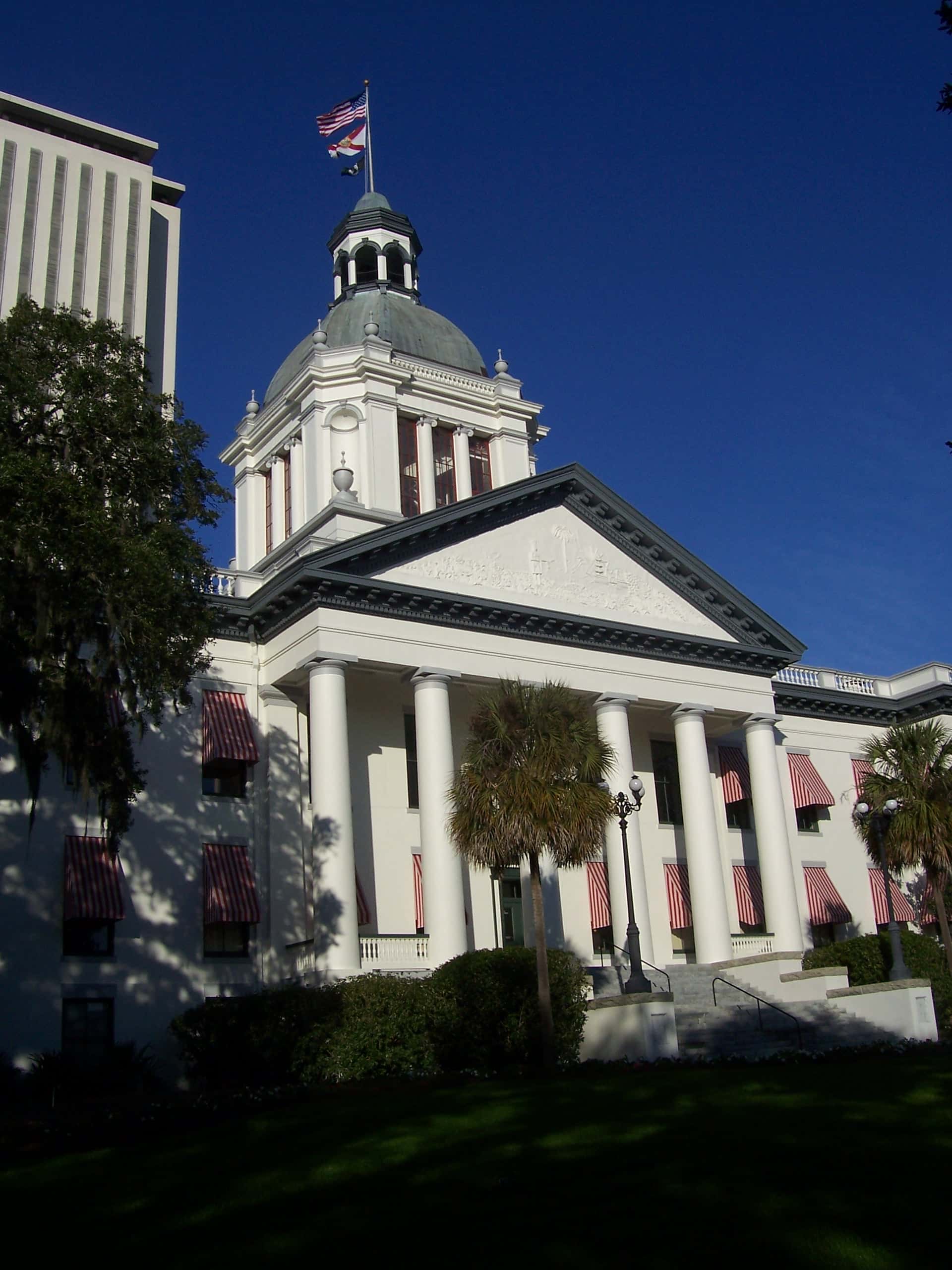
Florida's redrawn congressional map, signed into law by Governor Ron DeSantis on May 4, 2026, has triggered an immediate wave of legal challenges, with three separate lawsuits filed in Tallahassee state court within days of the governor's signature. The lawsuits put one of Florida's most significant voter-approved constitutional protections directly at issue, and the outcome will determine how the state's 28 congressional seats are drawn heading into the November 2026 elections.
A Map Signed, and Lawsuits Filed the Same Day
Governor DeSantis signed HB 1-D, the product of a special legislative session convened in January 2026, just hours before the first lawsuit was filed. The Campaign Legal Center filed the initial challenge on May 4, and two additional suits followed within 48 hours. All three were filed in Leon County Circuit Court in Tallahassee, and all three center on the same constitutional argument: that the new map violates Florida's Fair Districts Amendment, which voters approved in 2010 by a 63 percent margin.
The Elias Law Group filed suit on behalf of Florida voters, arguing the map was deliberately engineered to benefit one political party in violation of the state constitution's ban on partisan gerrymandering. The National Redistricting Foundation also sponsored a separate challenge, raising similar claims. Legal teams on all three suits have asked the court to place the map on hold before any elections are conducted under its new lines.
Election administrators across the state found themselves in a difficult position almost immediately. Officials in counties across Florida began scrambling to inform voters about the new congressional boundaries even as the lawsuits raised the possibility that those boundaries could be struck down before Election Day. The uncertainty has created logistical headaches for supervisors of elections who must prepare candidate qualifying materials and voter registration materials based on district lines.
A Tallahassee circuit court judge has already taken steps to consolidate the three challenges into a single proceeding, signaling that the legal fight will move quickly given the election calendar. A hearing on a motion to temporarily block the map from taking effect is expected to be scheduled in the coming weeks.
What the New Congressional Map Actually Does
The new map creates four additional Republican-leaning congressional seats, reshaping Florida's delegation in ways that have drawn intense scrutiny from voting rights advocates. Before the redistricting, Florida's congressional delegation stood at 20 Republicans and 8 Democrats. The redrawn lines are projected to shift that balance further toward Republicans by splitting districts that had been held by or were competitive for Democratic candidates.
Florida became the eighth state in the country to complete mid-decade congressional redistricting during the current cycle, joining a national movement by Republican-controlled legislatures to redraw maps following favorable court rulings. The Florida Legislature passed the map with near party-line votes, and DeSantis praised the new lines as necessary to comply with recent federal court decisions.
Both Republican and Democratic lawmakers, as well as several nonpartisan legal experts, have acknowledged that the map was drawn with partisan data guiding the placement of virtually every boundary. Legal filings by plaintiffs and even some statements attributed to DeSantis's own legal team have conceded that the new map does not comply with the letter of Florida's Fair Districts provisions. The central legal dispute is not whether the map violates Fair Districts but whether that constitutional provision remains valid in light of a recent U.S. Supreme Court ruling.
Critics of the map point out that Florida's constitution contains two redistricting provisions: one that prohibits drawing lines to favor a political party and a second that addresses majority-minority districts. DeSantis and his attorneys have argued that a recent Supreme Court decision affects both provisions, making the entire Fair Districts framework inapplicable. Voting rights advocates strongly contest that interpretation.
The Supreme Court Ruling That Set This in Motion
The legal strategy behind Florida's new map accelerated dramatically on April 29, 2026, when the U.S. Supreme Court issued its 6-3 ruling in Louisiana v. Callais. The high court struck down a Louisiana congressional map that had created a second majority-Black district, finding that the district was an unconstitutional racial gerrymander. The ruling significantly narrowed the scope of the Voting Rights Act's requirements regarding majority-minority districts.
Within an hour of the Callais ruling, the Florida House passed the new congressional map that DeSantis had been pushing since calling the special session in January. Republican leaders argued the Supreme Court's decision removed a key legal basis for the anti-gerrymandering constraints Florida had operated under since 2012, when earlier DeSantis-era maps were struck down for violating Fair Districts.
DeSantis publicly argued that the Callais ruling renders Florida's entire Fair Districts Amendment unconstitutional, contending that because one section of the amendment could now be considered invalid under federal precedent, the whole amendment falls. Legal scholars across the political spectrum have largely rejected this interpretation, arguing that Callais addressed racial classifications under the Voting Rights Act and the Equal Protection Clause, not the separate question of whether states can ban partisan gerrymandering.
The Republican sponsor of HB 1-D in the Florida Legislature notably stated publicly that the Callais ruling does not affect the provision of Fair Districts that bans partisan gerrymandering, directly contradicting the governor's broader legal argument. That statement by a bill supporter could prove significant as the court cases proceed.
The Fair Districts Amendment: What Floridians Actually Voted For
Florida voters approved two constitutional amendments in 2010, known collectively as the Fair Districts Amendments. One provision, Article III, Section 20, explicitly prohibits drawing congressional districts that favor or disfavor a political party or an incumbent. A separate provision addresses minority representation requirements. Both passed with supermajority support, reflecting broad public consensus across party lines that partisan mapmaking should be constrained.
The 2010 amendments were the product of a citizen-driven ballot initiative and were among the strongest anti-gerrymandering provisions in any state constitution at the time. Their passage led to years of litigation, court-ordered redraws, and ultimately congressional maps that produced more competitive districts than Florida had seen in decades.
Plaintiffs in the current lawsuits argue that the partisan gerrymandering prohibition in Article III, Section 20 is completely separate from any Voting Rights Act considerations and remains fully valid regardless of the Callais ruling. They contend that Florida voters have an independent, state-constitutional right to non-partisan redistricting that cannot be wiped out by a federal court ruling addressing a different legal question.
Legal experts who have reviewed the case believe the partisan gerrymandering ban is the strongest ground for the plaintiffs, since nothing in Callais addressed state prohibitions on political line-drawing. The question of whether a state can choose to give its own voters stronger anti-gerrymandering protections than federal law requires has not been settled by the current Supreme Court, and that question may ultimately travel back to the high court after Florida's courts weigh in.
What Both Sides Are Arguing as the Court Fight Begins
The arguments playing out in the Leon County courtroom reflect a fundamental disagreement about the relationship between state and federal constitutional law. DeSantis's legal team has argued that Florida's Fair Districts provisions were grafted onto state law as a response to Voting Rights Act requirements, and that now that the Act has been curtailed, the state provisions should be treated as similarly limited. Plaintiffs counter that this reasoning would erase a constitutional right that Floridians voted themselves independent of any federal mandate.
The state has also argued on procedural grounds that even if the map violates Fair Districts, the court should decline to order a new map drawn on the eve of an election cycle. Courts have sometimes been reluctant to impose redistricting remedies close to an election, a dynamic that could benefit the state even if the legal merits favor the challengers.
Voting rights organizations have pushed back hard on any delay, arguing that allowing an unconstitutional map to govern even one election cycle causes irreparable harm to affected voters. They point to earlier Florida redistricting litigation in which courts did intervene before elections to require compliant maps, even under tight deadlines.
Observers noted that the Tallahassee judge's decision to consolidate the three cases suggests the court intends to move efficiently through the procedural stages, which could allow a ruling on the injunction motion before candidate qualifying windows open for the 2026 general election cycle.
What This Means for Florida Voters Going Into 2026
The stakes of the litigation are significant for millions of Floridians. The four seats projected to shift under the new map represent a meaningful change in who represents South Florida, Central Florida, and parts of the I-4 corridor in Washington. If the new lines hold through the 2026 elections, the Florida congressional delegation could become even more heavily Republican, with ramifications for federal funding, committee assignments, and policy priorities that affect the state.
For individual voters, the uncertainty means that the district they live in, and the candidates appearing on their ballot, could change depending on whether a court grants the requested injunction. Election supervisors have urged state officials to seek clarity quickly so that they can prepare ballots and voter registration information accurately.
The Florida Supreme Court is widely expected to have the final word on whether the state's Fair Districts provisions survive the challenge. The high court's composition has shifted significantly in recent years, and its ultimate ruling will set precedent that governs how Florida draws all future maps at every level of government.
Whatever the courts decide, the episode has reignited a statewide debate about whether the 2010 voter mandate for fair districts retains force in a changed legal landscape. For voting rights advocates, the answer is unambiguous: Floridians voted for a constitutional right that no court ruling can silently repeal. For DeSantis and his allies, the legal landscape has fundamentally changed, and the new map reflects that new reality. The courts will now decide which interpretation governs.
Spotted an issue with this article?
Have something to say about this story?
Write us a letterComments
No comments yet. Be the first to weigh in.
Related Coverage

Miami shuts enclosed park slides after 13-year-old dies following Shenandoah Park incident
1d ago

Appeals Court Orders Hope Florida Grand Jury Report Expunged, Rules $10 Million Was Never Public Money
1d ago

Jacksonville Council Committees Clear $30 Million Gas Tax Loan to Rescue JTA Ahead of Oct. 13 Final Vote
2d ago

Florida Supreme Court Suspends Pinellas-Pasco Judge Jennifer Cruz Dubbeld 20 Days Over 2024 Campaign Misconduct
2d ago