Florida Leads Nation in 287(g) Immigration Agreements as ICE Expands Operations
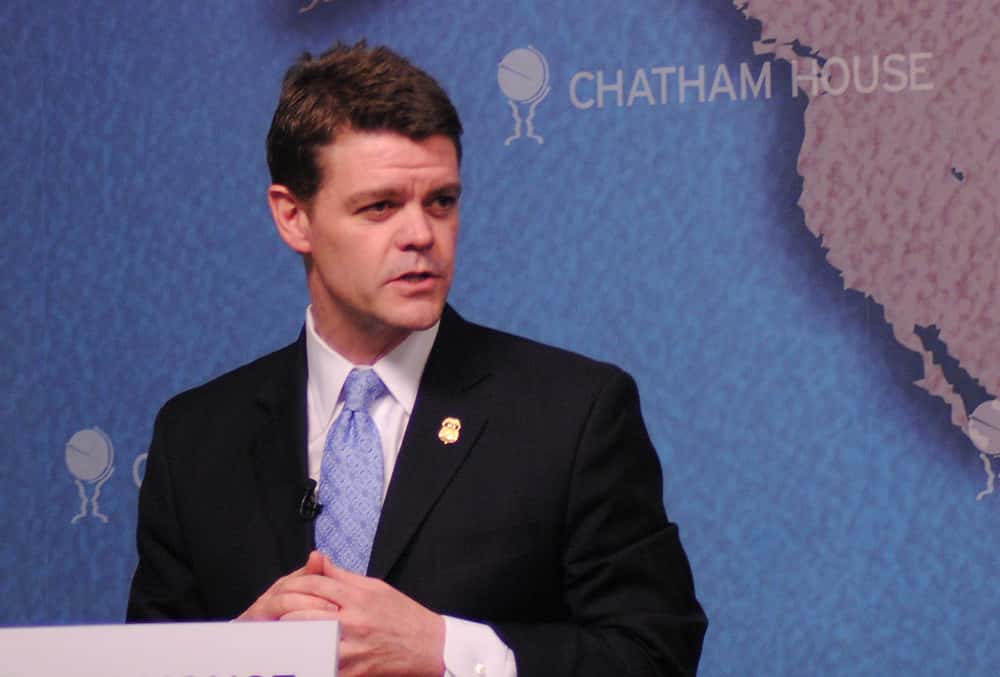
Florida now holds more federal 287(g) immigration enforcement agreements than any other state, with all 67 county sheriffs participating and roughly 325 agreements in place across state and local agencies. U.S. Immigration and Customs Enforcement announced financial awards to Florida 287(g) partners this month, and the state's enforcement partnership has become the federal government's most extensive arrangement of its kind.
The scale represents a dramatic expansion. Federal figures cited by ICE describe a 577 percent increase in Florida agreements since January 2025, transforming an arrangement that had been limited to a handful of jurisdictions into a statewide framework.
Recent operations illustrate what that structure produces. A weeklong multiagency operation in the Fort Myers area conducted in late August resulted in approximately 500 arrests, and a separate set of Central Florida operations involving ICE Miami and 287(g) partners produced roughly 400 arrests.
What 287(g) does
Section 287(g) of the Immigration and Nationality Act authorizes the federal government to delegate certain immigration enforcement functions to state and local law enforcement officers, who then perform those functions under federal supervision.
The program operates through several models. The jail enforcement model allows trained officers to identify and process removable individuals already in local custody. The task force model permits officers to exercise immigration authority during their regular duties. A third model provides a streamlined warrant service arrangement.
Officers must complete federal training and operate under a written agreement specifying the scope of their authority. The agreements are between the federal government and the individual agency, not with the state as a whole.
Florida law has made participation effectively mandatory for county sheriffs and certain other agencies, which explains how the state reached universal participation while other states have seen agencies withdraw.
The recent operations
The Fort Myers operation, conducted between August 24 and 27, involved ICE working alongside the Florida Highway Patrol, the Lee County Sheriff's Office, the Florida National Guard, the Florida Fish and Wildlife Conservation Commission, U.S. Customs and Border Protection and other agencies.
ICE stated that those arrested included individuals with final orders of removal, repeat immigration violators, and people with criminal histories involving domestic violence, drug offenses, driving under the influence, assault and violent and sexual offenses.
Governor Ron DeSantis has highlighted results from the state-federal partnership, including an operation the state has described as reaching more than 10,000 arrests cumulatively.
The involvement of agencies whose primary missions lie elsewhere, including the Fish and Wildlife Conservation Commission and the National Guard, reflects the breadth of the state's approach.
The debate over local policing
Supporters argue the partnership addresses a genuine gap. Federal immigration enforcement has finite personnel, and local agencies encounter individuals during ordinary police work whom federal authorities would otherwise not identify. Removing people with serious criminal histories, in this view, serves public safety directly.
Critics raise a public safety argument running in the opposite direction. Police departments depend on community cooperation, and when immigrant communities associate local police with immigration enforcement, willingness to report crimes and serve as witnesses declines. Law enforcement leaders in other states have cited this concern in declining to participate.
There is also a resource question. Officers performing immigration functions are not performing other duties, and agencies must weigh that allocation against local priorities. Federal funding awards partially address the cost but do not eliminate the tradeoff.
Civil liberties organizations have raised concerns about detention conditions, access to counsel and the risk of wrongful detention of U.S. citizens and lawful residents mistakenly identified.
The fiscal dimension
The costs of expanded enforcement have surfaced in Florida's state budget in ways that have drawn legislative attention. A legislative budget panel voted Friday to direct roughly $250 million to the Florida Division of Emergency Management to cover unpaid bills, including obligations tied to immigration enforcement and to the now-closed Everglades detention facility.
The agency delivered its accounting of that spending to legislative leaders less than an hour before the meeting, a sequence several lawmakers criticized. Senate Minority Leader Lori Berman argued the arrangement lacked adequate legislative oversight and transparency.
Federal reimbursement for state immigration enforcement spending has been a recurring subject, and how much of the state's outlay is ultimately repaid remains unresolved.
What it means for Floridians
Florida has one of the largest immigrant populations in the United States, concentrated in South Florida but present throughout the state. Miami-Dade County in particular has communities with deep roots and mixed immigration status within individual families.
For those households, the expansion has practical consequences that extend beyond enforcement statistics. Routine interactions, including traffic stops, carry different implications than they did previously, and community organizations have expanded legal aid services, know-your-rights programming and rapid response networks.
The agricultural, construction and hospitality sectors, all significant Florida employers, depend on immigrant labor. Industry groups have raised concerns about workforce availability, and those concerns intersect with the state's broader labor market, where the unemployment rate has run near 4.7 percent.
How the program has changed over time
Section 287(g) was created by Congress in 1996, but its use has fluctuated substantially across administrations and across local political environments.
Participation expanded in the mid-2000s, contracted in the following decade as several jurisdictions withdrew amid litigation and community opposition, and expanded again sharply beginning in 2025.
Florida's trajectory diverged from the national pattern because state law directed local participation rather than leaving it to individual sheriffs' discretion. That statutory approach produced the universal county participation the state now reports.
Other states have moved in the opposite direction, with some enacting laws limiting local cooperation with federal immigration enforcement. The resulting patchwork means a person's exposure to immigration enforcement during an ordinary police encounter varies substantially by geography.
Training and supervision requirements
Officers performing immigration functions under a 287(g) agreement must complete federal training covering immigration law, civil rights protections, the scope of delegated authority and documentation requirements.
The agreements specify supervision arrangements, under which ICE personnel oversee the delegated activity. The degree of practical supervision has been a subject of criticism from oversight bodies in past program reviews.
Agencies must also maintain records, and the agreements contain provisions addressing complaint procedures and program review. Whether those mechanisms function as intended has been contested.
Scale introduces its own challenge. Training and supervising officers across 325 agreements requires federal capacity that must grow alongside the program, and oversight quality is difficult to maintain during rapid expansion.
Florida's labor market context
Immigration enforcement intersects with Florida's economy through sectors that depend substantially on immigrant labor.
Agriculture is the clearest case. Florida's produce, nursery and citrus operations rely on seasonal and year-round workers, and growers have consistently reported difficulty filling positions. The H-2A temporary agricultural worker program provides a legal pathway but involves cost and administrative complexity that smaller operations find burdensome.
Construction faces similar dynamics, particularly given the volume of residential and commercial building Florida's growth has required. Hospitality, which employs a large share of the workforce in tourism-dependent regions, is a third.
Florida's unemployment rate has run near 4.7 percent, and the state's private sector job growth has at points outpaced the national rate while experiencing periods of contraction. Business organizations have raised workforce availability concerns without generally taking positions on enforcement policy itself.
What the models mean in practice
The distinction between the program's models determines what residents actually encounter, and the difference is substantial.
Under the jail enforcement model, immigration screening occurs after an arrest, when a person is already in custody at a county facility. The trigger is the underlying arrest, and the immigration consequence follows from it.
Under the task force model, deputized officers may exercise immigration authority during patrol activity, which means the immigration question can arise during a traffic stop or other field encounter rather than only after booking.
The warrant service officer model is narrower, authorizing officers to serve and execute administrative warrants on individuals already in agency custody.
Florida agencies participate across these models, and which model a given agency operates under determines how immigration enforcement intersects with routine policing in that jurisdiction.
The Everglades facility and what followed
The detention facility the state built in the Everglades, constructed on a remote airstrip and operated for a period before closing, became the most visible element of Florida's enforcement expansion.
Its construction used emergency procurement authority, which allowed the state to move quickly but limited the public record that competitive bidding ordinarily creates. Public records litigation over contract details followed.
The facility has since closed, but the financial obligations it generated remain, which is what brought the Legislative Budget Commission to Friday's vote on roughly $250 million for the Division of Emergency Management.
How much of that spending federal reimbursement ultimately covers has not been resolved, and the answer determines whether Florida taxpayers absorb the cost of capacity that no longer operates.
What residents should know about their rights
Legal aid organizations across Florida have distributed guidance covering the rights that apply during encounters with law enforcement regardless of immigration status.
Those materials generally address the right to remain silent, the distinction between administrative and judicial warrants, and the advisability of consulting an attorney before answering questions about immigration status.
Organizations have also encouraged families to prepare documentation, including custody arrangements for children and access to important records, so that households are not scrambling during a crisis.
Verification of legal service providers matters, because individuals facing status questions are frequently targeted by unauthorized practitioners. Florida restricts who may give immigration legal advice.
What's next
Federal funding awards to Florida 287(g) partners will continue supporting agency participation, and additional multiagency operations are expected.
The legislative oversight question is likely to return when lawmakers convene for the 2027 regular session in January. Several members have indicated they intend to examine the spending report FDEM delivered and to consider proposals tightening reporting requirements for emergency procurement.
The November 3 election introduces another variable. The governor's race between Byron Donalds and David Jolly has featured sharply different positions on immigration enforcement, and the outcome would shape whether Florida's approach continues on its current trajectory.
Spotted an issue with this article?
Have something to say about this story?
Write a letter to the editorComments
No comments yet. Be the first to weigh in.
Related Coverage
Congress Averts Shutdown With Funding Extension Through December
2h ago

Florida Marks 25 Years Since September 11 With Flags at Half-Staff
1d ago
Falcon 9 Set to Close Out the O3b mPOWER Constellation From Cape Canaveral
2d ago
Moody and Nixon Face Off for the Final Two Years of a Florida Senate Term
2d ago