Dolphins Begin a New Era Under Jeff Hafley as Miami Moves On From Tua Tagovailoa

The Miami Dolphins are turning the page on a difficult era. After a disappointing 2025 season, the franchise has cleaned house, installing a new general manager in Jon-Eric Sullivan and a new head coach in Jeff Hafley, while moving on from quarterback Tua Tagovailoa. The sweeping changes mark the start of a new chapter for a team that has long chased sustained success but has struggled to break through, and they set the stage for a pivotal offseason in South Florida.
The decision to part with Tagovailoa, the quarterback the Dolphins built around for years, signals the depth of the franchise's reset. The move carries a steep financial cost and reshapes the team's identity heading into the 2026 season, leaving questions about who will lead the offense and how quickly the new leadership can return Miami to contention.
A franchise reset
The overhaul began at the top. The Dolphins parted with their previous head coach after the 2025 season and brought in Jeff Hafley to lead the team, pairing him with new general manager Jon-Eric Sullivan. New leadership in both the front office and on the sideline represents a comprehensive change in direction, the kind of reset a franchise undertakes when it concludes that incremental adjustments are no longer enough.
The 2025 season provided the impetus. Miami finished with a losing record, a result that fell well short of expectations for a team that had aspired to compete deep into the playoffs. When a season disappoints to that degree, organizations often respond with significant change, and the Dolphins chose a thorough remaking of their leadership and roster.
Hafley arrives with the task of rebuilding the team's culture and on field performance. New coaching staffs bring new schemes, new standards and new evaluations of the existing roster, and the early phase of a coaching change is about establishing identity and direction. How Hafley shapes the Dolphins will define the franchise's trajectory in the seasons ahead.
Moving on from Tua Tagovailoa
The most consequential decision was the move to part ways with Tua Tagovailoa, the quarterback who had been the centerpiece of the Dolphins' offense. The change closes a chapter that included both flashes of high level play and persistent questions about consistency and durability, and it leaves a significant void at the game's most important position.
The 2025 season was a difficult one for the quarterback. Tagovailoa threw a career high number of interceptions across the games he played and was eventually benched, a turn of events that underscored the struggles that defined the team's season. For a player who had shown the ability to lead an efficient offense, the downturn contributed to the franchise's decision to move in a new direction.
The separation carries a substantial financial cost for the Dolphins, with a significant amount of dead money counting against the salary cap. By structuring the move to spread that cost over multiple years, the team can manage the cap impact while resetting its quarterback situation. The financial commitment involved illustrates just how decisively the franchise has chosen to change course.
The Florida angle
The Dolphins are one of Florida's flagship sports franchises, a team with a passionate fan base across South Florida and a history that includes some of the most celebrated moments in NFL lore. The franchise's fortunes matter deeply to a region that follows its team closely, and a reset of this magnitude commands attention throughout the state's sports community.
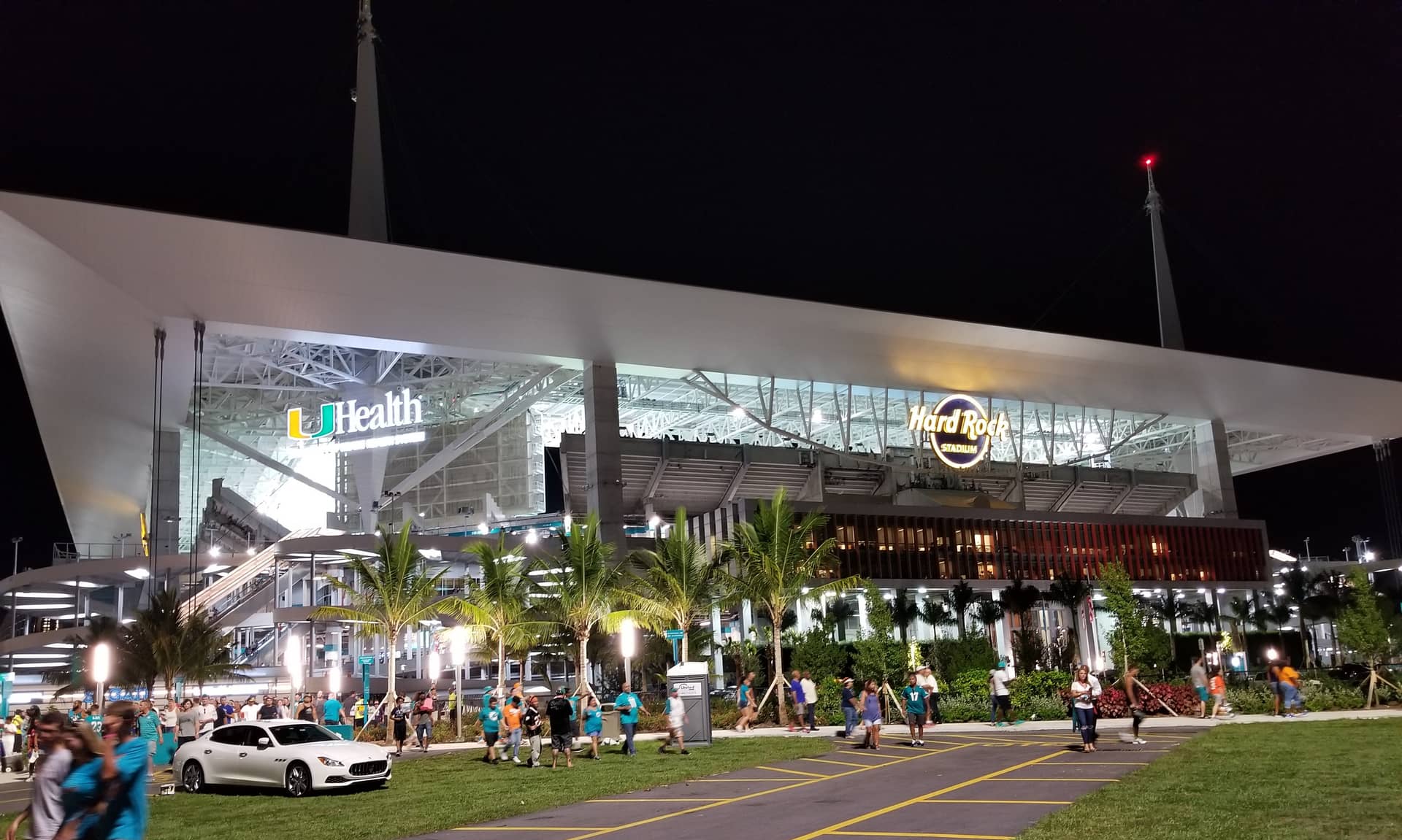
Miami plays its home games at Hard Rock Stadium, the same venue hosting World Cup matches this summer, underscoring South Florida's role as a hub for major sporting events. The Dolphins share the Florida NFL landscape with the Tampa Bay Buccaneers and the Jacksonville Jaguars, and the state's three franchises give Florida football fans plenty to follow each season.
For Dolphins fans, the offseason changes bring a mix of uncertainty and hope. Wholesale change is unsettling, but it also offers the possibility of a fresh start and a new direction after a season that fell short. The fan base will watch closely as the new leadership assembles its roster and charts a path back to relevance in a competitive league.
The cost of a clean break
The decision to move on from Tua Tagovailoa carries one of the largest financial penalties associated with a quarterback departure in recent NFL memory. By releasing the quarterback, the Dolphins absorb a substantial amount of dead money, salary cap charges for a player no longer on the roster. To manage the impact, the team structured the move to spread the cost across multiple years, a common mechanism that softens the immediate blow to the cap.
Dead money of that scale constrains a team's flexibility, limiting the resources available to sign and retain other players. The Dolphins are betting that the long term benefit of a fresh start outweighs the short term financial pain, a calculation that reflects how decisively the franchise concluded that change was necessary. Such moves underscore the high stakes nature of quarterback decisions in the modern NFL.
The financial reset extends beyond the quarterback position. Reports have suggested the team could pursue additional roster changes to clear cap space and reshape the roster, part of the broader house cleaning that has accompanied the leadership overhaul. How the front office navigates these financial constraints will shape its ability to build a competitive team in the seasons ahead.
Building in a competitive division
The Dolphins compete in one of the NFL's more demanding divisions, where success requires consistently strong play to keep pace with rivals. A franchise undertaking a major reset faces the challenge of rebuilding while competing in an environment that offers little margin for error, and the new leadership must balance long term construction with the pressure to win.
Establishing a new identity under a new coaching staff takes time, as players adapt to new schemes, standards and expectations. The early phase of a coaching tenure is often about evaluation and foundation building, determining which players fit the vision and where the roster needs reinforcement. Patience is required, though the NFL's competitive nature rarely affords much of it.
For the Dolphins, the path forward runs through sound decisions at quarterback and across the roster, disciplined cap management and the development of a cohesive team culture. The franchise's history includes celebrated successes, and the fan base's expectations reflect that legacy. The new regime carries the responsibility of restoring the team to contention, a task that will define its tenure in South Florida.
What's next
With new leadership in place and the quarterback position open, the Dolphins face critical decisions about how to build their roster for 2026. Identifying a quarterback to lead the offense is the most pressing question, and the choices the front office makes at the position will shape the team's outlook for years to come.
The new coaching staff will also evaluate the rest of the roster, determining which players fit their vision and where the team needs to add talent. Roster construction under a new regime is a process that unfolds across the offseason and into training camp, as the staff shapes the group it will take into the season.
The Dolphins' reset is a bet that fresh leadership and a new direction can deliver the sustained success that has eluded the franchise. The coming months will reveal how Hafley and Sullivan intend to build the team, and the 2026 season will offer the first real measure of whether Miami's bold offseason changes move the franchise forward. For now, a proud franchise begins again, with its fans hoping the new era brings the breakthrough they have long awaited.
The quarterback search will dominate the conversation around the team. In the modern NFL, no position matters more, and the Dolphins' ability to identify and develop a capable signal caller will largely determine how quickly the rebuild bears fruit. Whether through the draft, free agency or a trade, the choice the franchise makes at quarterback will be the defining decision of this offseason and a key to its future.
Beyond the quarterback question, the new regime must establish a clear philosophy and culture. Successful turnarounds in the NFL typically stem from a coherent vision that aligns the front office, coaching staff and roster around a shared approach. Hafley and the new general manager will be tasked with instilling that identity, a process that unfolds over time and is tested in the crucible of the regular season.
For Dolphins fans, the reset brings both the discomfort of uncertainty and the optimism of a fresh start. The franchise's storied history and passionate following raise the stakes, and expectations will build as the new leadership assembles its team. The 2026 season will offer the first meaningful evidence of whether Miami's bold offseason represents the beginning of a genuine revival, and South Florida will be watching every step of the way.
The franchise's path back to contention will unfold against the backdrop of a fan base that has waited a long time for sustained success. The Dolphins carry one of the proudest legacies in professional football, and that history shapes expectations even in a rebuilding year. The new leadership inherits both the burden and the opportunity of that legacy, tasked with translating bold offseason moves into results on the field. How quickly they can do so will determine whether the difficult decisions of this offseason, including the costly parting with Tagovailoa, come to be seen as the foundation of a revival or merely another chapter in a long search for stability. For now, the team and its fans turn the page together, hopeful that the reset points toward better days.
Spotted an issue with this article?
Have something to say about this story?
Write a letter to the editor