Florida Budget Directs $645 Million to Everglades Restoration as Reservoir Work Advances
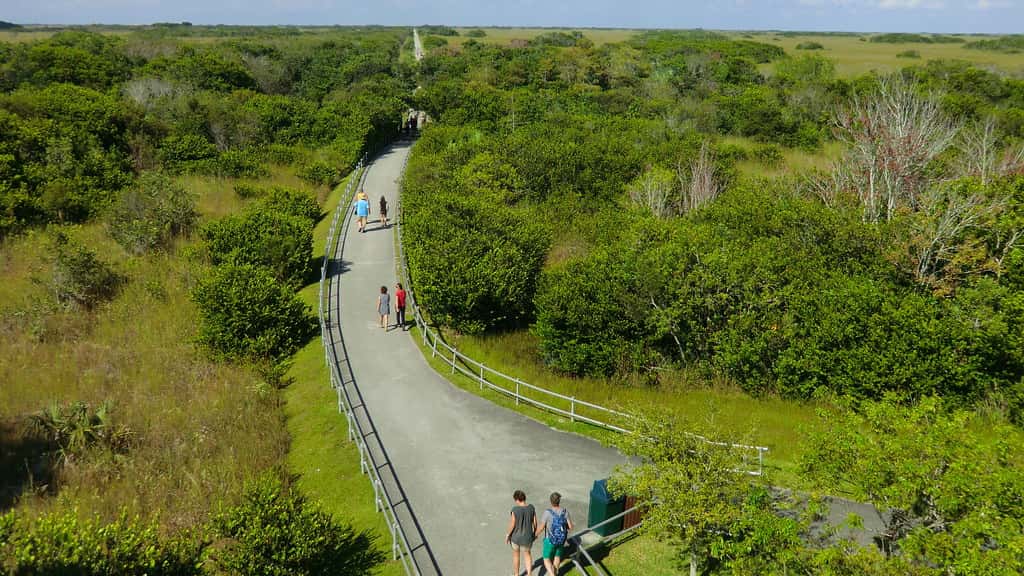
Florida's newly signed 2026-2027 budget directs roughly $645 million to Everglades restoration, continuing a multi-year push to rehabilitate one of the nation's most significant wetland ecosystems. A substantial portion of the funding is expected to support the Everglades Agricultural Area Reservoir, known as the EAA Reservoir, a centerpiece project designed to store and clean water south of Lake Okeechobee and redirect it into the Everglades.
The allocation reflects sustained state investment in a restoration effort that carries environmental, economic, and water-supply implications for millions of Floridians. For South Florida communities, coastal estuaries, and the broader regional water system, the funding represents another increment of progress in a decades-long undertaking.
Restoration on this scale is best understood not as a single project but as a network of interlocking efforts, each addressing a different piece of a system that human engineering reshaped over more than a century. The annual budget cycle is where much of that work either gains momentum or stalls, since steady funding allows construction, planning, and land management to proceed without the disruptions that come from uncertain financing. The $645 million figure is therefore as much a signal of continuity as it is a line item.
What the funding supports
The budget's Everglades allocation covers a range of restoration activities, with the EAA Reservoir among the highest priorities. The reservoir is engineered to capture water that would otherwise be discharged east and west to coastal estuaries, treat it to reduce harmful nutrients, and send it south toward the Everglades, mimicking the natural flow that development and water management disrupted over the past century.
State officials have framed the reservoir as a key tool for reducing damaging discharges to the St. Lucie and Caloosahatchee estuaries, which have suffered from algae blooms and ecological stress tied to nutrient-laden releases from Lake Okeechobee. By storing and cleaning water before moving it south, the project aims to address multiple problems at once: estuary health, Everglades hydration, and water supply.
The governor's office has highlighted milestones in the reservoir's progress, including the execution of contracts intended to accelerate construction. Restoration of this scale involves coordination among state agencies, water management authorities, and federal partners, and the funding sustains the state's share of that complex effort.
Beyond the marquee reservoir, restoration funding typically supports a wider array of work, from water treatment areas that filter nutrients to projects that restore more natural patterns of water flow across the landscape. These components are designed to function together, and the value of any single project is often tied to the completion of others around it. Sustained funding helps keep that interconnected work moving in parallel rather than in isolated pieces.
The Florida context
The Everglades once stretched as a slow-moving sheet of water across much of South Florida, but drainage, agriculture, and urban development fragmented the system and altered its flows. Restoration efforts seek to undo some of that damage by improving water storage, treatment, and movement, with the goal of supporting wildlife, replenishing aquifers, and protecting the region's water supply.
The Comprehensive Everglades Restoration Plan, a long-term framework involving both state and federal participation, guides much of this work. Florida's recurring budget allocations fund the state's portion, and consistent funding has been a point of emphasis for state leaders who tie the effort to both environmental stewardship and economic interests like tourism and fishing.
Water that flows through the restored system ultimately affects drinking water for a large share of South Florida's population, since the region's aquifer depends on the broader hydrology. That connection makes Everglades restoration a water-security issue as much as an environmental one, broadening its relevance beyond conservation circles.
The shared state and federal structure of the restoration also shapes its pace and politics. Because responsibility is divided, progress depends on both partners holding up their commitments, and the timing of one side's funding or construction can affect what the other can accomplish. Florida's recurring allocations are partly intended to keep the state's contribution dependable, which advocates argue strengthens the case for matching federal support.
How we got here
The drive to restore the Everglades grew out of a long recognition that the same water management system that made South Florida habitable and farmable also damaged the wetland at its heart. Canals, levees, and pumping stations were built over generations to control flooding and move water for agriculture and growing cities, and those changes redirected flows that once nourished the marsh. Over time, the consequences for wildlife, water quality, and the region's natural water storage became increasingly apparent.
Out of that recognition came a long-term restoration framework intended to rebalance the system, restoring more of the natural southward flow while still meeting the water needs of farms and communities. That balancing act has defined the effort from the start, since the landscape the restoration must work within includes productive agricultural land and densely populated areas. Each project represents an attempt to reconcile those competing demands.
The reservoir now drawing much of the funding reflects this history. It is designed to do what the altered system stopped doing on its own: hold water, clean it, and send it south. Years of planning, design, and negotiation preceded the construction now underway, and the current budget continues a commitment that has spanned multiple state administrations and budget cycles.
Why it matters environmentally
The Everglades supports a remarkable array of wildlife, including wading birds, alligators, and the endangered Florida panther, along with marine life in the connected estuaries. Restoring more natural water flows helps sustain these species and the habitats they depend on, and it supports the seagrass beds and fisheries that underpin parts of the regional economy.
Reducing harmful discharges to coastal estuaries also addresses a recurring public concern. Algae blooms fed by nutrient-rich water releases have at times fouled waterways, harmed marine life, and affected coastal communities that rely on clean water for tourism and recreation. Projects like the reservoir are intended to lessen the frequency and severity of those events.
Research has also linked Everglades restoration to climate resilience in South Florida, with studies suggesting that a healthier, better-functioning wetland system can help buffer the region against some climate-related pressures. That added dimension has strengthened the case for continued investment as the state confronts sea-level rise and intensifying weather.
A restored wetland also stores and slowly releases water in ways that benefit the broader system, helping to recharge aquifers and moderate the swings between wet and dry conditions. That natural storage function is difficult and costly to replicate with infrastructure alone, which is part of why restoring the marsh itself, rather than simply building around it, is central to the long-term strategy.
The interconnected nature of the system means that benefits in one area can cascade into others. Cleaner water moving south supports the marsh, which in turn sustains wildlife, recharges aquifers, and helps stabilize conditions in the connected estuaries. Conversely, problems left unaddressed in one part of the system can ripple outward. That interdependence is a recurring theme in how scientists and officials describe the restoration, and it underscores why the work is pursued as a coordinated whole rather than a series of disconnected fixes.
What it means for Floridians
For South Florida residents, Everglades restoration touches daily life through water supply, flood management, and the health of the waterways that define the region. A functioning restoration system helps protect drinking-water sources, supports recreation and tourism, and reduces the risk of the kinds of algae events that disrupt coastal communities.
For taxpayers statewide, the recurring funding represents a significant ongoing commitment, and the value of that investment depends on projects being completed and operating as designed. The acceleration of reservoir construction is meant to deliver benefits sooner, but large infrastructure projects of this kind require sustained funding and careful management to reach completion.
The effort also intersects with Florida's agricultural and economic interests, since the agricultural area south of Lake Okeechobee is part of the landscape the restoration must work within. Balancing environmental goals with agricultural and community needs has been a persistent feature of the restoration's politics, and continued funding keeps that balancing act in motion.
What's next
With the budget signed, the funded projects, including the EAA Reservoir, will continue through their construction and planning phases. Progress will depend on the pace of work, coordination among the agencies involved, and the federal partnership that shares responsibility for the broader restoration plan.
State officials are likely to continue marking milestones as construction advances, and environmental groups will watch closely to assess whether the projects deliver the water-quality and flow improvements they promise. The reservoir's eventual operation will be a key test of the strategy's effectiveness.
The pace of large public works projects is rarely linear, and restoration on this scale is no exception. Construction schedules can be affected by weather, permitting, supply considerations, and the sequencing of interrelated components, all of which the agencies involved must manage. Sustained annual funding is intended to smooth that process by giving project managers the confidence to plan ahead, but the ultimate timeline depends on many moving parts working in concert across the state and federal partnership.
Public attention is also likely to remain a factor. Because Everglades restoration touches water quality, wildlife, and the everyday concerns of coastal communities, residents and advocacy organizations tend to follow its progress closely. That scrutiny can serve as a form of accountability, keeping pressure on officials to deliver the outcomes the funding is meant to produce. As milestones are reached and the reservoir moves toward operation, those watching will be looking for evidence that the investment is translating into measurable improvements on the ground.
For now, the $645 million allocation keeps one of the country's largest ecosystem restoration efforts moving forward. Its long-term success will be measured not in dollars but in cleaner estuaries, healthier wildlife, more reliable water supply, and an Everglades system that functions closer to the way nature intended.
Spotted an issue with this article?
Have something to say about this story?
Write a letter to the editorRelated Coverage

King Tides Swamp South Florida Streets and Shut Down Two Miles of A1A
3h ago
Everglades Restoration Delivers Record Freshwater Flows Even as Drought Grips South Florida
7h ago

Florida Wildlife Officials Identify Northeast Florida Algae Bloom as a Lower-Toxin Species, Not Red Tide
1d ago
DeSantis Widens Emergency Order as Pasture Mealybug Spreads to 25 Florida Counties
2d ago