Florida Marks America's 250th With Free Parks and a Five-Day Weekend
Florida joined the rest of the nation in marking a milestone unlike any in living memory over the July 4, 2026 weekend: the 250th anniversary of American independence, known as the Semiquincentennial. The occasion, commemorating the signing of the Declaration of Independence in 1776, drew celebrations across the state that blended patriotic tradition with the particular flavor of Florida summer.
From waterfront fireworks in South Florida to small-town parades in the Panhandle, communities seized on the quarter-millennium anniversary as a reason to gather. The scale of the milestone gave organizers a theme grander than an ordinary Fourth of July, and many events leaned into the historical weight of the moment, drawing connections to the founding era and to earlier national commemorations.
Gov. Ron DeSantis marked the anniversary with policy as well as ceremony. He announced additional days off for state employees and framed the 250th as a historic milestone worthy of extended observance. The result was a five-day holiday weekend for the state's workforce and a series of gestures aimed at encouraging Floridians and visitors alike to take part in the festivities.
For a state that depends heavily on tourism and outdoor recreation, the timing offered both civic and economic opportunity. The long weekend, the summer heat, and the draw of the beaches combined to make the anniversary a natural occasion for travel, family gatherings, and the kind of large public celebrations that define the American summer.
A Five-Day Weekend for State Workers
The governor's most concrete action was to expand the holiday for Florida's public workforce. By closing state offices on Thursday, July 2 and again on Monday, July 6, the administration gave the state's roughly 100,000-plus employees a five-day break bracketing the Fourth of July itself.
The extended closure effectively transformed a single federal holiday into a long weekend, a move the governor tied explicitly to the significance of the 250th anniversary. Officials presented the additional days as a way to honor the milestone and to give public servants time to celebrate with their families and communities.
The decision carried practical implications beyond the symbolism. State offices closed for two extra business days means certain government services paused around the holiday, and residents needing to conduct state business were advised to plan around the closures. For the workers themselves, the arrangement delivered a rare stretch of consecutive days off in the heart of summer.
The gesture also reflected a broader pattern of framing the Semiquincentennial as an event deserving of special recognition. Rather than treating July 4, 2026 as one holiday among many, the administration positioned it as a once-in-a-generation occasion, using the machinery of state government to mark its importance.
Free Access to State Parks
Alongside the extended holiday, Florida offered free access to its state parks on July 4, waiving entry fees to encourage residents and visitors to spend the anniversary outdoors. The offer opened the gates to the state's extensive network of parks, springs, beaches, and trails at no cost for the day.
Florida's state park system is among the most visited in the nation, encompassing crystalline springs, coastal preserves, and historic sites that draw millions of visitors each year. Waiving fees on the Fourth invited families to take advantage of those natural spaces on a day already associated with cookouts, swimming, and outdoor gatherings.
The free-parks initiative dovetailed with the broader celebratory mood and with the state's interest in promoting its natural attractions. For budget-conscious families, the waived fees lowered the barrier to a holiday outing, and for the parks themselves, the day offered a chance to showcase Florida's landscapes to a wide audience.
The offer also aligned the anniversary with a distinctly Floridian way of celebrating. In a state defined by its coastline and its springs, spending the Fourth outdoors near the water is as much a part of the holiday as fireworks, and the free-access day made those spaces available to everyone regardless of cost.
Celebrations Across the State
Beyond the state-level gestures, the heart of the anniversary played out in communities across Florida. Cities and towns held fireworks shows, parades, and family-oriented events, each putting a local stamp on the national milestone.
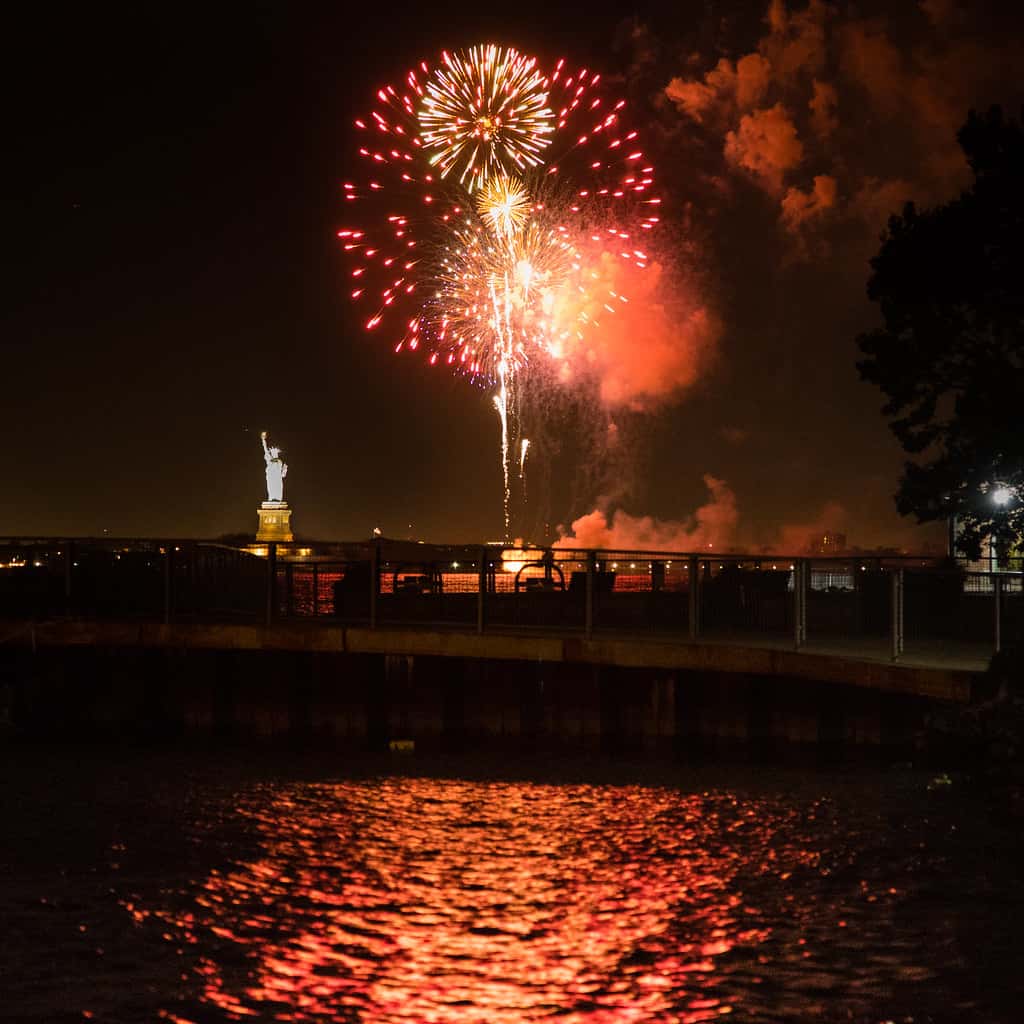
In South Florida, waterfront fireworks lit the night sky, with silhouetted crowds gathering along the shoreline to watch displays reflected on the water. Such waterfront celebrations are a signature of the region's Independence Day tradition, and the 250th anniversary lent them added significance as spectators marked a number no previous generation had seen.
Some communities leaned into the historical resonance of the moment by referencing the 1976 Bicentennial, the last comparable national commemoration and one still remembered by many Floridians. Themed events drew a line between that celebration a half-century ago and the present milestone, inviting older residents to recall the earlier festivities while introducing younger generations to the tradition.
The range of celebrations reflected the diversity of the state itself. Large coastal cities mounted major public displays, while smaller inland towns held parades and community gatherings scaled to their size. Together they formed a statewide mosaic of observance, unified by the anniversary but varied in their expression.
A Tourism and Community Moment
The long holiday weekend arrived at a significant time for Florida's tourism economy. The Fourth of July is traditionally one of the busiest travel periods of the summer, and the added days off, the free parks, and the milestone anniversary combined to reinforce that draw in 2026.
Beaches, resorts, and attractions across the state count on the early-July window to anchor their summer season. A holiday weekend stretched across five days for many workers, paired with the appeal of a historic anniversary, gave families additional reason to travel, book accommodations, and patronize local businesses.
The community dimension ran alongside the economic one. Public celebrations of the sort held over the weekend serve as gathering points that knit neighborhoods together, offering shared experiences that transcend the daily routine. For many Floridians, the parades and fireworks were less about tourism than about coming together with neighbors to mark a common heritage.
That blend of the civic and the commercial is familiar in Florida, where the tourism industry and community life are deeply intertwined. The 250th anniversary amplified both, turning a single holiday into an occasion that filled hotels and beaches while also drawing residents into the public square.
Echoes of the Bicentennial
The references to 1976 that surfaced in some communities pointed to a deeper thread running through the celebrations. The Bicentennial remains a touchstone for how the nation marks its major anniversaries, and its memory shaped expectations for how the Semiquincentennial might unfold.
For Floridians old enough to remember, the Bicentennial evokes a year of sustained national commemoration, with events, exhibitions, and displays spread across many months rather than concentrated on a single day. That model of an extended, multi-part observance offers a template for the 250th, which organizers have similarly treated as a yearlong occasion rather than a one-day event.
The generational span between the two anniversaries adds to their resonance. A half-century separates the Bicentennial from the Semiquincentennial, meaning many who celebrated in 1976 are marking the milestone again in 2026, now often alongside children and grandchildren. That continuity gives the anniversary a personal dimension layered atop its national significance.
By drawing on the Bicentennial's example, Florida communities signaled that the 250th is not simply a bigger Fourth of July but a distinct commemorative moment. The themed events and historical framing positioned the anniversary within a lineage of national milestones, connecting the present celebration to the memory of the last one.
A Statewide Civic Spectacle
Taken together, the weekend's events amounted to a statewide civic spectacle that combined official policy, natural attractions, and grassroots celebration. The governor's holiday proclamation and free-parks offer set the stage, while the parades, fireworks, and family gatherings supplied the substance.
The coordination between state-level gestures and local festivities illustrated how a national anniversary filters down through the layers of public life. Decisions made in Tallahassee about office closures and park fees shaped the conditions for celebration, but the celebrations themselves took form in cities and towns according to local tradition and taste.
The result was an observance that felt both unified and varied, a single anniversary expressed through hundreds of distinct gatherings. That decentralized character is fitting for a milestone rooted in the founding of a federal republic, in which national identity is lived out through countless local communities.
For Florida specifically, the weekend showcased the state's capacity to turn a national occasion into a distinctly local experience, blending its beaches, springs, and waterfronts with the universal rituals of Independence Day. The 250th anniversary became, for a weekend, both an American event and a Florida one.
What's Next
The July 4 weekend represented a high point rather than an endpoint. The Semiquincentennial is being observed as a yearlong commemoration, and additional events tied to the 250th are expected to continue across Florida through the remainder of 2026.
Communities that mounted celebrations over the holiday may build on that momentum with further programming as the year unfolds. Historical exhibitions, educational initiatives, and additional public events are the kind of activities that typically accompany an anniversary of this magnitude, extending the observance well beyond a single weekend.
For the state's tourism industry, the anniversary offers a recurring hook throughout the year, a theme around which attractions and destinations can organize promotions and events. The early-July weekend demonstrated the draw of the milestone, and businesses across the state are positioned to keep leveraging it in the months ahead.
How Florida sustains the commemoration will become clearer as the year progresses. The Fourth of July set a benchmark with its free parks, extended holiday, and widespread celebrations, and the coming months will show whether the state maintains that energy as the Semiquincentennial continues. For now, Floridians have marked the 250th in the way the season invites: outdoors, near the water, and among their neighbors.
Spotted an issue with this article?
Have something to say about this story?
Write a letter to the editorComments
No comments yet. Be the first to weigh in.
Related Coverage
Walt Disney World turns 55 with Lakeshore Lodge reservations opening Oct. 8
2d ago

Disney Cruise Line Sets Oct. 7 Reveal for Disney Believe Homeport
4d ago

Orlando's Theme Park Market Cools Even as Epic Universe Fills Its First Full Year
Sep 26
Orlando's Theme Park Balance Shifts as Universal's Epic Universe Reshapes the Market
Sep 25