SpaceX Keeps Space Coast Humming With Rapid July Falcon 9 Launch Cadence
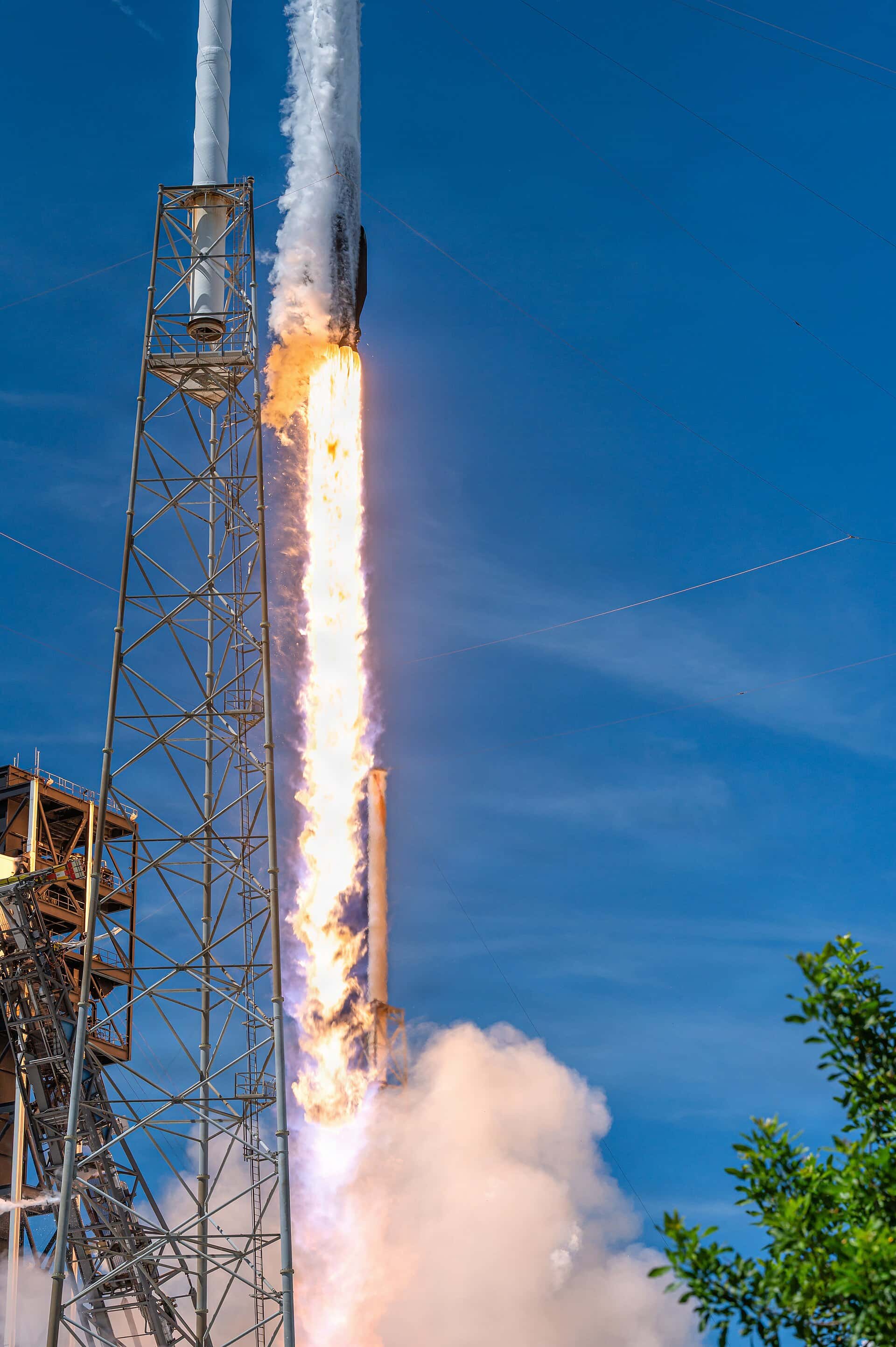
Along Florida's Space Coast, the rockets keep coming. SpaceX is maintaining a rapid launch cadence from Cape Canaveral Space Force Station in July 2026, stacking Starlink deployments and commercial missions in an early-July window that underscores just how central the company has become to Brevard County's economy and identity. For a region whose fortunes have long risen and fallen with the launch schedule, the steady tempo is both an economic lifeline and a point of civic pride.
The workhorse of the moment is the Falcon 9, the reusable rocket that has turned spaceflight from a rare spectacle into a near-routine occurrence on Florida's Atlantic coast. One early-July mission is targeting a batch of about 29 Starlink internet satellites to low-Earth orbit from Space Launch Complex 40, a familiar profile that has become the backbone of SpaceX's flight rate.
What makes that particular flight notable is the booster: its first stage is reportedly flying for a 13th time, a vivid illustration of the rapid reuse that has reshaped the economics of getting to space. Each return and refurbishment of a booster is a small demonstration of the model that has let SpaceX launch more often than any operator in history, and that has kept the Cape busier than at any point since the Apollo era.
An Early-July Launch Window
SpaceX's Florida manifest for early July is dense, with the company chaining missions from its Cape Canaveral pads in the kind of back-to-back rhythm that has become its signature. The precise timing of any single launch can slip with weather and range availability, but the broader picture is one of near-continuous activity across the early part of the month.
The Starlink flight carrying roughly 29 satellites is emblematic of that rhythm. These missions, which loft batches of the company's flat-packed internet satellites into low-Earth orbit, recur so frequently that they have become the metronome of the Space Coast schedule, filling the gaps between higher-profile crewed and commercial flights.
Alongside the Starlink cadence, additional missions are on Florida's July calendar. A Globalstar mission is planned for the month, with a Falcon 9 Block 5 slated to carry payload to low-Earth orbit, one more commercial customer in a manifest that has grown steadily more diverse as SpaceX's reliability has drawn in operators across the satellite industry.
Taken together, the flights illustrate a spaceport operating at industrial tempo. Where a single launch was once a marquee event, the Cape now routinely hosts several in a matter of days, a transformation that has redefined what a working spaceport looks like.
Booster Reuse and Why It Matters
The reported 13th flight of a single Falcon 9 first stage is more than a statistic. Booster reuse is the core of the cost revolution SpaceX set out to achieve, and each additional flight of a recovered stage spreads the expense of building that hardware across more missions, lowering the effective price of reaching orbit.
The mechanics are by now familiar to Space Coast residents: after boosting a payload toward orbit, the first stage separates, relights its engines, and either returns to a landing zone or settles onto a droneship at sea. It is then inspected, refurbished, and flown again, sometimes within weeks, a turnaround that would have been considered science fiction a generation ago.
That capability is what enables the launch cadence itself. A fleet of proven, reusable boosters means SpaceX is not rebuilding a rocket for every mission, and it is that efficiency, more than any single technology, that keeps Florida's pads active week after week. The higher the reuse count climbs, the more the company demonstrates the durability of the hardware.
For the industry watching from around the world, a booster on its 13th flight is a data point about how far reusability can be pushed. For Brevard County, it is simply the reason the rockets keep flying, and the reason the jobs tied to them keep existing.
Starship and the Broader Florida Buildout
SpaceX's Florida ambitions extend well beyond the Falcon 9. The company is expanding its Starship program presence toward Kennedy Space Center, where new launch infrastructure is planned for the massive next-generation vehicle that SpaceX intends to use for its most ambitious missions. That buildout signals a long-term commitment to the state that goes beyond the current cadence.
Starship, far larger and more powerful than the Falcon 9, represents a different scale of operation, and standing up the pads, tanks, and support systems to launch it in Florida is a multiyear undertaking. The planned infrastructure at Kennedy Space Center would give SpaceX a second major launch base for the vehicle alongside its Texas operations, distributing its most important program across two coasts.
For the Space Coast, the prospect of Starship launches from Florida carries enormous implications. A vehicle of that size would draw national attention, potentially reshape the local workforce, and further cement the region's position as a multi-customer spaceport capable of handling everything from small satellite deployments to the largest rockets ever built.
The buildout also fits a broader pattern of investment along Florida's coast, where multiple operators and agencies are competing for pad space and range time. That competition, and the infrastructure it is producing, is part of what state officials point to when they describe Florida's growing role in commercial space.
The Economic Engine of Brevard County
The launch tempo is not an abstraction for the communities around the Cape. Brevard County's economy is woven through with the space industry, from the engineers and technicians who prepare and fly the rockets to the suppliers, contractors, and service businesses that support them. A high cadence means steady work, and steady work sustains the region.
Tourism is the other side of the ledger. Launch viewing has become a genuine draw, pulling visitors to beaches, causeways, and viewing sites to watch Falcon 9s climb over the Atlantic. When the schedule is full, hotels, restaurants, and attractions along the coast feel the benefit, turning the spaceport into an engine of visitor spending as well as high-skilled employment.
That dual role, as both a workplace and a spectacle, is central to the Space Coast's modern identity. The region markets itself around its rockets, and its self-image is bound up with being the place where America goes to orbit. A busy manifest reinforces that identity in a way a quiet pad never could.
Florida officials have leaned into the trend, promoting the state's expanding role in commercial space as a pillar of economic development. The pitch is straightforward: a spaceport running at industrial cadence, serving many customers, anchors an industry that pays well and keeps growing, and Florida has positioned itself to capture more of it.
A Multi-Customer Spaceport
What distinguishes the modern Cape is that it no longer serves a single program or agency. The same range that hosts SpaceX's Starlink and Globalstar flights supports a widening roster of government and commercial customers, a diversity that insulates the region against the boom-and-bust cycles that once defined it.
That multi-customer model is a deliberate evolution. For decades, the Space Coast's fortunes were tied largely to NASA's flagship programs, and gaps between programs brought painful downturns. The current mix, with commercial launch providers flying frequently for many buyers, spreads the risk and keeps the pads active even as any one program ebbs.
SpaceX sits at the center of that model, its cadence effectively setting the baseline tempo for the range. But the company shares the Cape with other operators and missions, and the coordination required to fly so often from adjacent pads is itself a marker of how mature Florida's spaceport operations have become.
The result is a launch site that behaves less like a special-event venue and more like a transportation hub, dispatching payloads to orbit on a schedule. That shift, from occasion to infrastructure, is the quiet story beneath every individual launch.
Florida's Bet on Commercial Space
State leaders have made no secret of their ambitions for Florida's space sector, promoting the coast's growing role and courting the investment that a high launch rate attracts. The logic is that a busy, diversified spaceport draws suppliers, talent, and follow-on business, compounding the economic footprint of each launch.
The Starship infrastructure planned toward Kennedy Space Center is the clearest emblem of that long-term bet. Building for the largest rocket in the world is a statement about where SpaceX expects to operate for years to come, and Florida's willingness to host it reflects a shared interest in keeping the state at the forefront of commercial spaceflight.
There are challenges embedded in the growth, from range scheduling to environmental review to the strain that frequent launches place on infrastructure and surrounding communities. A cadence this high tests the systems that make it possible, and sustaining it requires continued investment on the ground as much as in the rockets themselves.
Still, the direction is unmistakable. Florida has staked a substantial part of its economic identity on commercial space, and the July launch tempo is the everyday evidence that the bet is paying off, at least for now.
What Is Next
The near-term outlook points to more of the same, with additional Starlink batches expected to continue at a rapid clip and the planned Globalstar mission adding a commercial payload to the July manifest. Exact dates will move with weather and range conditions, but the overall trajectory is toward sustained, frequent activity from Cape Canaveral's pads.
Further out, the Starship buildout toward Kennedy Space Center is the development to watch, a multiyear effort that could redefine the scale of Florida launches and the workforce that supports them. Progress on that infrastructure will be a key signal of how deeply SpaceX intends to root its most ambitious program in the state.
For Brevard County, the questions are practical: whether the cadence holds, how many jobs and how much tourism it sustains, and whether the promised Starship operations materialize on the timeline officials hope for. For now, the rockets keep flying, and the Space Coast keeps counting on them.
Spotted an issue with this article?
Have something to say about this story?
Write a letter to the editorComments
No comments yet. Be the first to weigh in.
Related Coverage
Rick Scott and Ashley Moody file bill to shield Eglin Gulf test range from offshore drilling
3h ago
Miami Federal Judge Rules Federal Ban on Noncitizen Voting Unconstitutional in Broward Case
6h ago
Former Miami Congressman David Rivera Sentenced to 10 Years in Secret Venezuela Lobbying Case
8h ago

Federal judge strikes down ICE immigration courthouse arrest policy: what it means for Florida
11h ago