Supreme Court Upholds Birthright Citizenship in 6-3 Ruling, and Florida's Leaders React
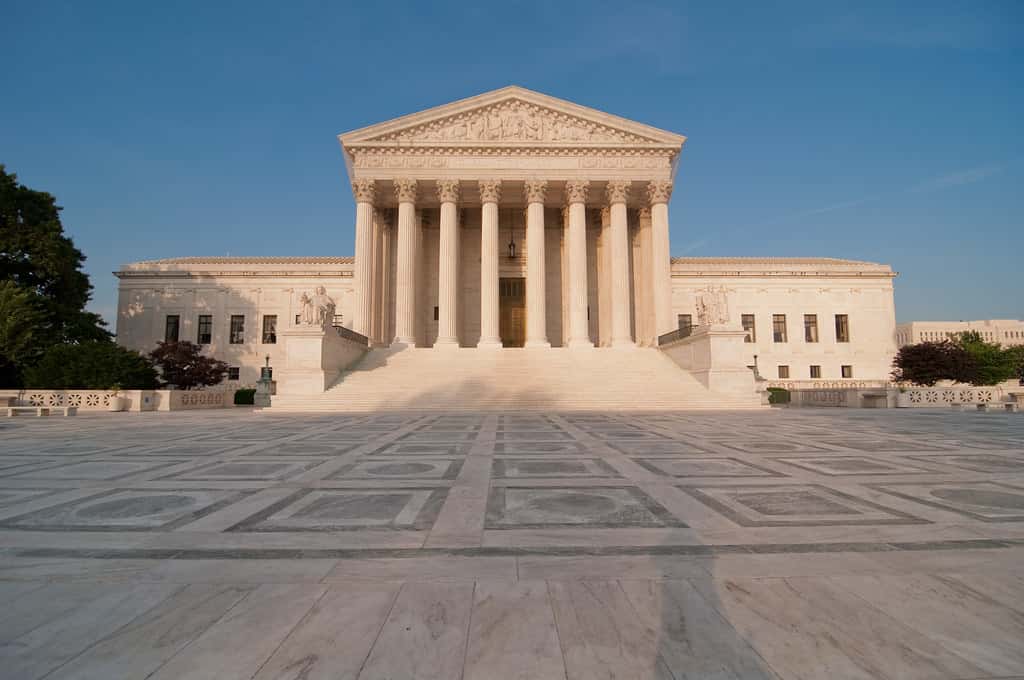
The U.S. Supreme Court has upheld birthright citizenship in a landmark 6-3 decision, striking down an executive order that sought to deny citizenship to children born in the United States to parents who are in the country illegally or temporarily. The ruling reaffirms a long-settled understanding of the 14th Amendment and carries significant implications for Florida, home to large immigrant communities and a central player in the national immigration debate.
The decision drew reaction from Florida officials across the political spectrum, with Democrats particularly vocal in expressing relief. For the many Florida families whose lives are touched by immigration policy, the ruling settles, at least for now, a fundamental question about who is recognized as an American citizen at birth.
The case ranks among the most consequential the court has decided in the current era, touching a constitutional guarantee with roots in the aftermath of the Civil War. Its resolution provides clarity on a principle that had been thrown into doubt, with particular resonance in a state as diverse as Florida.
What the court decided
By a 6-3 vote, the court rejected the executive order declaring that children born to people in the country illegally or temporarily are not American citizens. In an opinion written by Chief Justice John Roberts, a majority held that the long-settled understanding of the 14th Amendment, adopted after the Civil War, makes a citizen of nearly anyone born in the country, with very limited exceptions.
The 14th Amendment's citizenship clause has been understood for generations to guarantee citizenship to those born on American soil, a principle affirmed in longstanding precedent. The majority's opinion rested on that established understanding, rejecting the attempt to reinterpret the amendment's reach through executive action.
Justice Brett Kavanaugh provided the sixth vote but reached his conclusion on narrower grounds, basing his decision on a federal statute rather than on the Constitution directly. That distinction could matter in future disputes, as a ruling grounded in statute rather than constitutional interpretation can leave different avenues open for future legal and legislative action.
The bottom line of the ruling was clear: the executive order could not stand, and birthright citizenship remains the law of the land. The 6-3 split, however, revealed that the question divided the court, a point that shaped reactions to the decision.
Florida's reaction
Elected officials in Florida on both sides of the aisle welcomed the outcome, though Democrats were more outspoken. Congresswoman Frederica Wilson said the decision brings relief to countless families who had spent months fearing that one of the nation's most fundamental constitutional protections could be stripped away. Her comments captured the anxiety that had gripped many immigrant families as the case moved through the courts.
For families who had worried about the citizenship status of children born during the period of uncertainty, the ruling offered reassurance. The prospect of a change to birthright citizenship had created real fear in communities across the state, and the decision addressed that concern directly.
Some Florida Democrats expressed concern about the closeness of the vote even as they celebrated the result. Congresswoman Debbie Wasserman Schultz said the 6-3 split was disturbing, arguing that the 14th Amendment is clear and that the case should have been a unanimous decision.
That reaction reflected unease that a constitutional principle many consider settled was upheld by a divided court rather than an overwhelming majority. For some observers, the closeness of the vote underscored the contested nature of a question they viewed as long resolved.
Why it matters for Florida
Florida's demographics make the ruling especially consequential. The state is home to large and diverse immigrant populations, including families from across Latin America and the Caribbean, and questions about citizenship reverberate through communities from Miami to Orlando to Tampa.
The state's history as a destination for immigrants and refugees, from Cuban exiles to Haitian and Venezuelan communities, gives immigration policy an outsized presence in Florida life. A change to birthright citizenship would have created uncertainty for children born in the state to affected parents, touching families across many communities.
The decision removes that uncertainty for now. Children born in Florida, as elsewhere in the country, remain citizens at birth under the reaffirmed reading of the 14th Amendment. For families who had feared their children could be denied citizenship, the ruling provides a measure of stability during an otherwise turbulent period in immigration policy.
Hospitals, schools and social service agencies that serve immigrant families also operate with more clarity following the ruling. The settled understanding of birthright citizenship shapes how those institutions register births and provide services.
The national context
The case is part of a broader story about the Supreme Court's role in shaping immigration policy. The court has become a pivotal force in a series of high-profile disputes, and its decisions carry nationwide effect. The birthright citizenship ruling stands among the most significant, touching a constitutional guarantee with roots in the aftermath of the Civil War.
The judiciary has increasingly been the venue where major immigration questions are decided, as policies advanced by the executive branch face legal challenges that work their way up to the highest court. The birthright citizenship case fits that pattern, with the court serving as the ultimate arbiter.
Immigrant rights groups expressed relief at the outcome while cautioning that the broader legal and political fight over immigration is far from over. Advocates noted that the ruling protects a core principle but that other policies and enforcement actions continue to affect immigrant communities across the country, including in Florida.
The 14th Amendment's history
Birthright citizenship is rooted in the 14th Amendment, ratified in 1868 in the aftermath of the Civil War. Its citizenship clause was adopted to guarantee citizenship to formerly enslaved people and to establish a clear rule that those born in the United States and subject to its jurisdiction are citizens. That principle has been understood for generations to extend broadly to those born on American soil.
Longstanding legal precedent affirmed the amendment's reach, and for more than a century birthright citizenship was treated as settled law. The recent case tested whether an executive order could narrow that guarantee, and the court's decision reaffirmed the established understanding rather than reworking it.
The historical weight of the amendment featured prominently in the debate surrounding the case. Supporters of birthright citizenship pointed to its origins and long acceptance as reasons the guarantee should not be altered by executive action, an argument the majority's reasoning reflected.
An issue that resonates in Florida
Few states feel the immigration debate as acutely as Florida, where immigrant communities are woven into the fabric of daily life and the economy. The state's population includes large numbers of residents with roots in Cuba, Haiti, Venezuela, Colombia, Mexico and many other countries, and immigration policy touches families across those communities.
Florida's economy also depends heavily on immigrant labor in sectors such as agriculture, hospitality, construction and health care. Policies affecting immigrants ripple through those industries and the communities that sustain them, giving the birthright citizenship ruling practical significance beyond its constitutional dimension.
The political response in Florida reflected those stakes, with officials weighing in on a decision that touches so many of their constituents. The ruling's reaffirmation of birthright citizenship removed one source of uncertainty for immigrant families, even as broader debates over immigration policy continue to divide the state and the nation.
What it means for Floridians
For Florida residents, the ruling settles an immediate and deeply personal question about citizenship for children born in the state. It offers reassurance to families who had been living with uncertainty, and it reaffirms a principle that has underpinned American citizenship for generations.
The decision touches not only immigrant families but the broader communities and institutions connected to them. Clarity on citizenship affects everything from birth registration to eligibility for services, giving families and agencies a stable footing.
At the same time, the divided vote and the differing legal rationales among the justices signal that debates over immigration and citizenship will continue. Floridians can expect the issue to remain prominent in state and national politics, even with this particular question resolved.
A divided court on a settled question
The 6-3 split, and the differing rationales among the justices in the majority, revealed that a question many had considered settled still divides the nation's highest court. While the outcome reaffirmed birthright citizenship, the closeness of the vote signaled that the issue remains legally and politically contested.
Chief Justice Roberts anchored the majority opinion in the constitutional understanding of the 14th Amendment, while Justice Kavanaugh reached the same result through a federal statute. That distinction, though technical, matters because it reflects different views of the legal foundation for the guarantee, and it could shape how future disputes are argued.
For observers on both sides, the split underscored that constitutional questions once thought resolved can return to the fore. The ruling settled the immediate case, but the divisions it exposed suggest that debates touching on citizenship and immigration will continue to find their way to the courts.
What's next
With the executive order struck down, attention shifts to other immigration policies and enforcement actions moving through the courts and the political system. The ruling closes one avenue but does not end the broader contest over immigration in the United States.
Because Justice Kavanaugh grounded his decisive vote in statute rather than the Constitution, future legislative or legal developments could revisit related questions. The precise scope and durability of the ruling may be tested in subsequent cases.
For Florida, a state at the crossroads of the nation's immigration debate, the decision is a significant marker. It reaffirms birthright citizenship for the state's residents while leaving the larger policy landscape as contested as ever, ensuring that immigration will remain a central issue for Florida's families, communities and elected leaders.
Spotted an issue with this article?
Have something to say about this story?
Write a letter to the editorComments
No comments yet. Be the first to weigh in.
Related Coverage
Treasury mails $500 ACA 'refund' checks, with nearly 128,000 Floridians in line for payments
6h ago

Rep. Salazar's immigration break with Trump reshapes FL-27 race a month before Election Day
6h ago
Florida loses 51 Medicare Advantage plans for 2027, the most of any state, as open enrollment nears
8h ago

FAA draft review finds no significant impact from Blue Origin's plan for 50 New Glenn launches a year at Cape Canaveral
10h ago